


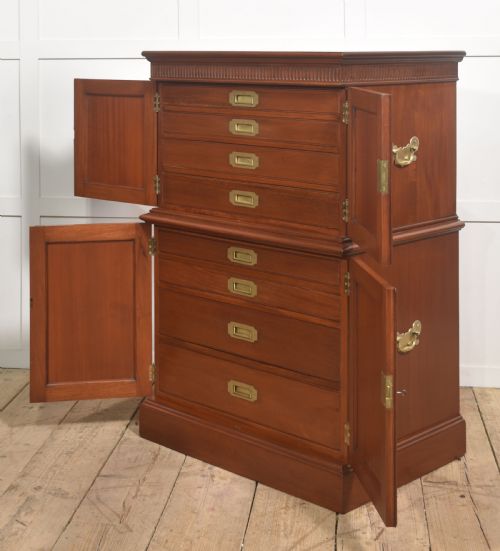


Antique Coin Chest
An antique coin chest organises small valuables safely, combining fine cabinetmaking with utilitarian precision.
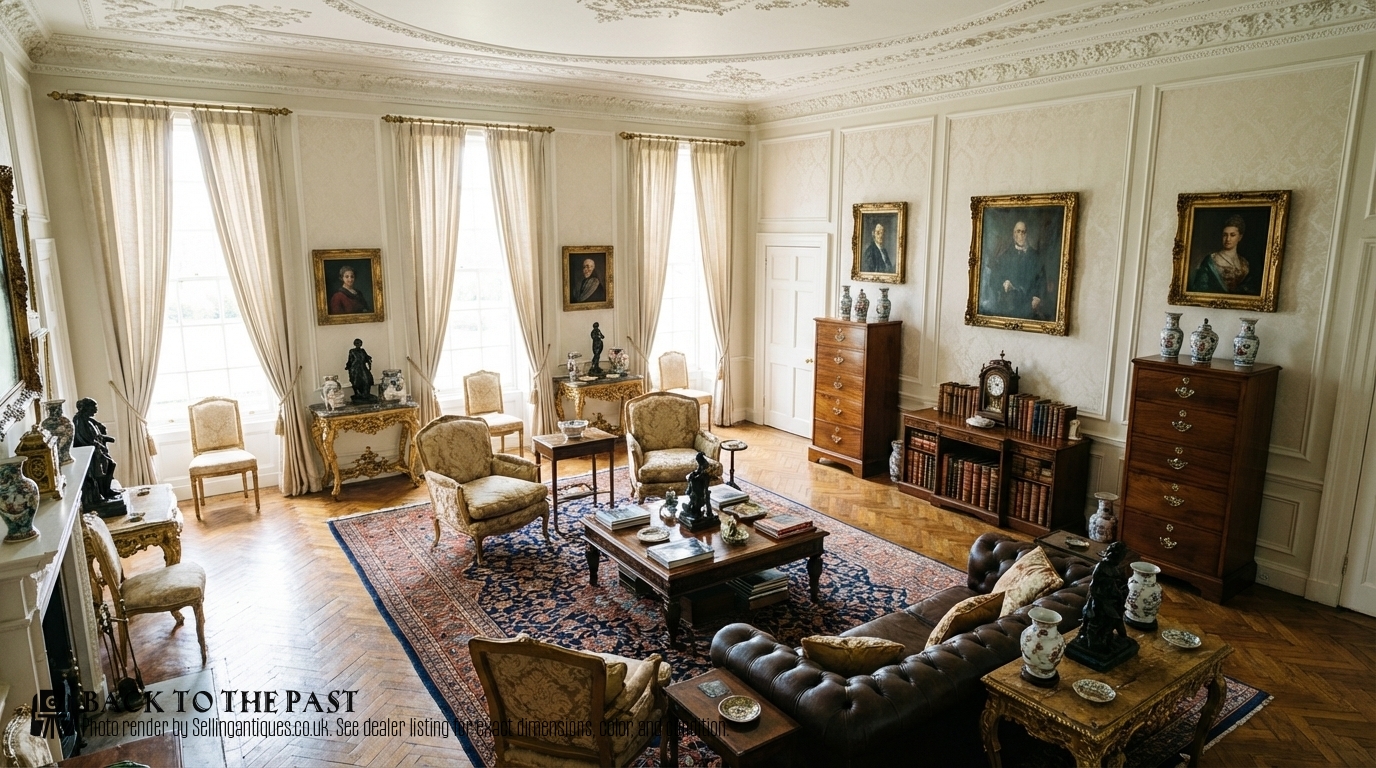
Antique Coin Chest
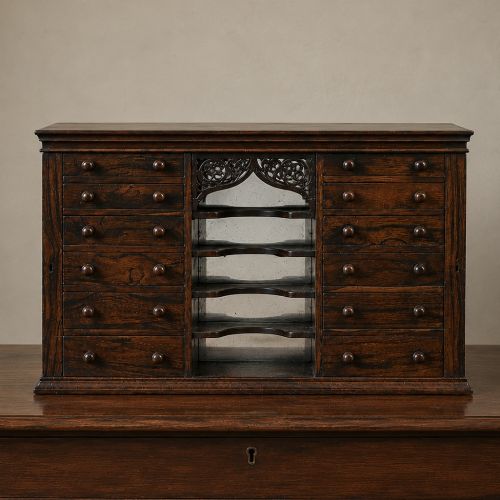
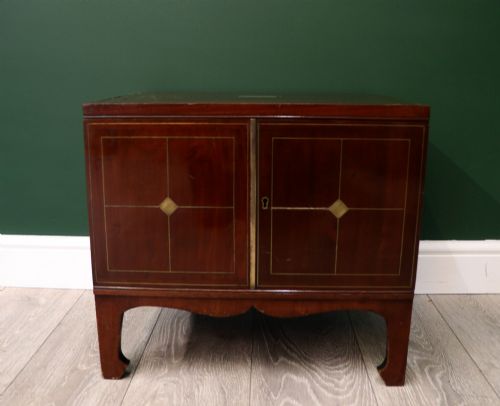
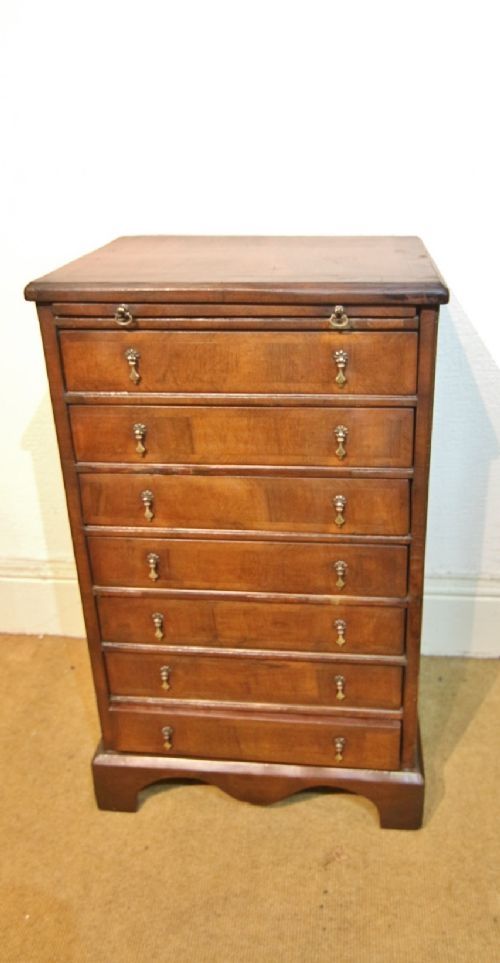
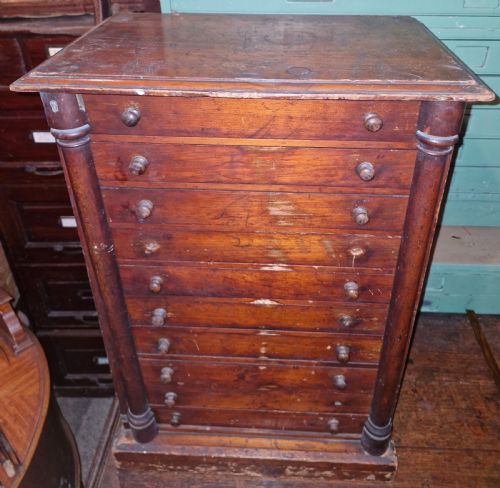
When you search for an antique coin chest, you examine multi-drawer cabinetry designed specifically to house small objects, medals, or currency securely. The pieces available here span the Georgian, Regency, and Victorian periods, alongside later works from around 1900.
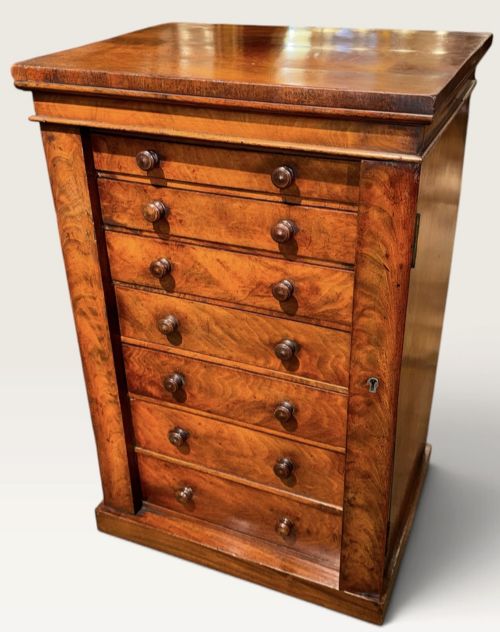
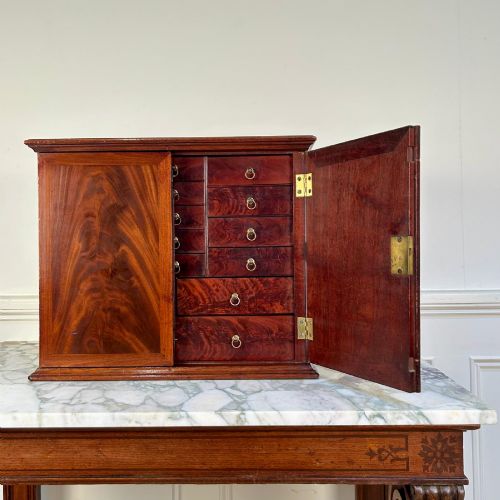
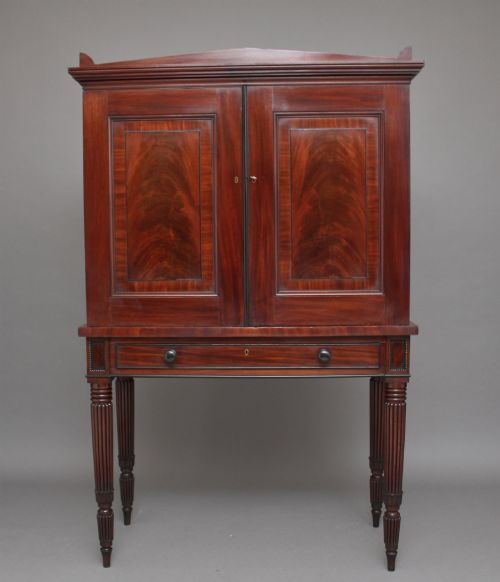
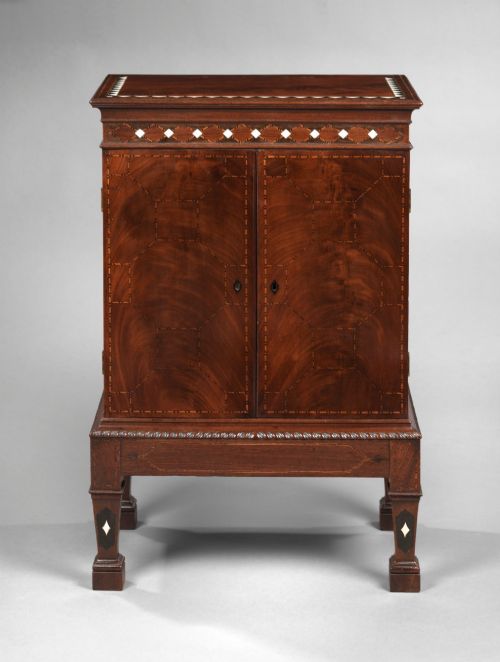
The most common formats on this page are compact mahogany collectors cabinets and multi-drawer specimen chests fitted with brass handles. Cabinet forms range from small desktop specimen cases to substantial chests on stands with numerous small internal drawers.
Materials and construction
Cabinetmakers constructed these chests predominantly using timbers such as mahogany, walnut, oak, rosewood, and deal, frequently selecting figured veneers for exterior visual impact. Interiors rely on tight joinery to protect delicate contents from dust and atmospheric changes.
Hardware details involve brass drop handles, key escutcheons, and inset campaign-style fixtures that reinforce corners and facilitate transport. Certain pieces integrate glass panels or mirrored elements, balancing secure storage with display capability.
Antique Coin Chest Retail Price Guide 2026
Typical asking prices for coin chest among the pieces listed under this phrase on Sellingantiques today, from the lower quarter to the upper quarter. They describe what is for sale here now, not the wider market.
Listings feature woods including mahogany, walnut, burr walnut, oak, rosewood, pine, deal, and satin birch across Victorian and Georgian eras.
Assessing quality and execution
Quality rests upon the precision of the drawer construction and the selection of timber grain, where solid mahogany or figured walnut elevates a piece above stained deal or simpler pine carcases. The integration of robust locking mechanisms and original brass hardware distinguishes superior workshop production.
Brady of Edmonton·Charles William Schofield
The Antique Coin Chest Glossary
- Collector's cabinet
- A piece of furniture fitted with many shallow drawers designed for organising small specimens, medals, or coins. These items often feature locking doors to secure the contents.
- Campaign style
- Furniture constructed with inset brass handles, reinforced corners, and portability in mind for travel. This aesthetic originates from military use during the eighteenth and nineteenth centuries.
- Specimen case
- A small chest or box intended to hold natural history items or precious objects for study and display. They frequently employ glass viewing panels or compact miniature drawer layouts.
- Wellington chest
- A tall, narrow chest of drawers secured by a locking hinged side pilaster that fastens over the drawer edges. This design provides robust security for the contents within.
- Standish
- A desk accessory or cabinet form historically equipped for writing materials or valuable collections. It often incorporates multiple compartments and drawers.
Antique Coin Chest: Frequently Asked Questions
What were antique coin chests used for?
These chests served collectors, naturalists, and gentlemen who needed secure, orderly storage for valuable small items like currency, medals, or geological specimens.
The shallow drawers prevented delicate objects from shifting or rubbing against one another while stored in bulk.
How do I date an antique coin chest?
Dating relies on observing timber choices, cabinet styles, and construction methods characteristic of periods like the Georgian era or the Victorian age.
Details such as brass handle types and dovetail tightness offer further clues regarding the decade of manufacture.
How do I live with a coin chest?
Place the cabinet on a stable surface away from direct sunlight and sudden temperature shifts to protect the polished wood surfaces and internal linings.
The drawers provide practical storage for modern collections of small trinkets, jewellery, or stationery.
Are all these cabinets made of mahogany?
While mahogany appears frequently across Georgian and Victorian examples, the selection also includes walnut, oak, rosewood, pine, and deal.
Different workshops utilised whatever local or fashionable timbers suited the commission and intended destination of the piece.