




Antique Coffee Spoons
These antique coffee spoons offer small-scale silverwork spanning the Victorian period through the mid-twentieth century.
Antique Coffee Spoons
Antique coffee spoons are small implements designed for demitasse cups, typically measuring considerably shorter than standard teaspoons. When you search for antique coffee spoons, you encounter individual pieces alongside matched sets housed in fitted presentation cases.
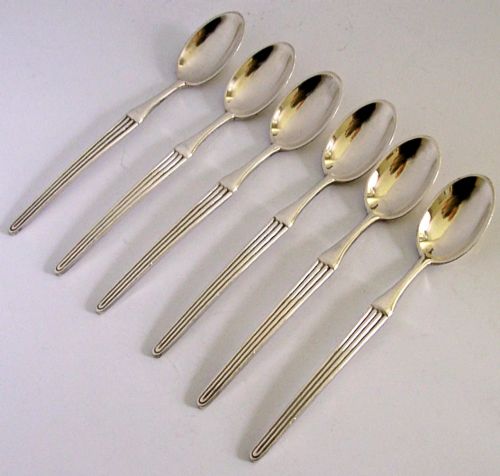
The pieces on this page originate from periods including the Victorian era, Edwardian years, and twentieth-century decades like the 1920s and 1930s. Styles range from plain silver flatware to ornate Art Deco, Art Nouveau, and Arts and Crafts designs.
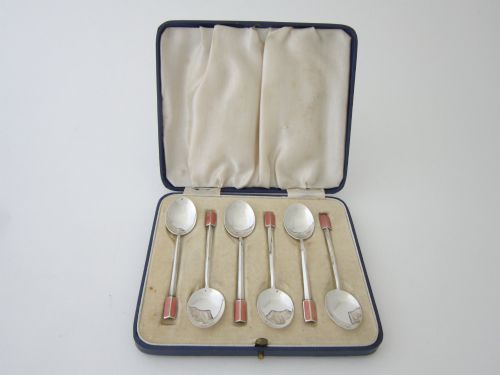
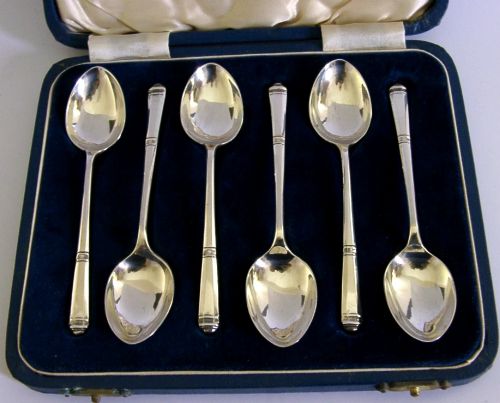
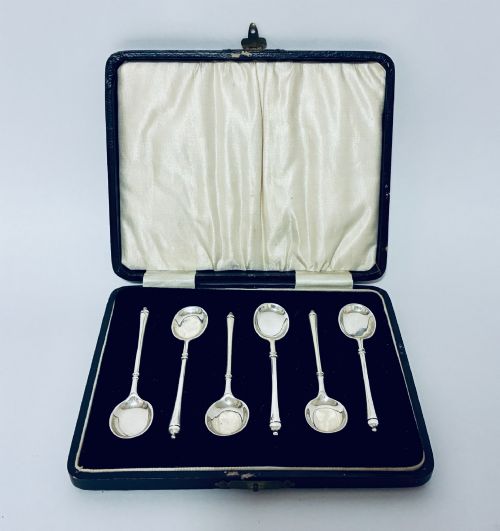
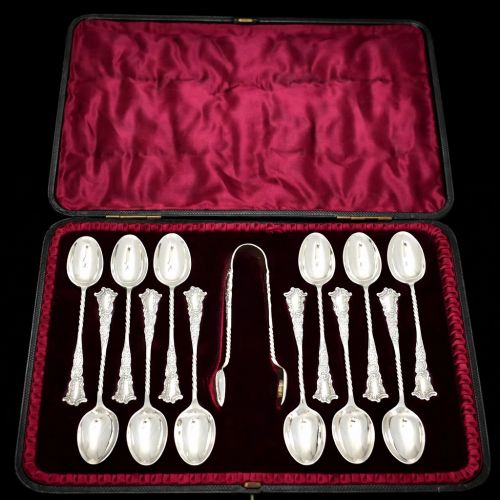
Many examples arrive with original fitted boxes lined in silk, satin, or velvet, often retaining leatherette outer shells. Sets frequently include six spoons, occasionally accompanied by matching sugar tongs or coffee cans and saucers.
How they were made
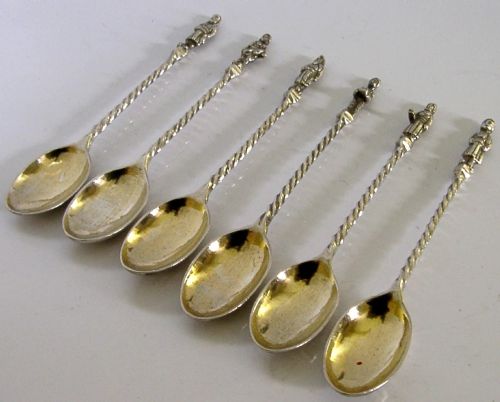
Makers shaped these spoons predominantly from sterling silver and silver gilt, utilising traditional silversmithing techniques such as casting, hammering, and hallmarking. Some examples incorporate precious metals applied over base structures.
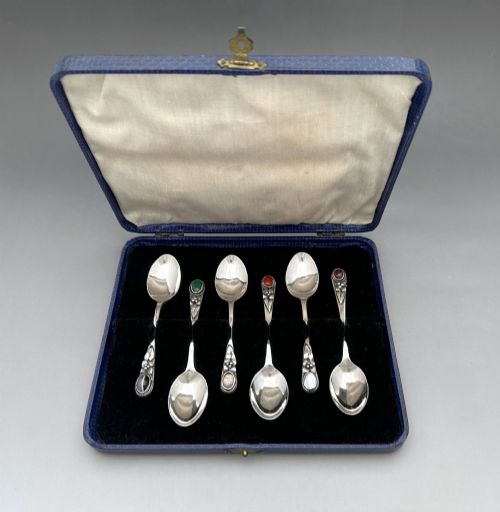
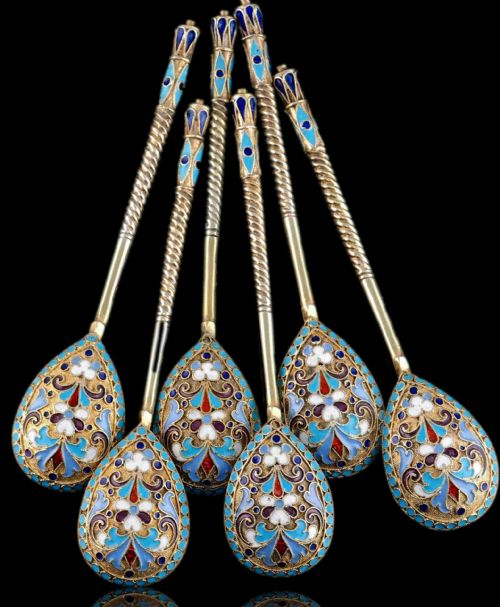
Colour enters the designs through vitreous enamel work, cloisonné, and inset semi-precious stones. Certain twentieth-century pieces integrate Bakelite elements into handles or decorative terminals.
Design styles represented include Victorian, Edwardian, Art Nouveau, Art Arts and Crafts, Art Deco, and Ottoman.
What varies in quality
Quality rests in the crispness of the silversmith's work, the weight of the silver, and the preservation of any enamel or gilding. Maker attribution also shapes distinction, with pieces carrying marks from notable firms holding particular interest.
The condition of fitted cases influences the overall appeal. Sets retaining their original velvet or satin linings and sound leatherette exteriors show greater completeness than loose spoons.
Georg Jensen·Dmitrii Nikolaevich Nikolaev·David Andersen·Liberty and Co·Robert Stebbings·Cooper Brothers and Sons·Walker and Hall·Evald Nielsen·D and A
The Antique Coffee Spoons Glossary
- Demitasse
- A small cup used for serving Turkish coffee or espresso. Antique coffee spoons are specifically proportioned for these miniature vessels.
- Cloisonné
- An ancient technique for decorating metalwork objects with coloured glass paste placed within compartments defined by wire. It appears frequently on twentieth-century enamel spoons.
- Silver-gilt
- Silver that has been coated with a thin layer of gold on its surface. This treatment creates a rich, warm tone seen on various antique flatware sets.
- Hallmark
- An official stamp applied by an assay office to indicate the purity of a precious metal, the maker, and the year of manufacture. These marks allow precise dating of British silver.
- Bakelite
- An early plastic material utilised for handles and decorative accents on mid-century tableware and bridge sets.
Antique Coffee Spoons: Frequently Asked Questions
How are antique coffee spoons used today?
These small spoons function well for demitasse coffee, espresso, and serving condiments like sugar or jam. Their compact size also makes them suitable for tasting portions.
Many collectors prefer to keep cased sets intact for display rather than using them for daily dining. They fit easily into modern table settings while adding historical detail.
Are these spoons made of solid silver?
Most pieces listed are solid sterling silver or silver gilt, though descriptions occasionally note silver-mounted elements. Hallmarks stamped on the stems verify the metal standard.
Some variants incorporate enamel, semi-precious stones, or Bakelite on the handles while retaining silver bowls and stems.
Why do many antique coffee spoons come in boxes?
Fitted presentation boxes protect delicate items, particularly those featuring enamel work or gilt finishes. Makers retailed sets in silk and velvet-lined cases for gifting.
Finding a set in its original leatherette or fabric-covered box preserves the complete historical object as it was sold decades ago.
How do I identify the date of a silver spoon?
British pieces carry assay office marks and date letters that pinpoint the exact year of manufacture. Stylistic markers such as geometric enamel patterns or flowing organic lines also point to Art Deco or Art Nouveau periods.
Archival records and maker marks help establish whether a set dates to the Victorian era or later decades like the 1930s.