


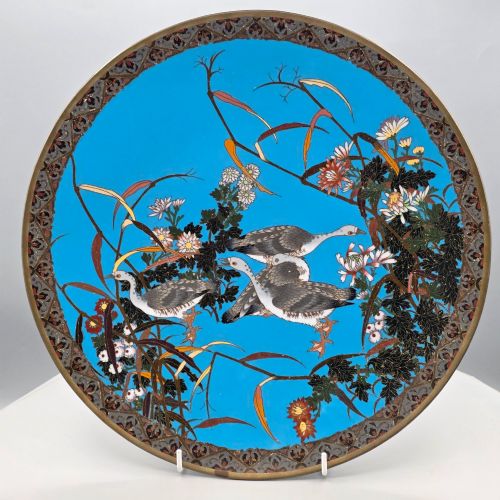




Antique Cloisonne Wall Charger
An antique cloisonne wall charger brings intricate metalwork and vibrant enamels into a room, offering a focal point shaped by nineteenth-century craftsmanship.
Antique Cloisonne Wall Charger
An antique cloisonne wall charger is a decorative dish designed for display, featuring complex motifs created with metal wires and coloured glass enamels. The selection available spans the Edo and Meiji periods alongside the Qing Dynasty, bringing diverse regional aesthetics together on large plates and plaques.
Most examples originate from Japanese workshops dating between the eighteen-sixties and nineteen-hundreds, showcasing naturalistic subjects such as dragons, birds, koi, and flora. These large presentation pieces often incorporate hanging fixtures or substantial weight designed for prominent interior placement.
Materials and construction methods
Artisans formed the body of each charger from hammered copper, bronze, brass, or occasionally porcelain in the Totai Shippo technique. Thin metal wires of brass or copper were soldered onto the base to create raised partitions, known as cloisons, which mapped out the intricate designs.
The resulting cells were filled with glass paste enamels and fired in kilns multiple times before the surface was ground flat and polished to a smooth finish. This labour-intensive process required precise temperature control to fuse the vitreous materials securely to the metal armature.
Antique Cloisonne Wall Charger Retail Price Guide 2026
Typical asking prices for cloisonne wall charger among the pieces listed under this phrase on Sellingantiques today, from the lower quarter to the upper quarter. They describe what is for sale here now, not the wider market.
Several chargers feature startled frogs alongside cascading chrysanthemums, capturing a moment of unexpected wildlife drama in wire and glass.
Factors influencing quality and distinction
Quality rests in the fineness of the wirework and the density of the cellular patterns, where thinner wires and tighter compartments demand greater technical mastery. The clarity of the enamel colours and the absence of pitting or distortion across the wide surface also separate standard production from masterwork output.
Artistic composition plays a role, with dynamic subjects like leaping koi, dragons, or phoenixes rendered with anatomical precision rather than rigid symmetry. Signed pieces and those utilising unusual variations such as tree bark effects or cinnabar lacquer integration indicate higher workshop status.
The Antique Cloisonne Wall Charger Glossary
- Cloisonne
- A decorative metalwork technique where fine wires form small compartments that hold coloured enamel paste.
- Totai Shippo
- A method of applying cloisonne enamel directly onto a porcelain body rather than traditional metal bases.
- Ho-o
- A mythical bird or phoenix frequently depicted in East Asian decorative arts as a symbol of grace.
- Mon
- A traditional Japanese heraldic emblem or badge used to signify family lineage or clan affiliation.
- Charger
- A large ornamental plate or platter traditionally produced for display rather than dining use.
Antique Cloisonne Wall Charger: Frequently Asked Questions
How do I hang a heavy charger safely?
Displaying these substantial wall plates requires specialised hardware, such as spring-loaded brass wall hangers designed to distribute weight evenly around the rim without causing stress fractures to the enamel.
Ensure the fixing is anchored directly into wall studs or uses heavy-duty wall plugs capable of supporting items weighing several kilograms.
What periods do these chargers come from?
The pieces available primarily originate from the late nineteenth century, spanning the Edo and Meiji periods in Japan, alongside occasional Qing Dynasty examples.
Production techniques evolved during this timeframe, shifting from bold dragon motifs of the eighteen-sixties towards finer pictorial landscapes by nineteen hundred.
How should I clean my enamel charger?
Dust the surface gently using a soft, dry microfibre cloth to remove particulate matter without abrading the polished metal wires and vitreous enamel cells.
Avoid liquid cleaners, chemical solvents, or immersion in water, as moisture can infiltrate microscopic gaps in the solder and damage the metal base.
What motifs appear on these pieces?
Common subjects include mythical creatures like dragons and ho-o birds, alongside naturalistic depictions of geese, owls, koi fish, chrysanthemums, and Mount Fuji.
Many designs incorporate auspicious symbols or family mons, reflecting traditional Eastern symbolism applied during the Meiji manufacturing boom.