





Antique Clock with Handle
An antique clock with handle is a portable timepiece designed for travel or easy relocation, combining mechanical precision with robust portability.
Antique Clock with Handle
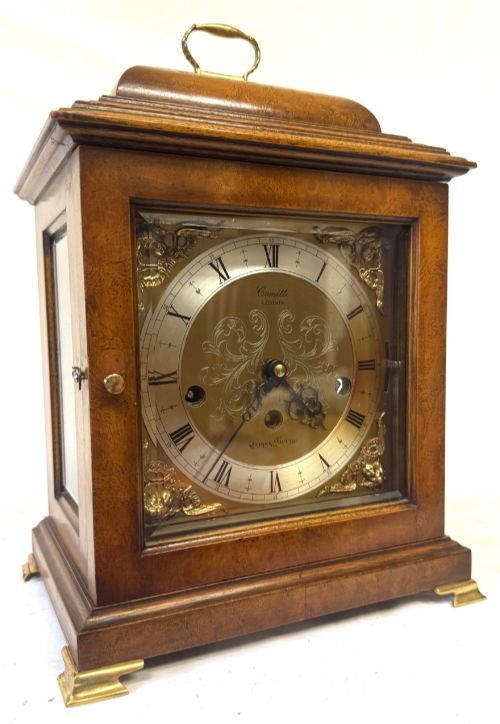
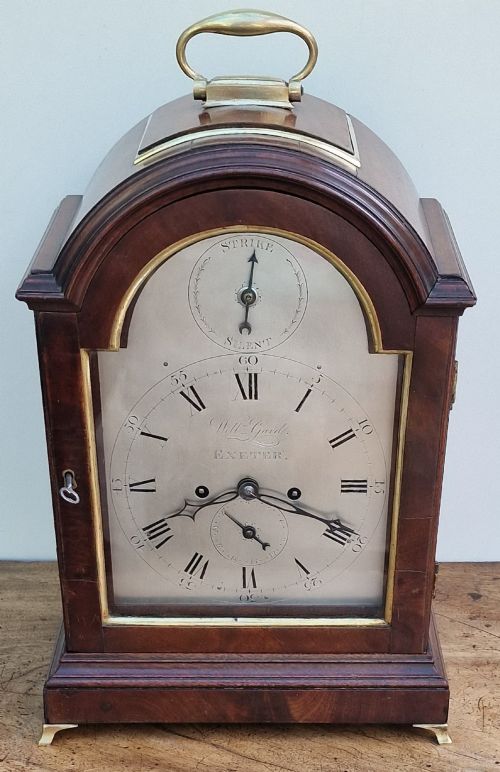
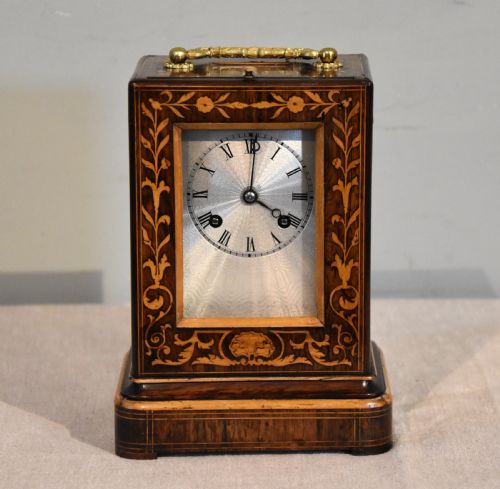
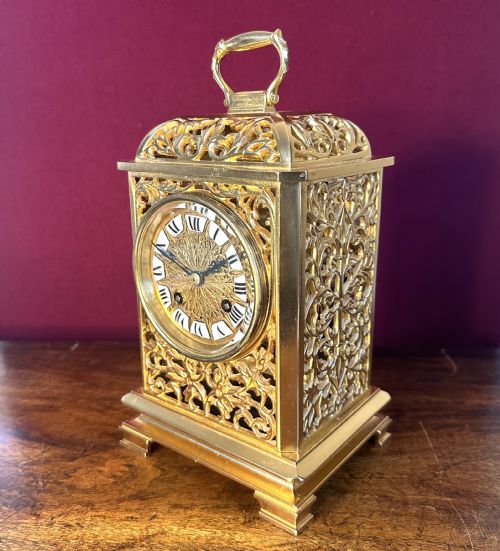
When you search for an antique clock with handle, you encounter portable timepieces spanning the eighteenth, nineteenth, and twentieth centuries. These objects include carriage clocks, bracket clocks, and library clocks equipped with integrated carrying handles.
Carriage clocks dominate the selection, often rendered in brass, glass, and gilt brass during the Victorian and Edwardian eras. Larger wooden bracket clocks and library clocks also feature prominently, utilising mahogany, rosewood, and ebonised cases fitted with distinct top handles.
Origins vary across English and French workshops, encompassing traditional designs alongside specialised pieces like repeat striking mechanisms and miniature variations. The handle itself defines the functional character of each piece, bridging domestic mantel display with genuine portability.
How they were made
Maker construction combines heavy metalwork and fine cabinet-making, using brass, bronze, and gilt brass for carriage frames and glass panels. Wooden variants employ solid mahogany, rosewood, and ebonised timber for bell-top and architectural cases.
Dials feature silvered metal, enamel, and brass mounts, housing intricate mechanical movements such as verge escapements and platform escapements. Integrated handles are securely mounted to the top plates or wooden cases using robust brackets and pins designed to support the weight of the movement.
Antique Clock with Handle Retail Price Guide 2026
Typical asking prices for clock with handle among the pieces listed under this phrase on Sellingantiques today, from the lower quarter to the upper quarter. They describe what is for sale here now, not the wider market.
Listings feature carriage clocks and bracket clocks spanning the eighteenth century through to the Edwardian period in brass, mahogany, and rosewood.
What varies in quality
Quality separates ordinary production pieces from exceptional horology through the refinement of the movement and the crispness of the case casting or cabinet work. Superior examples display sophisticated complications like repeat striking and Westminster chimes paired with fully signed dial plates.
The integrity of the materials dictates overall standard, where heavy fire-gilded brass frames, unblemished enamel dials, and well-figured mahogany or rosewood cases distinguish the upper tier. Original components, including matching escape mechanisms and uncompromised handles, elevate the stature of a piece significantly.
Pickford of London·Paul Garnier·James Smith London·Robert Higgs London·John Ellicott·Joseph Lum of London
The Antique Clock with Handle Glossary
- Carriage clock
- A small, spring-driven timepiece originally designed for travelling, typically featuring a brass and glass case with a handle on top.
- Bracket clock
- A portable table clock, traditionally housed in a wooden case with a carrying handle, designed to sit on a bracket or table.
- Platform escapement
- A self-contained escapement unit mounted on a small platform, common in nineteenth-century French carriage clocks.
- Verge escapement
- An early mechanical escapement regulating the speed of a clock by means of a crown wheel and pallet verge.
- Fusee
- A conical pulley used in older clocks to maintain even force on the gear train as the mainspring unwinds.
Antique Clock with Handle: Frequently Asked Questions
Why did these clocks need handles?
Carriage and library clocks were built for travel, allowing owners to transport accurate timekeeping between rooms or across long journeys.
The handle provides a secure grip for lifting heavy brass and wooden cases without damaging delicate glass panels or internal mechanisms.
How do I wind an antique carriage clock?
Most carriage and bracket clocks use a dedicated winding key inserted into arbors located on the backplate or underneath the movement.
Care must be taken not to over-wind the mainspring, stopping immediately when resistance is felt to preserve the antique mechanism.
What is the difference between a carriage clock and a bracket clock?
Carriage clocks generally feature glass and brass or gilt-metal construction designed in France and England during the nineteenth century.
Bracket clocks typically utilise wooden cases made of mahogany or rosewood, originating earlier in the eighteenth century with distinct architectural proportions.
Are these clocks suitable for daily use?
Many mechanical clocks from the eighteenth and nineteenth centuries remain fully functional and can keep reliable time with proper professional servicing.
Regular maintenance ensures that delicate escapements and gear trains suffer minimal wear during daily operation.