
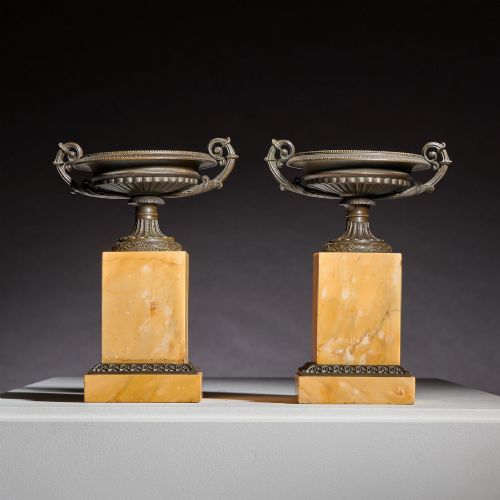
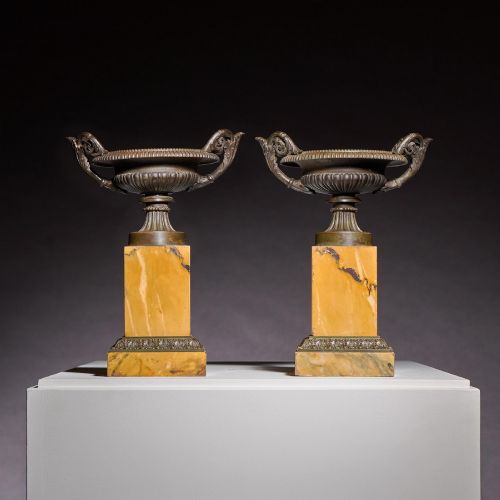
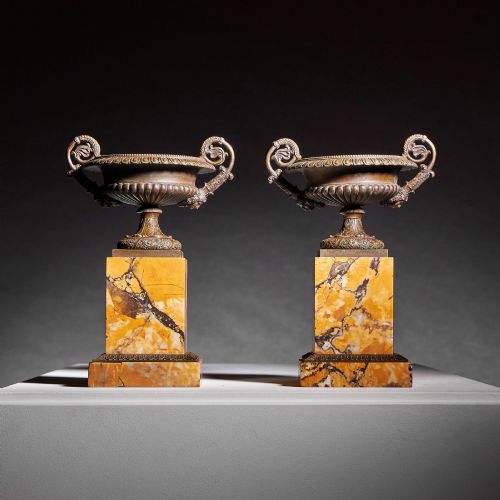
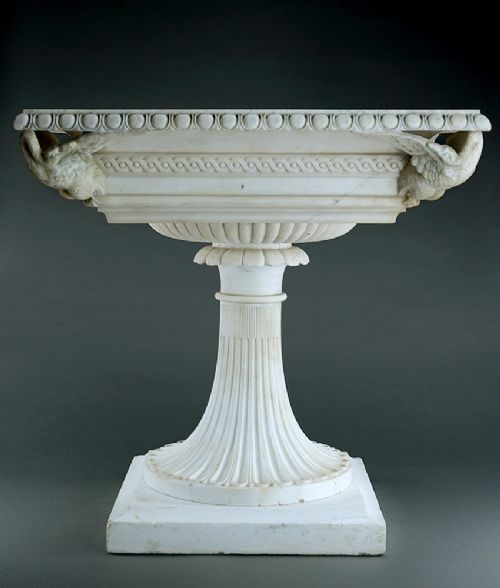



Antique Classical Tazza
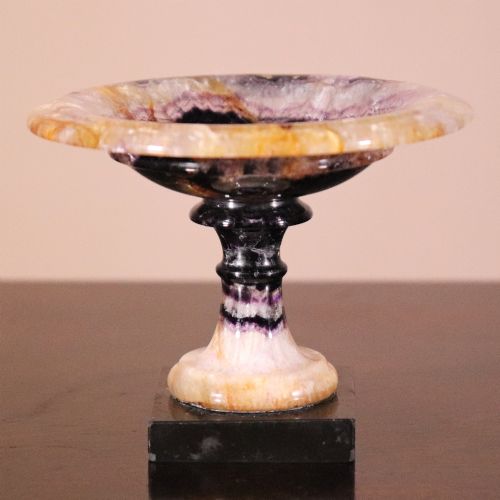
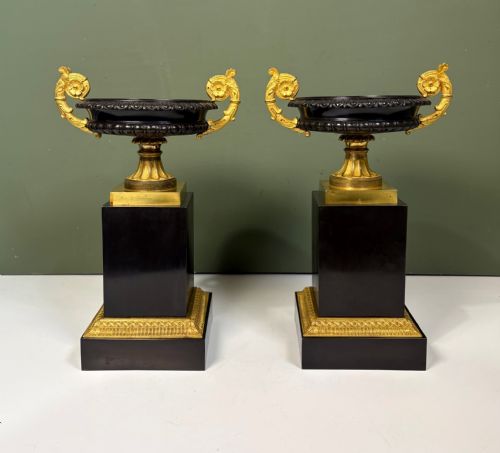
An antique classical tazza brings the architectural gravity of antiquity to a tabletop through raised stone or cast metal.

Antique Classical Tazza
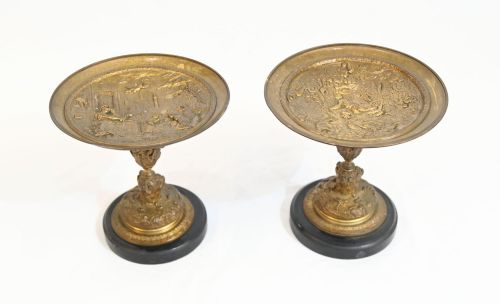
These pedestal vessels draw on ancient forms, appearing frequently as decorative bowls, centrepieces, and tazza urns across this selection. Makers fashioned them during the nineteenth century, alongside Regency, Victorian, and earlier eighteenth-century examples, often as Grand Tour souvenirs of Italian origin.
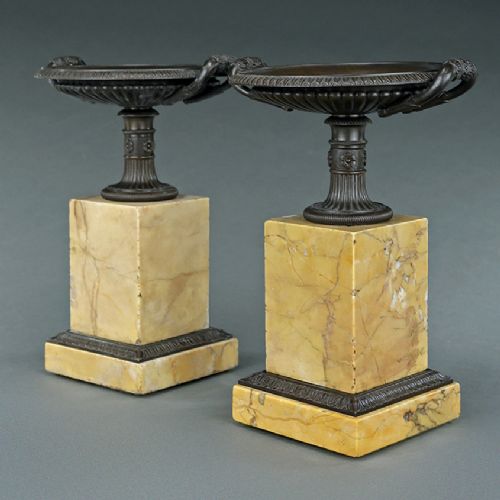
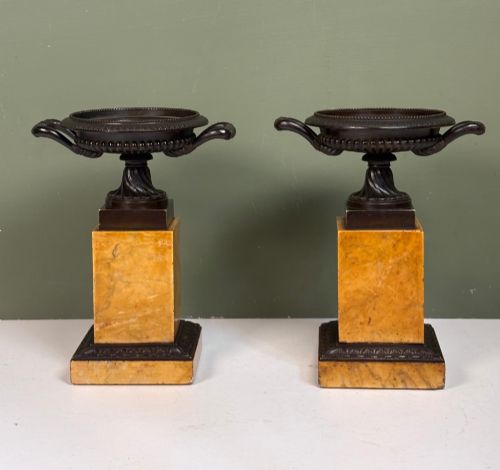
Buyers encounter balanced pairs and substantial single pieces shaped from heavy materials like marble, bronze, and ormolu. The designs lean heavily on neoclassical, French Empire, and Renaissance Revival vocabularies, translating ancient architectural motifs into domestic ornaments.
Distinctions in craftsmanship
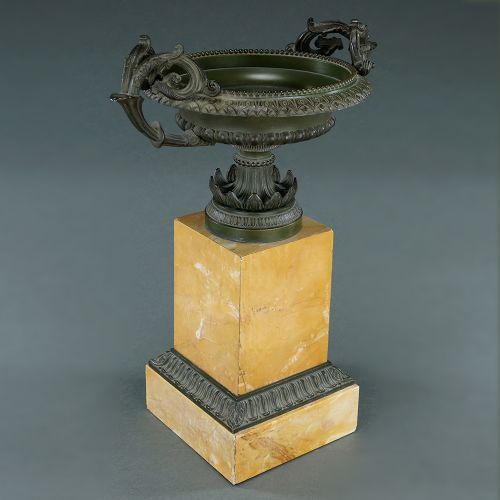
Quality rests on the crispness of the bronze chasing and the select figuring of the marble or mineral used for the basin. Finer examples display precise finishing on hidden edges and harmonious proportions between the shallow bowl and the supporting foot.
Simpler cast iron or brass pieces rely entirely on basic silhouette, whereas high-grade Grand Tour works integrate multiple contrasting materials, such as bronze handles fitted to striated Sienna marble bases.
Materials span cast iron, bronze, walnut, and multiple marble varieties including Sienna and Antico Rosso.
Boschetti·W M F·Sevres
The Antique Classical Tazza Glossary
- Tazza
- A shallow bowl mounted on a stem and foot, used historically for display or serving. These decorative examples translate classical drinking vessels into static interior ornaments.
- Grand Tour
- A cultural journey undertaken by wealthy young Europeans in the eighteenth and nineteenth centuries. Travellers collected bronze and marble souvenirs modelled after classical antiquities.
- Ormolu
- Gilt bronze produced by applying a finely ground mercury and gold amalgam to a bronze base. This technique creates a rich golden surface that resists tarnish.
- Sienna Marble
- A striking yellow and purple-veined decorative marble quarried in Italy. It was prized by makers of neoclassical and Grand Tour ornaments for its dramatic colouration.
Antique Classical Tazza: Frequently Asked Questions
What is an antique classical tazza used for?
These elevated vessels serve entirely decorative functions as centrepieces on tables, consoles, and mantelpieces. Their shallow form showcases the grain of the stone or the detail of the metalwork without practical dining applications.
Historically, they evolved from ancient drinking cups into prestige display objects during the Renaissance and later nineteenth-century revivals. Placing one on a surface introduces a focal point rooted in classical architectural proportions.
How do I identify a Grand Tour tazza?
Grand Tour pieces typically combine patinated cast bronze with Italian marbles like Sienna or rouge griotte. They often replicate specific classical archaeological discoveries encountered by travellers in Rome or Pompeii during the nineteenth century.
Examine the underside and joints for period construction methods, such as hand-cut threaded screws or old patination on the bronze. The presence of mineral inlays like malachite or Blue John also points directly toward high-status souvenir production.
How do I clean marble and bronze tazzas?
Dust marble and bronze surfaces gently with a soft, dry cloth to prevent accumulation in carved recesses. Avoid water, modern detergents, or chemical polishes, which strip historical patina and stain porous stone.
Bronze benefits from an occasional very light application of microcrystalline wax if the metal appears dry, while marble requires simple dry wiping. Protecting the piece from direct sunlight and moisture preserves the original polish and mineral colours.