


Antique Chuval Wall Hanging
An antique chuval wall hanging brings the geometric tribal artistry of Central Asian nomadic weaving directly into a modern interior.
Antique Chuval Wall Hanging
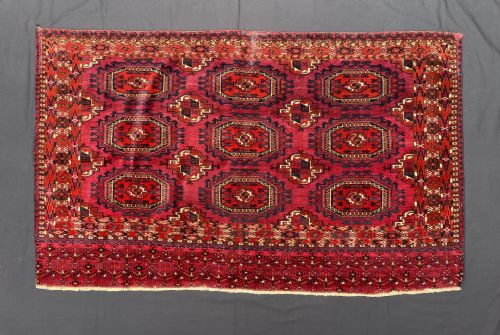
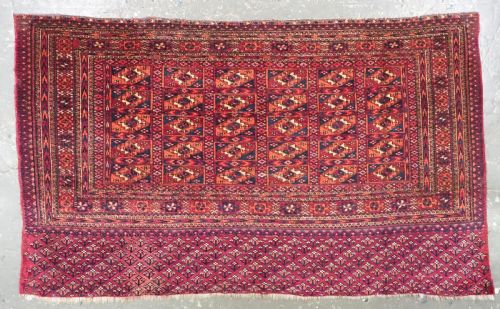
These textiles were historically utilised as household storage sacks within nomadic tents before being adapted for modern display as decorative wall hangings.
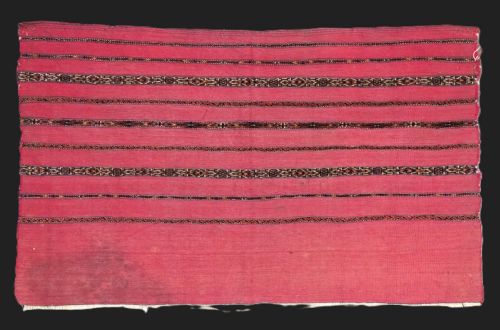
The selections available range from complete bag faces with surviving plain weave backs to fragments and panel designs originating from the mid-nineteenth century to the early twentieth century.
Materials and construction methods
Weavers constructed these pieces utilising hand-spun wool and cotton foundation threads, often incorporating silk highlights to define specific motifs.
Natural dyes provide the characteristic deep crimson, madder, and ivory colour palettes observed across the tribal groupings.
The weaving technique relies on dense knotting to create durable pile surfaces, frequently finished with plain weave backs and hanging loops.
Listings feature Turkmen tribal weaving traditions spanning from the eighteenth century through the early twentieth century.
Factors determining quality
The fineness of the knotting and the tightness of the weave separate standard bag faces from exceptional examples produced by master weavers.
Clarity and complexity of design elements, such as gul arrangements and turreted Salor motifs, dictate the visual impact of the textile.
Condition plays a significant role, with complete pieces retaining original backs, borders, and hanging loops commanding greater attention from collectors.
The Antique Chuval Wall Hanging Glossary
- Chuval
- A large tent storage bag produced by nomadic Turkmen tribes for household organisation and bedding storage. These pieces were traditionally woven on horizontal looms.
- Gul
- The primary repeating medallion motif found across Turkmen tribal rugs and bag faces. Different tribal groups developed distinct gul patterns to signal lineage.
- Elem
- The decorated lower panel situated beneath the main field of a chuval or rug. This section often displays floral or tree designs.
- Torba
- A smaller nomadic storage bag utilised inside the tent for holding smaller personal items. They share similar construction methods with larger chuvals.
- Kizil
- A designation referring to red-ground Turkmen weavings dominated by rich crimson and madder tones. These pieces showcase deep saturated natural dyes.
Antique Chuval Wall Hanging: Frequently Asked Questions
What is a chuval used for?
Historically, nomadic families utilised chuvals as large storage sacks inside their tents to hold wool, clothing, and domestic belongings.
Today, collectors mount these flat-woven and piled bag faces on walls to appreciate their tribal patterns and textile history.
How do I hang an antique textile safely?
Mounting a textile requires distributing the weight evenly across the entire upper edge to prevent stress on the antique wool and cotton foundations.
Conservation-grade velcro systems or custom fabric sleeves sewn to the reverse provide secure support for wall display.
How can I tell different tribal designs apart?
Tribal attribution relies on identifying specific structural patterns, such as the repeating gul medallions associated with Tekke, Yomut, or Salor weavers.
Border configurations and secondary ornaments further help distinguish pieces originating from the Akhal Oasis or the Amu Darya region.
Are these pieces complete bags or fragments?
Market examples include both complete bag faces retaining their original plain weave backs and individual front panels separated from the original structure.
Some pieces also survive as partial fragments or pairs, reflecting their long history of domestic use before entering collections.