


Antique Chuval Carpet
An antique chuval carpet is a tribal storage bag or face from Central Asia, collected for its rich wool texture and geometric design.
Antique Chuval Carpet
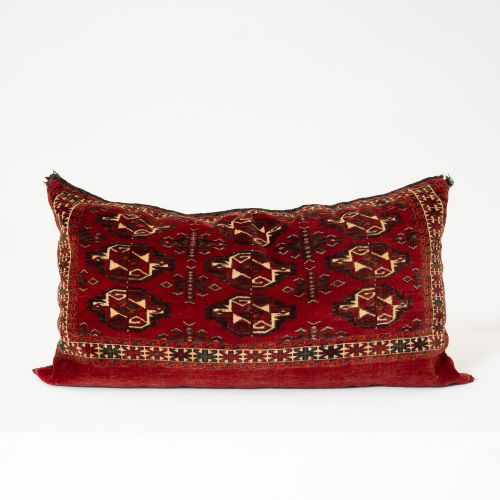
An antique chuval carpet functions primarily as a large tent storage bag or bagface made by nomadic and tribal groups across Turkmenistan and Central Asia. These items originate from various regional tribes including the Tekke, Ersari, Yomut, and Saryk. Buyers encounter these pieces largely as wall art, cushions, or preserved textile fragments dating from the mid-nineteenth century to the early twentieth century.
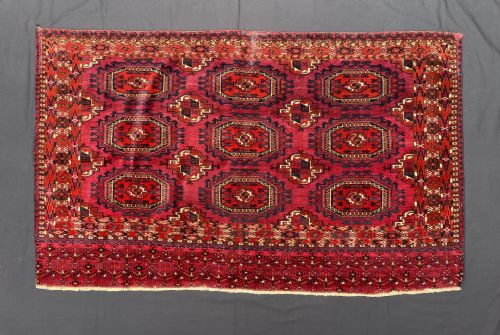
The format typically involves repeating major medallions known as guls, displayed in rows across the field. Chuval faces represent a specific category of Turkmen weaving intended for household storage rather than floor use. Surviving examples often retain their original woolen backs, while others appear as cut faces designed for display.
Tribal weavers produced these textiles to organise belongings within traditional dwellings, using distinct tribal patterns to signify lineage and origin. The pieces on this page span several decades of nomadic weaving tradition, showing regional variations in medallion count and border composition.
How they were made
Weavers utilised hand-spun wool for the pile and foundation, often combining cotton for structural contrast and white highlights. Natural dyes provided the deep red, crimson, and madder tones characteristic of these tribal textiles.
The construction relies on dense knotting techniques executed on upright looms, resulting in durable textiles designed for nomadic utility. Certain examples incorporate silk elements or specialised structural weaves to delineate specific design motifs within the field.
Listings feature pieces dated across the nineteenth and early twentieth centuries, spanning from eighteen-fifty to nineteen-twenty.
What varies in quality
The precision of the weave and the complexity of the gul arrangement separate standard examples from finer outputs. Finer knot density allows for sharper definition in intricate tribal motifs and geometric borders.
The condition of the pile, the vibrancy of the natural dyes, and the presence of original backs or complete elem panels influence the character of the piece. Scarcity of specific medallion designs, such as the aina or turreted salor variants, adds distinction to individual textiles.
Tekke Turkmen·Ersari Tribes·Yomut Tribes·Saryk Turkmen
The Antique Chuval Carpet Glossary
- Chuval
- A large tribal storage bag produced by Turkmen nomads for domestic use inside a yurt. These items are frequently found today as individual bagfaces.
- Gul
- A primary medallion or repeating floral-octagon motif used in Turkmen rug design. Different tribes developed distinct gul shapes to identify their group.
- Elem
- The decorated lower panel at the end of a carpet or storage bag. This section often displays secondary tree or shrub motifs.
- Torba
- A smaller utility bag compared to the chuval, traditionally hung on tent walls for smaller possessions. It shares similar weaving techniques and tribal designs.
Antique Chuval Carpet: Frequently Asked Questions
What is a chuval used for?
A chuval served as a large storage sack inside nomadic tents in Central Asia, used for bedding, clothing, or household goods. Families tied these bags against the lattice walls of their dwellings.
Today, collectors appreciate them as decorative wall hangings or specialised textile art due to their intricate wool work and tribal history.
How do I identify a Tekke chuval?
Tekke chuvals typically feature orderly rows of octagonal guls, often accompanied by secondary guls and detailed minor borders. The palette relies heavily on rich madder red and crimson tones.
They generally exhibit a finer knot density and tighter weave than pieces made by other regional tribes.
Are these pieces complete bags?
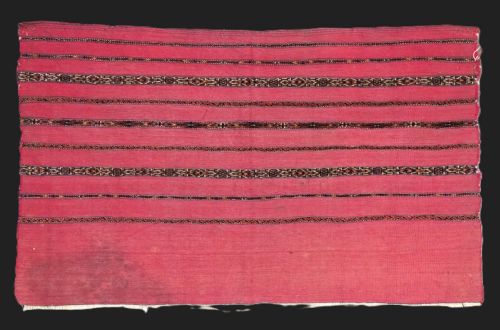
Many surviving examples are bagfaces, meaning the front decorative panel was separated from the plain flat-woven back over time. Some listings, however, include the original woolen back or complete construction.
Both formats are standard for antique nomadic textiles originating from the region.
How should I care for a tribal textile?
Keep the textile out of direct sunlight to protect the natural dyes from fading over time. Gentle vacuuming without a rotating brush helps remove dust from the wool pile.
Mounting the piece properly distributes the weight if displayed on a wall, preserving the structural integrity of the foundation.