




Antique Church Table
An antique church table brings austere architectural lines and honest ecclesiastical timber into a domestic interior.
Antique Church Table
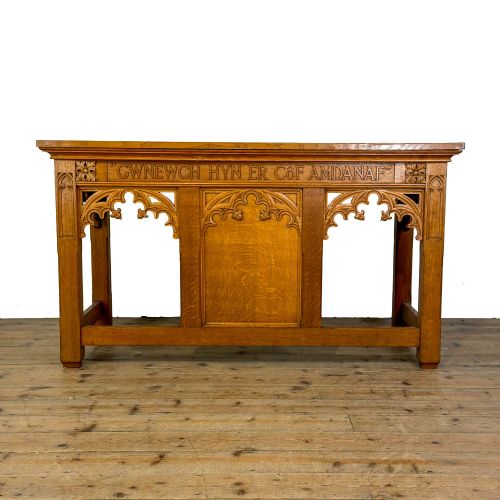
An antique church table encompasses utilitarian chapel furniture, side tables, and sturdy altar tables fashioned from substantial timbers. These pieces emerge predominantly from the Victorian era and the nineteenth century, often reflecting a distinct Gothic Revival aesthetic.
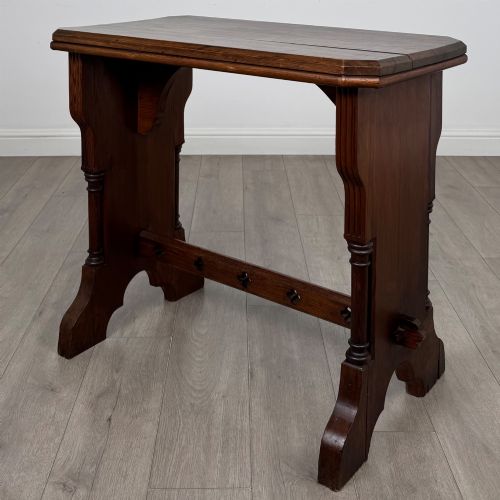
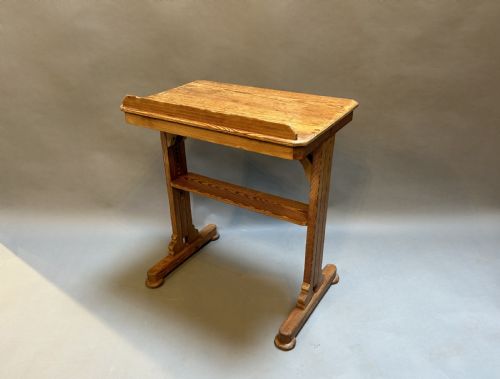
The most common examples encountered on this page are sturdy pitch pine or oak side tables and writing desks derived from ecclesiastical contexts. They frequently exhibit straightforward rectangular proportions, heavy planks, and architectural trestle supports rather than ornate carving.
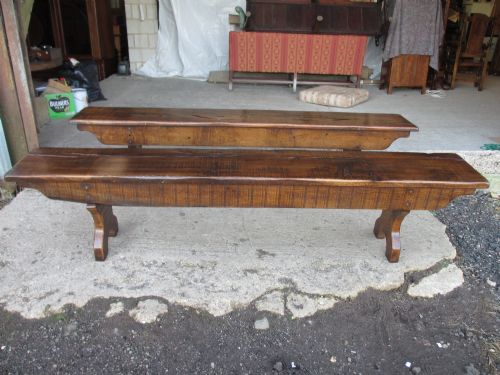
Beyond standard tables, the broader category includes related chapel furnishings such as pews, benches, and prayer desks designed for communal or private devotion. These utilitarian objects share the robust construction and austere profiles characteristic of nineteenth century ecclesiastical joinery.
Materials and construction methods
Joiners relied heavily on native British timbers like oak and pitch pine, selecting boards for durability and straight grain to withstand decades of heavy usage. Pine also appears frequently, particularly in provincial chapel furniture and secondary structural elements.
Construction techniques prioritise structural integrity through pegged mortise and tenon joints and substantial trestle bases. Metal fittings such as brass or iron brackets occasionally reinforce joints, while decorative elements draw directly from Gothic architectural motifs.
Several listings combine divine inspiration with earthly utility, offering benches long enough to seat an entire choir.
Assessing quality and craftsmanship
Quality rests primarily in the selection of timber and the integrity of the joinery rather than surface ornamentation. Superior pieces utilise thick, well-seasoned oak or pitch pine with minimal warping and precise, hand-cut joints.
Proportion and architectural harmony separate standard utility pieces from finer commissions. Tables that retain their original unpainted surfaces and patinated finishes demonstrate greater integrity than those stripped or overly restored.
T Thomason & Co
The Antique Church Table Glossary
- Gothic Revival
- An architectural and decorative style popular during the nineteenth century that revived medieval forms, pointed arches, and heavy timber construction. This aesthetic heavily influences the design of ecclesiastical tables and benches.
- Pitch Pine
- A resinous softwood valued for its durability and strong grain pattern, frequently utilised for nineteenth century church furniture and side tables. It takes a deep, warm patina over time.
- Altar Table
- A heavy, often long table positioned at the focal point of a chapel or church chancel for religious ceremonies. In domestic settings, these function as serving or console tables due to their narrow proportions.
- Trestle
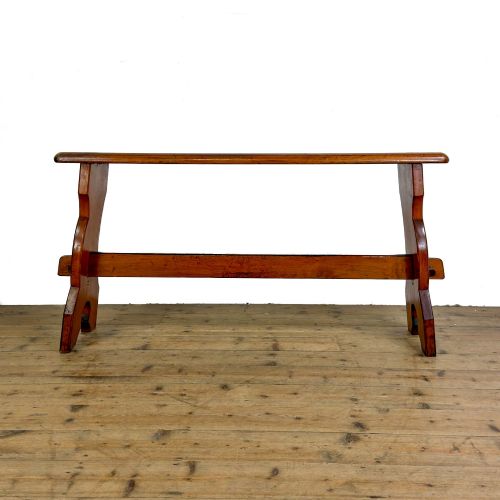
- A support structure consisting of a horizontal beam balanced on two paired legs, commonly seen on refectory and chapel tables. This design provides maximum legroom and stability.
- Prie-Dieu
- A small devotional desk designed for kneeling while praying, featuring a sloping top for books and a padded ledge. These pieces occasionally find new life as compact side tables.
Antique Church Table: Frequently Asked Questions
Were these tables used in actual churches?
The majority originate from nineteenth-century places of worship, Sunday schools, and rectories where durable surfaces were required for communal gatherings and administrative duties. Their heavy construction ensured they could endure decades of heavy daily use.
Some examples reflect private devotional use in domestic settings, particularly smaller writing desks and prayer kneelers.
How do I care for a pitch pine table?
Maintain the wood by applying natural beeswax periodically to nourish the dry grain and protect against moisture. Avoid placing timber furniture in direct sunlight or near heat sources to prevent splitting.
Dust regularly with a soft cloth rather than using harsh commercial polishes that can build up on historic surfaces.
Can I use an altar table as a desk?
Many ecclesiastical tables feature suitable heights and flat surfaces for modern writing tasks, provided you check the knee clearance underneath. Their deep planks and stable trestle bases offer ample workspace.
Consider pairing the table with a simple wooden bench or chair to maintain the aesthetic harmony of the room.
What is the difference between oak and pitch pine?
Oak is a dense hardwood valued for its strength and complex medullary rays, frequently associated with earlier or high-status Gothic Revival pieces. Pitch pine is a resinous softwood with a distinct, striking grain pattern that darkens gracefully with age.
Both materials were chosen for their structural resilience rather than decorative excess.