


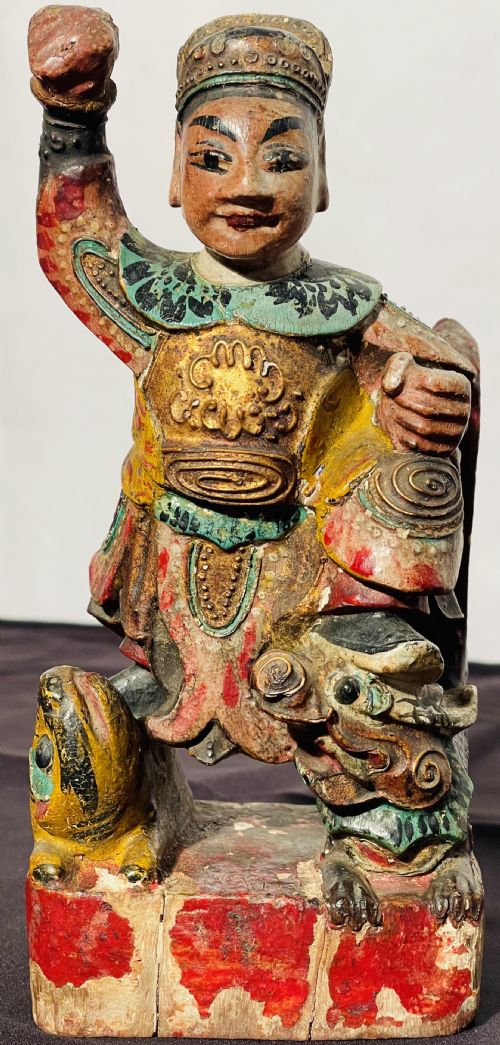
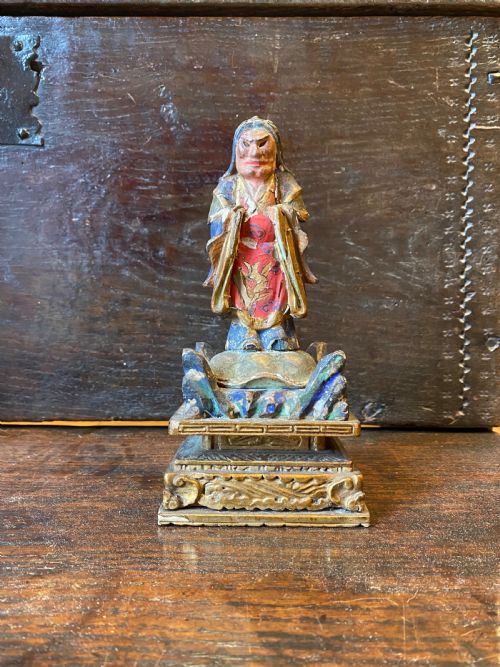
Antique Chinese Deity Figure
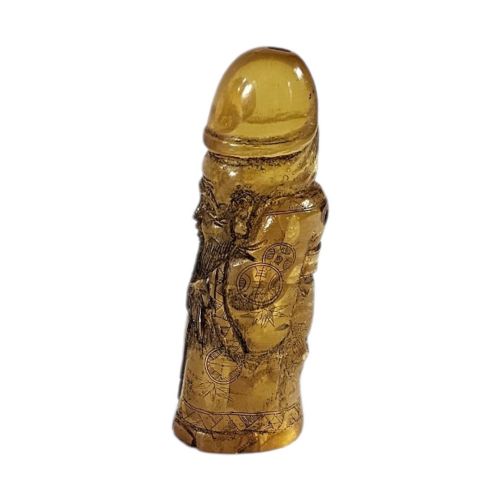
These antique Chinese deity figure pieces are carved and cast representations of revered figures designed to bring spiritual presence and cultural depth into a room.
Antique Chinese Deity Figure
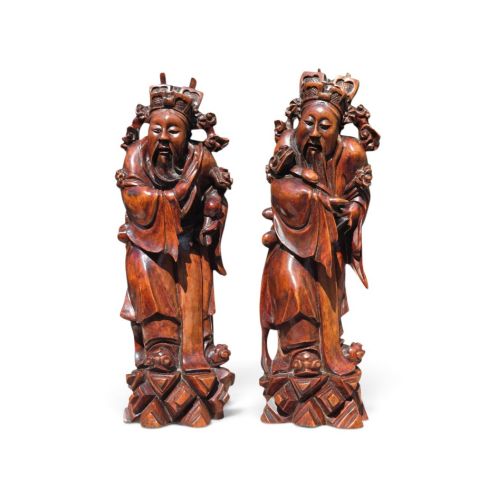
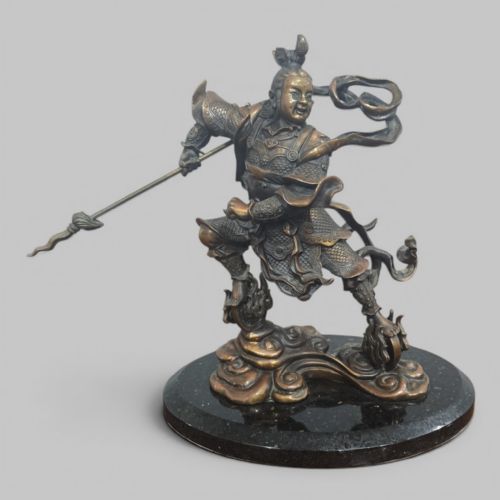
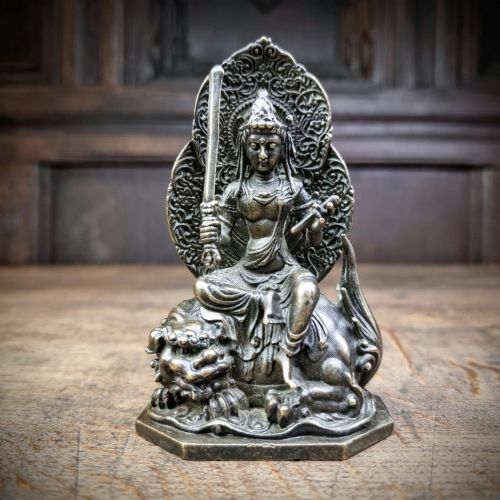
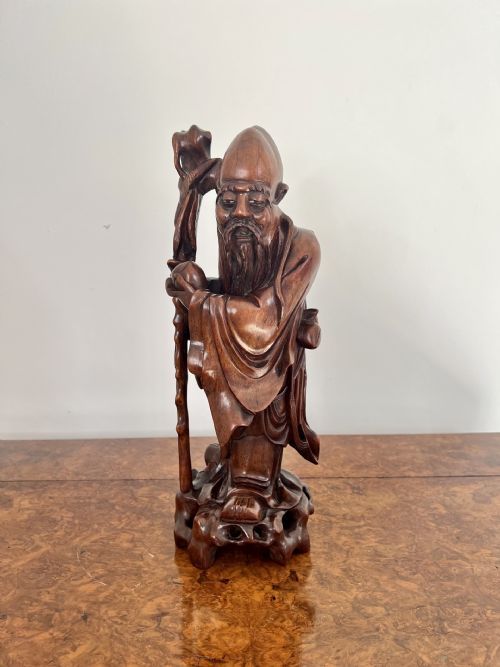
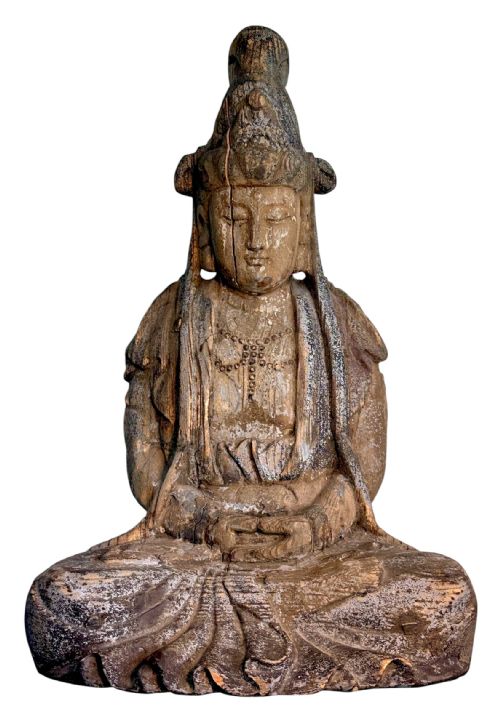
An antique Chinese deity figure encompasses sculpted representations of Buddhist, Daoist, and secular venerated figures created across the nineteenth and early twentieth centuries. These pieces appear in forms ranging from small pendants to monumental temple guardians and matched pairs of immortals. Buyers searching this phrase most frequently encounter wooden and bronze examples dating from the nineteenth century, including depictions of Guanyin, Shoulao, Buddha, and Zhenwu.
The objects take diverse forms, such as root carvings, medicine figure statues, and seated or standing icons reflecting traditional Chinese art and Sino-Tibetan styles. Many originate from the Qing Dynasty or subsequent decades up to the early twentieth century, showing the enduring production of religious and secular sculptural traditions. A buyer will find both simple devotional items and highly decorative scholar pieces designed for interior display.
How they were made
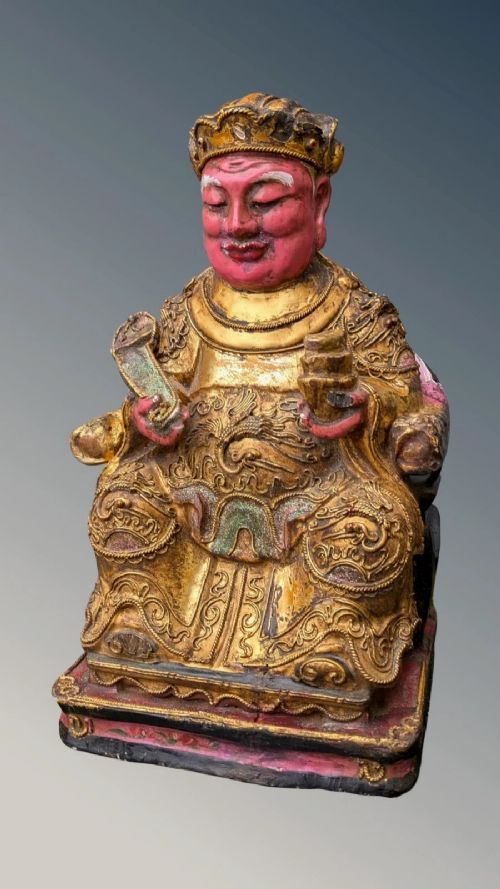
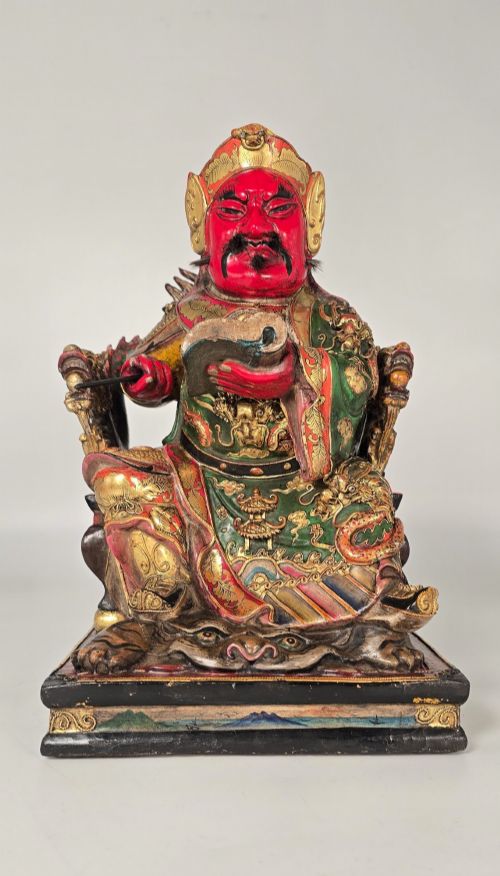
Makers combined structural carving with layered surface treatments, applying gilt and hand-painted pigments over wood or metal. The integration of polychrome finishes and lacquering protected the underlying material while defining the iconography of deities, scholars, and temple guardians. These techniques varied from regional workshops producing small pendants to large temple commissions.
Listings feature items spanning the 18th century through the early 20th century, encompassing Qing Dynasty and Victorian periods.
What varies in quality
Scale and ambition also define the upper tier of works, where monumental proportions, matched pairs, or complex iconography require advanced sculptural skill. The distinction lies in the harmony of the proportions and the confidence of the maker's hand, whether working in cast bronze or carved wood.
The Antique Chinese Deity Figure Glossary
- Guanyin
- A revered bodhisattva associated with compassion, frequently depicted holding a fish basket or seated in contemplative posture. This figure appears in both bronze and wood across nineteenth-century listings.
- Shoulao
- The Daoist god of longevity, typically represented as an elderly figure with a high forehead and a staff. Carved wooden examples often emphasise his traditional attributes.
- Zhenwu
- A powerful temple guardian and Daoist deity often portrayed in monumental works with martial armour and authoritative posture. These figures served protective roles in sacred spaces.
- Patina
- The surface sheen and coloration developed through age, handling, and environmental exposure on materials like bronze, hardwood, and bamboo. Collectors value depth of tone in older surfaces.
Antique Chinese Deity Figure: Frequently Asked Questions
What materials are used for these figures?
These sculptures utilise organic materials like wood, hardwood, bamboo, and root, alongside cast bronze and metal alloys. Surfaces are frequently enhanced with gold leaf, gesso, lacquer, and polychrome paint.
Organic wooden forms dominate the selection, ranging from small pendants to monumental temple figures. Bronze provides a durable alternative with distinct metallic patination.
How can I identify the age of a piece?
Dating relies on stylistic markers associated with periods like the Qing Dynasty, Victorian era, and early twentieth century. Material wear, surface oxidation on bronze, and the degradation of polychrome paint offer visual clues to antiquity.
Construction methods and tool marks left by carvers also help establish a chronological context. Comparing pieces to dated nineteenth-century examples provides a baseline for evaluation.
Who are the figures represented in the carvings?
Common subjects include Buddhist and Daoist figures such as Guanyin, Shoulao, Buddha, Avalokiteshvara, and temple guardians like Zhenwu. Wealthy scholars and medicine figures also appear among the traditional representations.
Each figure carries specific iconographic attributes, such as fish baskets for Guanyin or longevity symbols for Shoulao. These identities reflect the religious and cultural traditions of historic China.
How should I care for an antique wooden carving?
Wooden and polychrome sculptures require stable environmental conditions away from direct sunlight and extreme humidity fluctuations. Dusting should be performed gently with a dry, soft brush to protect fragile surface treatments like gold leaf and paint.
Avoid using liquid cleaners or polishes that might alter the historic patina or damage aged lacquer. Maintaining consistent indoor temperatures preserves the integrity of the wood and gesso.
Where were these figures originally displayed?
Many larger sculptures originated in temples, shrines, or domestic ancestral altars where they served devotional or protective functions. Smaller items like pendants and scholar desk pieces were kept for personal use or contemplation.
Monumental temple guardians stood as protective sentinels, while root carvings and hardwood figures decorated scholar's studios. Their original contexts ranged from public sacred spaces to private interiors.