

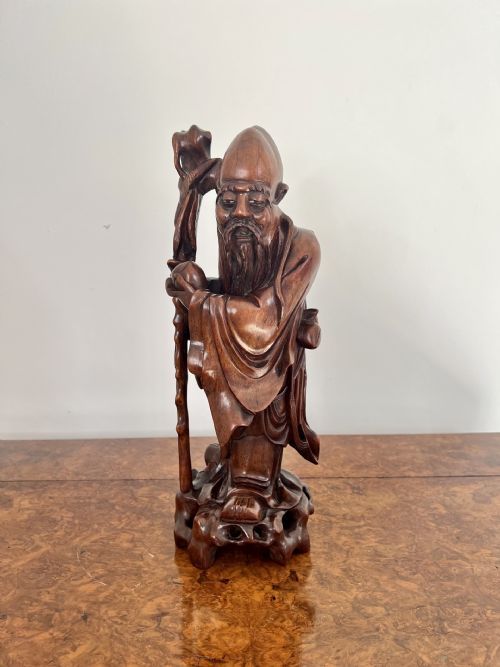


Dark Wood Chinese Sculpture
A dark wood chinese sculpture brings substantial heft and deep grain into a room, shaped into figures and beasts by carvers of the Qing period and later.
Dark Wood Chinese Sculpture
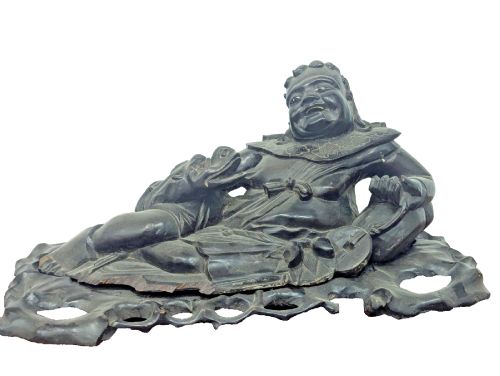
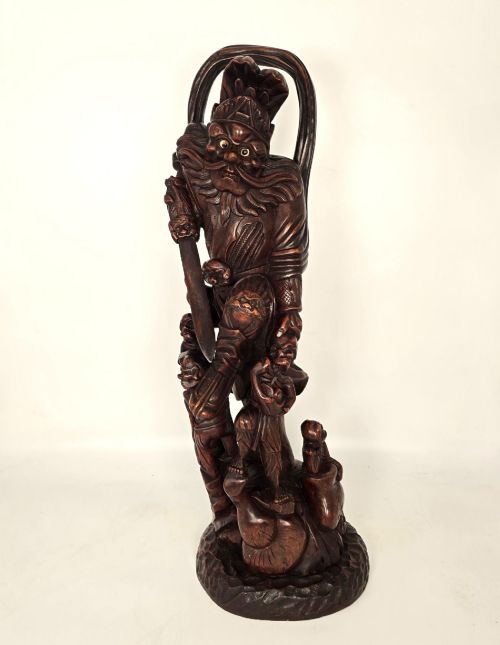
A dark wood chinese sculpture represents figures, deities, and animals carved from dense timbers across the nineteenth and early twentieth centuries. These pieces span figures of Buddha, Daoist immortals, guardians, and animals such as water buffaloes and lions.
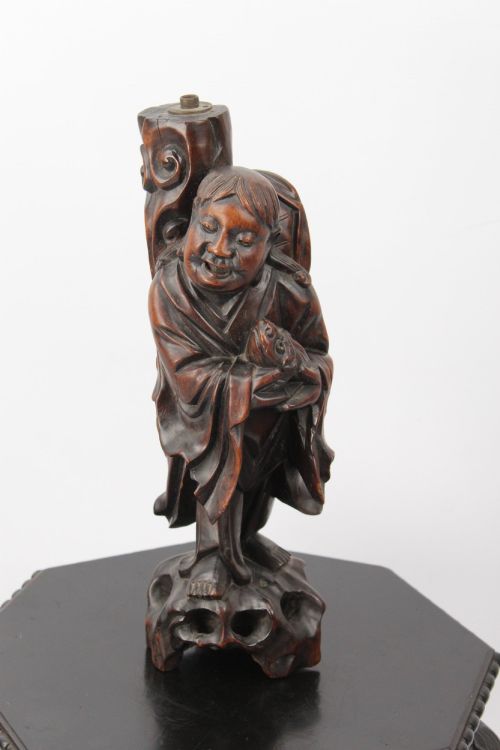
The selections encountered here most frequently date from the nineteenth century and the Qing dynasty, executed in heavy hardwoods and gnarled root wood. Forms range from solitary standing figures to matched pairs of elephants and foo dogs on fitted stands.
Buyers select these carvings for their robust physical presence and the intricate detail rendered in unyielding materials. Each object bears the distinct grain and dark patina developed over decades of handling.
What varies in quality
The standard of a carving depends upon the ambition of the composition and the discipline of the hand behind the chisel. Superior pieces display fluid motion in drapery and precise anatomical structure in human figures and animals.
Natural anomalies in the root wood or grain are integrated intelligently into the design by master carvers, whereas lesser examples rely on standard stock forms with repetitive surface detailing.
Water buffaloes appear frequently in this group, reminding us that an industrious farm animal makes a surprisingly dignified parlour ornament.
The Dark Wood Chinese Sculpture Glossary
- Hardwood
- Dense, slow-growing timber such as zitan or huali used for substantial carvings. These woods resist decay and hold intricate detail without splitting.
- Root Wood
- Gnarled subterranean timber selected for organic, twisting shapes. Carvers followed the natural contours to form figures and mythical beasts.
- Foo Dog
- Stylised guardian lion depicted in pairs outside temples and palaces. They protect sacred spaces and ward off malevolent spirits.
- Qing Dynasty
- The final imperial dynasty of China, spanning from sixteen-forty-four to nineteen-twelve. This era produced the bulk of the carved figures seen in these collections.
Dark Wood Chinese Sculpture: Frequently Asked Questions
How do I clean a dark wood sculpture?
Dust the surface regularly with a soft, dry brush to prevent particulate accumulation in the carved crevices.
Avoid liquid cleaners and wax polishes, which can darken the timber unnaturally or build up within the grain over time.
Are these sculptures solid wood?
The pieces are carved from single blocks of dense hardwood or continuous sections of root wood.
Larger figures may incorporate separately carved bases or attached elements like horns and staffs, but the primary body remains solid timber.
Where were these carvings displayed?
These sculptures occupied scholar tables, altars, and reception halls within traditional Chinese interiors. Pairs of figures often flanked doorways or sat upon bespoke wooden stands.
Today, they function as focal points on sideboards and mantels in contemporary rooms.
How do I tell nineteenth century carvings apart?
Examine the depth of the patina and the crispness of the tool marks left by the carver. Nineteenth-century examples display deep, dry surface sheens developed through generations of contact.
Subject matter and the density of the root wood or hardwood also indicate the prevailing aesthetic of the late Qing period.