



Antique Cherub Lamp
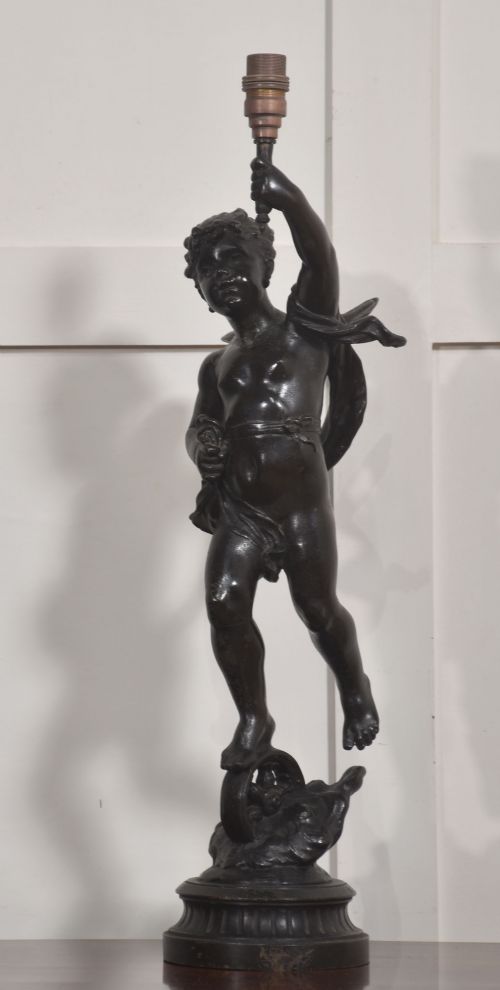
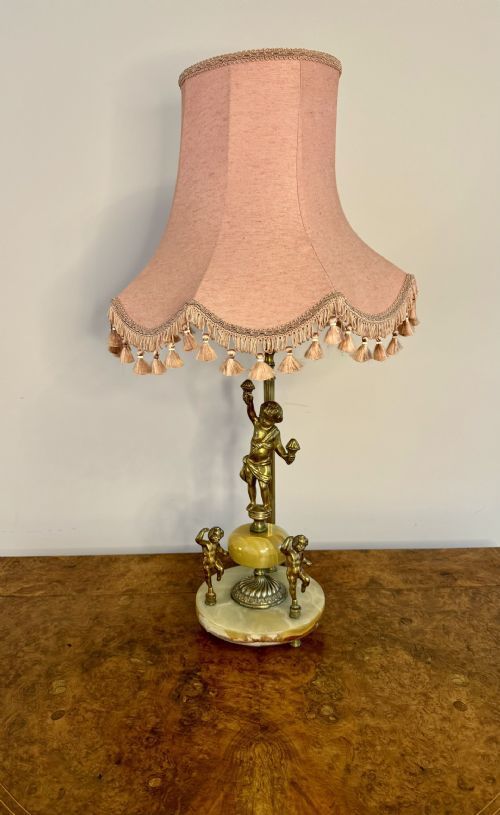
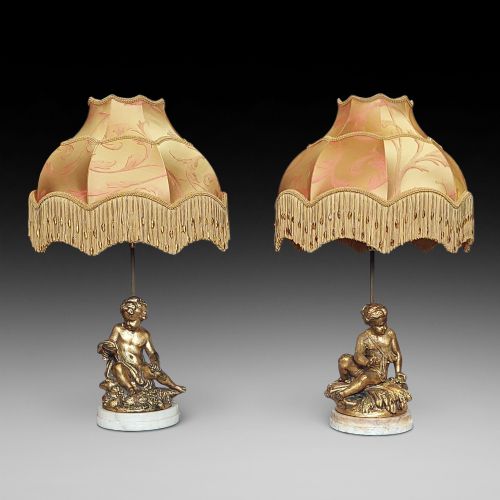
An antique cherub lamp brings sculptural presence and period illumination to a room, combining cast figural bronze, brass or porcelain with functional light.

Antique Cherub Lamp
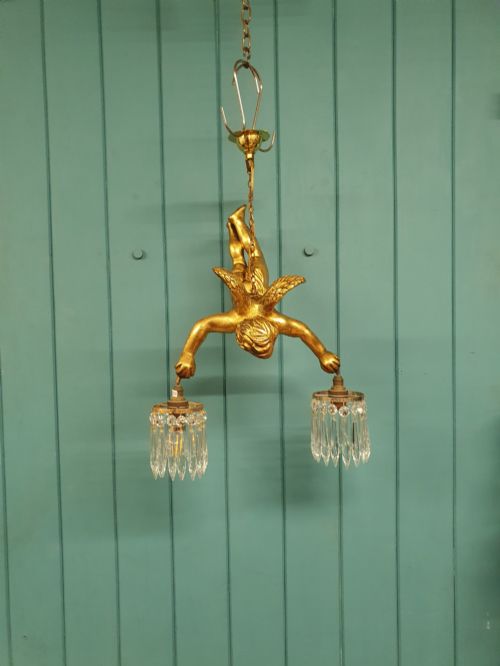
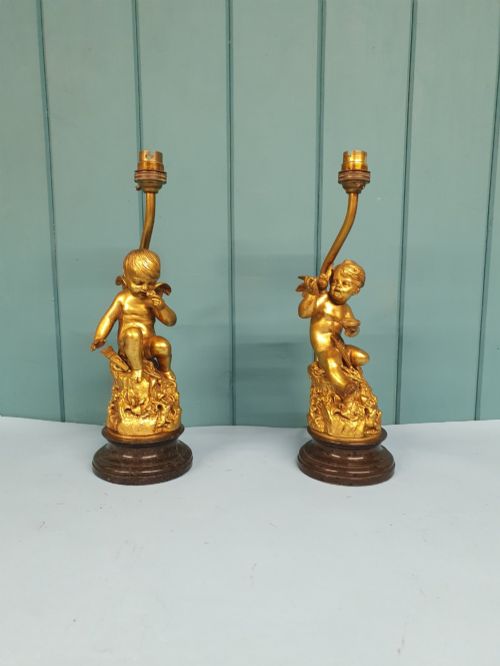
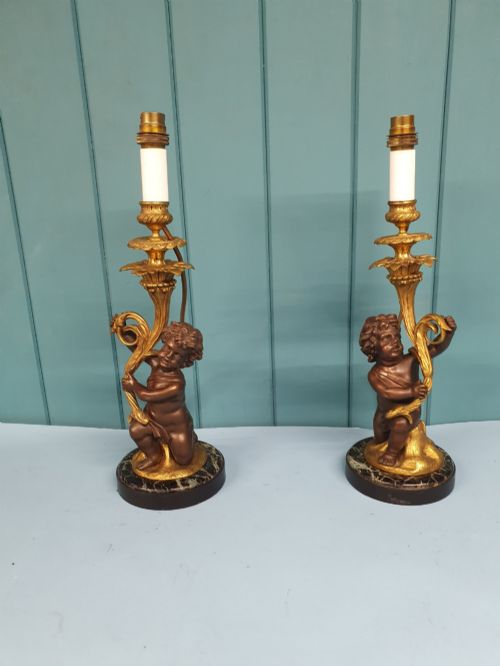
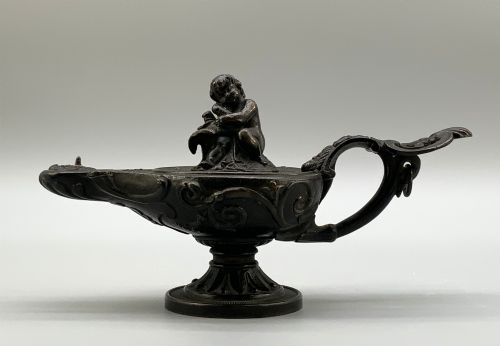
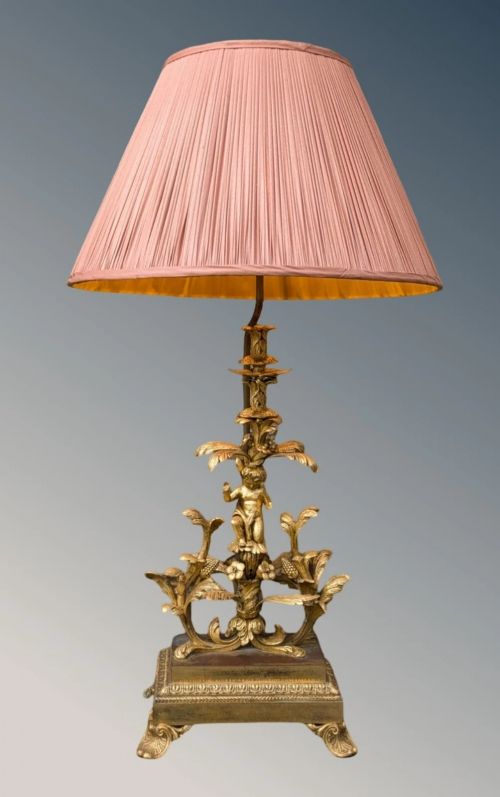
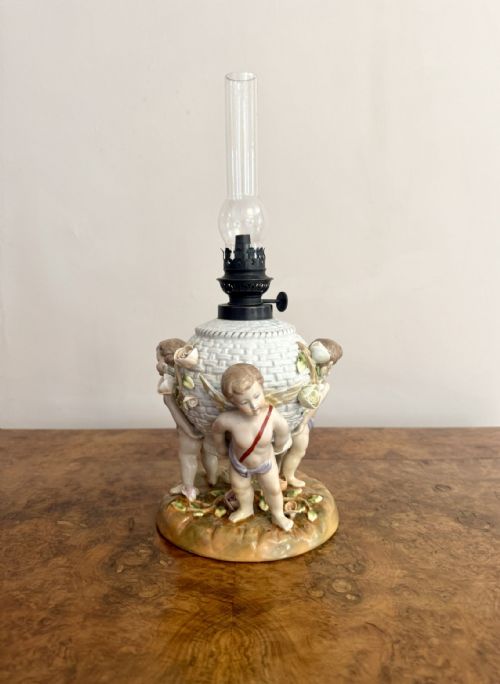
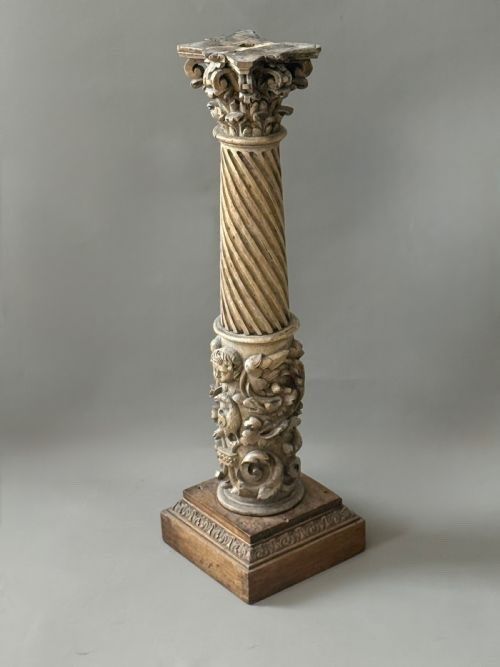
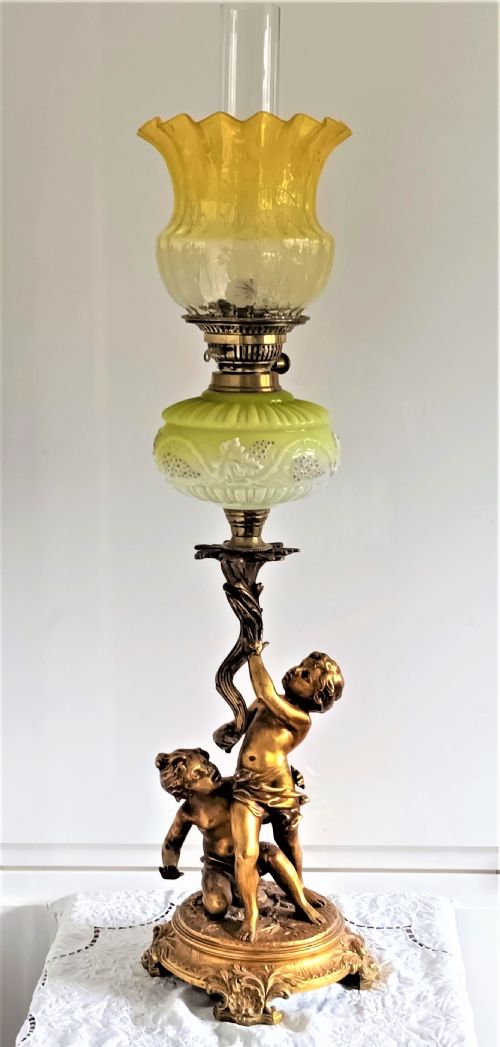
When you search for an antique cherub lamp, you encounter figural lighting and converted oil lamps spanning the nineteenth and early twentieth centuries. These pieces incorporate cast metal, carved wood or porcelain figures of putti supporting brackets, standards or oil fonts.
The most common examples on this page are bronze, brass and ormolu table lamps alongside porcelain figural bases from European factories. Many started life as oil lamps, candelabra or statuettes before receiving later electrical conversion.
Materials and construction
Foundry work dominates these pieces, utilising bronze, brass, gilt metal and ormolu cast through traditional methods and finished with patination or gilding. Porcelain examples utilise moulded ceramic bodies hand-painted with fine details and applied floral elements.
Support elements frequently incorporate secondary materials such as marble bases, cut glass crystal prisms, fabric shades and gilt toleware components to complete the fixture.
Listings span the nineteenth and early twentieth centuries, featuring materials from gilt bronze and Sitzendorf porcelain to carved oak and marble.
What separates the tiers
The integrity of the construction, including heavy marble or cast metal bases and original mounting hardware, separates standard domestic lighting from monumental or exhibition pieces.
Aug Moreau·Sitzendorf·Meissen·Sevres
The Antique Cherub Lamp Glossary
- Ormolu
- Gilded bronze produced through a mercury amalgamation technique on French decorative items. This finish gives a warm, deep gold lustre that ages differently from modern electroplating.
- Sitzendorf
- A German porcelain factory known for intricate figurative ceramics. Their pieces often incorporate applied flowers and cherubs supporting oil lamp fonts.
- Toleware
- Painted and lacquered sheet metal used for shades and decorative lamp components. It provides a durable coloured surface frequently found on French lighting.
- Grand Tour
- A nineteenth-century travel tradition where collectors acquired classical bronzes and antiquities. These objects were often later adapted into table lamps.
- Putto
- A chubby male infant figure frequently depicted in classical art and sculpture. They form the central cherubic motif on these lamp bases and candelabra.
Antique Cherub Lamp: Frequently Asked Questions
How do I wire an antique lamp?
Professional electricians should handle the internal rewiring of vintage metal and porcelain bases using modern braided flex that matches the period aesthetic.
Ensure the original socket housing is retained where possible to preserve the physical structure of the lamp.
Are these lamps converted from oil?
Many nineteenth-century specimens began as burning oil lamps or candelabra before receiving electrical fittings during subsequent decades. Conversion ports are usually discreetly integrated through the original burner assembly.
Checking the underside reveals whether weights or font reservoirs remain intact from the conversion process.
How do I clean bronze figures?
Dust bronze and brass surfaces gently with a soft dry brush to protect the underlying patination and applied gilding. Avoid chemical cleaners or abrasive polishes that strip historical finishes.
Applying a microcrystalline wax periodically protects exposed metal from atmospheric moisture.