


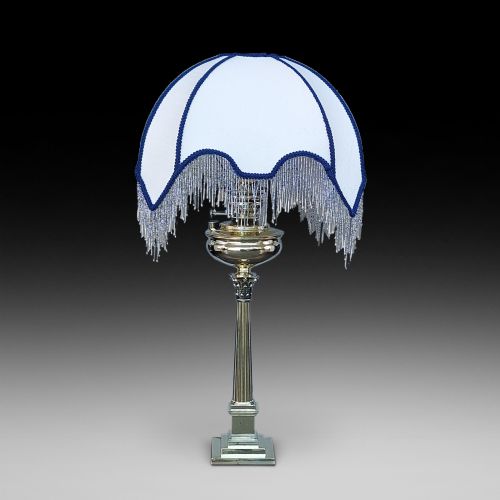


Beaded Fringe Lamp
When you search for a beaded fringe lamp, you are looking at decorative lighting that uses hanging glass beads to diffuse the light and soften the room.

Beaded Fringe Lamp
A beaded fringe lamp combines functional lighting with decorative textile and glass elements, creating a distinctive silhouette found in table lamps, floor lamps, and converted oil lamps. Buyers searching for a beaded fringe lamp will encounter various forms dating from the nineteenth century through the 1920s and 1930s.
The pieces on this page span the Victorian, Edwardian, and Art Deco periods, alongside styles such as Art Nouveau, Arts and Crafts, and Neoclassical Revival. Table lamps and standard floor lamps dominate the selection, often incorporating fabric shades or specialised glass work.
Materials range from brass, bronze, and silver plate to marble, glass, and silk. Many examples utilise metalwork bases shaped as Corinthian columns or figural subjects like cherubs, paired with elaborate shades.
How they were made
Construction relies on durable metal foundations, including cast brass, bronze, silver plate, and gilded spelter, which support the electrical components or oil reservoirs. Artisans shaped these metals into structural columns, decorative statuettes, and weighted bases.
Shades and decorative elements incorporate fabric, silk, and intricate glass beads arranged in fringes. Specialised techniques such as cold painting on bronze, porcelain modeling, and metal mounting complete the construction of these decorative objects.
Bronze cherubs occasionally moonlight as lamp supports, illuminating rooms with celestial enthusiasm.
What varies in quality
Quality rests upon the weight and finish of the metal casting, whether in the crisp fluting of a Corinthian column or the fine detail of a cold-painted bronze cherub. Superior examples display careful hand-chasing and robust structural integrity across the base and mountings.
The intricacy of the shade and the uniformity of the glass beads or silk fringe separate standard production pieces from finer items. Artistry in the mounting and the preservation of original materials define the upper tier of the range.
Georges Leleu
The Beaded Fringe Lamp Glossary
- Corinthian column
- A classical architectural order featuring an ornate capital decorated with acanthus leaves, frequently used for the stems of brass and silver plate table lamps. This form became particularly popular during the late nineteenth and early twentieth centuries.
- Cold painted
- A method where bronze figures received non-fired paint finishes, common in decorative lighting from the Victorian period onwards. The technique allowed for realistic polychrome details on cherubs and animal subjects.
- Spelter
- An alloy of zinc and lead used as a cost-effective substitute for bronze or brass in decorative castings. It often received a gilded or bronze-toned finish to mimic more expensive metals.
- Torchere
- A tall floor lamp or standard lamp designed to direct light upwards towards the ceiling. These pieces often feature vase-like bodies and substantial heights.
- Toleware
- Painted or lacquered metalware, typically tin or steel, used in the manufacture of decorative lamp components and shades. It provides a durable surface for colourful decorative schemes.
Beaded Fringe Lamp: Frequently Asked Questions
What periods do these lamps come from?
The listings span the late nineteenth century, the Victorian and Edwardian eras, and extend into the 1920s and 1930s. This period covers a diverse range of aesthetic movements from Revival styles to Art Nouveau and Art Deco.
Buyers will find that Victorian and Edwardian examples often feature classical brass columns or bronze figures, while later pieces embrace the cleaner lines of the 1920s.
How were these lamps originally used?
Many of these pieces began life as oil lamps before being converted to electricity during later decades, while others were manufactured directly as electric table and floor lamps. They served to provide ambient, softened illumination in principal rooms.
The addition of beaded fringes and fabric shades helped diffuse the bright light of early electric bulbs or oil flames, creating a warm atmosphere in period interiors.
Are these lamps suitable for modern use?
These lamps integrate well into contemporary interiors, serving as striking focal points on side tables, desks, or as floor-standing accent lighting. Their varied heights and materials allow them to complement both traditional and eclectic decors.
Collectors should check the wiring of older pieces to ensure safety and compliance with current electrical standards before daily use.
How do I identify a Neoclassical Revival lamp?
Neoclassical Revival pieces frequently incorporate architectural motifs derived from ancient Greece and Rome, such as fluted columns, Corinthian capitals, and symmetrical proportions. These designs reappeared strongly during the Edwardian period.
Materials for these lamps are typically cast brass or silver plate, sometimes mounted on heavy bases to provide stability for the tall stems.