





Antique Character Pitcher
An antique character pitcher brings the weight and humour of past centuries straight to the mantelpiece.
Antique Character Pitcher
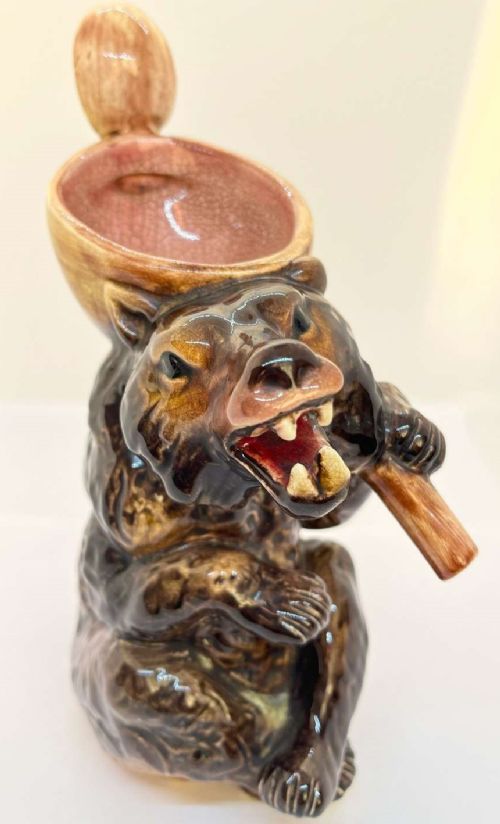
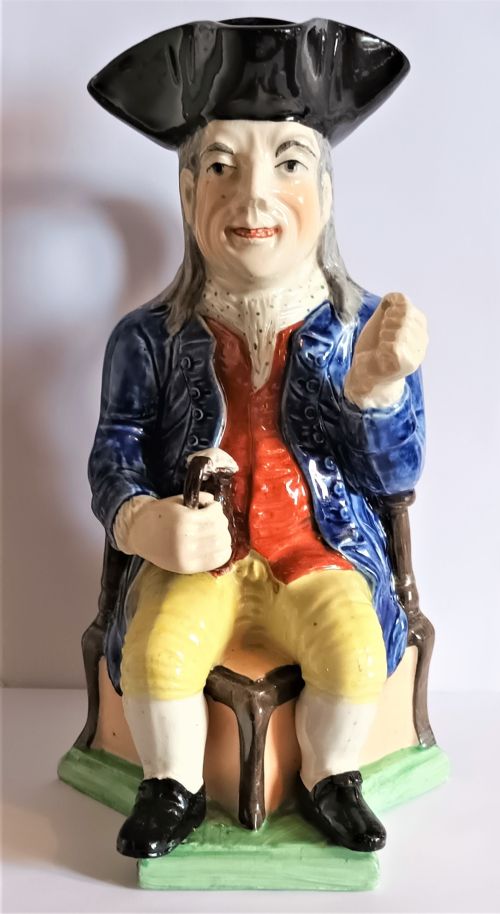
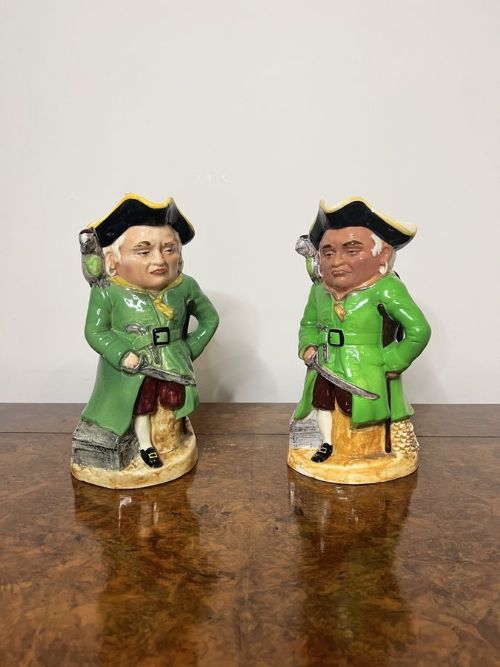
The antique character pitcher encompasses an array of ceramic vessels shaped as notable figures, historical commanders, and animals, designed with distinct personalities. When exploring this selection, buyers encounter traditional forms such as Toby jugs, decorative jugs, and specific character depictions spanning the Georgian era through to the early twentieth century.
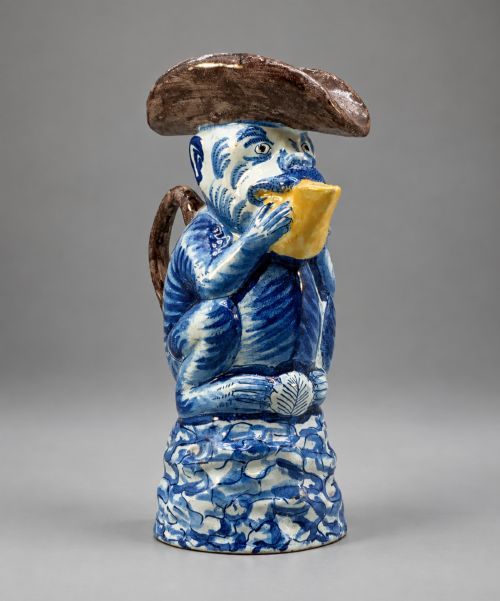
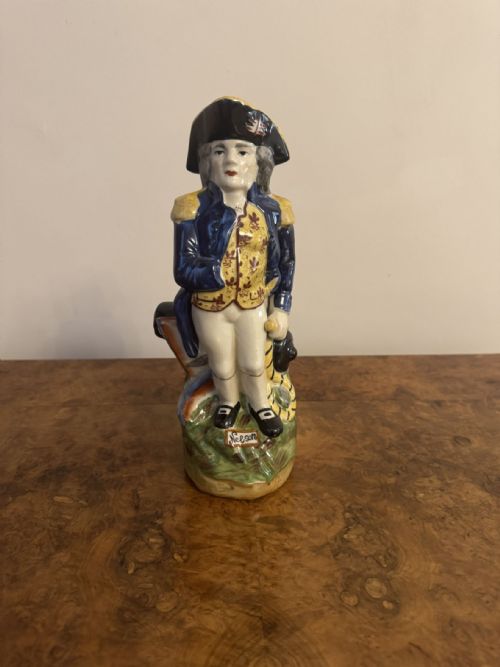
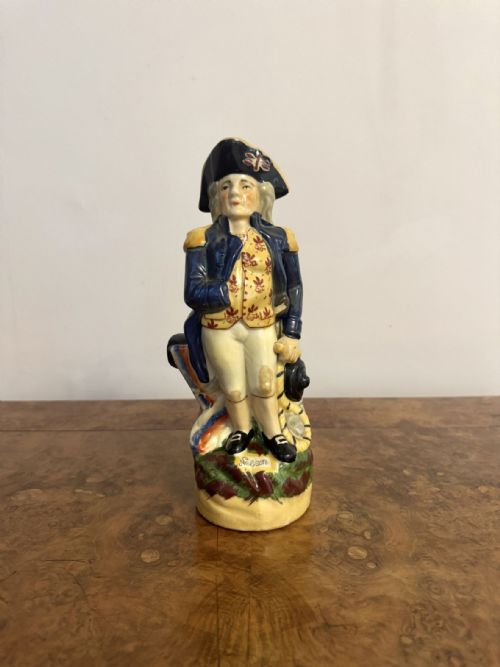
The pieces appearing most frequently across these listings originate from Victorian Staffordshire potteries, often portraying recognizable characters like Lord Nelson or regional figures such as the Squire and Mr Snuff. Alongside English earthenware, Dutch Delftware examples provide an alternative aesthetic with polychrome tin glazes and traditional motifs.
Makers utilised familiar archetypes to amuse contemporaries, resulting in jugs that served both practical pouring duties and decorative displays. Each surviving pitcher bears witness to the prevalent tastes of its period, bridging utilitarian domestic items with whimsical folk art.
How they were made
Potters constructed these figures primarily from earthenware and ceramic bodies, often shaping them through press-moulding techniques before hand-finishing details. The resulting hollow vessels received careful applications of lead glaze, enamel, or ceramic glaze to seal the porous clay and provide a glossy finish.
Colours were applied using liquid ceramic pigments or enamel paints, which required subsequent firing to bond permanently with the underlying glaze. This combination of moulded relief and painted surface gave the figures their characteristic depth and expression.
Antique Character Pitcher Retail Price Guide 2026
Typical asking prices for character pitcher among the pieces listed under this phrase on Sellingantiques today, from the lower quarter to the upper quarter. They describe what is for sale here now, not the wider market.
Listings feature earthenware bodies decorated with lead glaze and enamel paint across Victorian and Georgian periods.
What varies in quality
The reputation of the pottery and the complexity of the specific character model also influence the standing of a piece. Earlier Georgian and mid-Victorian productions often show superior modelling compared to later mass-produced variants, reflecting the skill of individual modellers.
Holdcroft
The Antique Character Pitcher Glossary
- Toby Jug
- A pottery jug modelled as a stout, jovial man usually wearing a tricorn hat and holding a mug or pipe. These vessels date predominantly from the Georgian and Victorian eras.
- Earthenware
- Porous pottery fired at lower temperatures, requiring a glaze to hold liquids. It forms the standard body for the majority of Staffordshire figures.
- Lead Glaze
- A glossy coating containing lead oxide applied to pottery before firing. It imparts a brilliant sheen and depth to underlying colours.
- Staffordshire Pottery
- Ceramics produced in the industrial region of Staffordshire, England, famous for figures and utilitarian vessels. The factories created immense quantities of domestic ornaments throughout the nineteenth century.
- Delftware
- Tin-glazed earthenware originating in the Netherlands or England, typically featuring white surfaces painted in blue or polychrome. The technique mimics imported Chinese porcelain styles.
Antique Character Pitcher: Frequently Asked Questions
What is a character pitcher?
A character pitcher is a ceramic vessel modelled in the likeness of a human, animal, or historical figure, combining utility with decorative sculpture.
Most surviving examples date from the nineteenth century and reflect popular cultural archetypes of their day.
How were character jugs used?
These vessels functioned primarily for serving ale or water at the table while doubling as humorous parlour ornaments.
Their sturdy earthenware construction suited daily domestic service before collectors preserved them as display pieces.
How do I date a pitcher?
Dating relies upon stylistic clues, the type of ceramic body, and glaze characteristics typical of periods like the Georgian era or Victorian reign.
Comparative study of known factory marks and model types helps narrow down the decade of manufacture.
Where were they made?
The majority of these pieces originated in English potteries, particularly within the Staffordshire region during the nineteenth century.
Continental workshops, notably in the Netherlands, also produced tin-glazed earthenware pitchers exported to Britain.