



Blue Ceramic Toby Jug
A blue ceramic toby jug brings character and humour to a room, depicting stout historical and fictional figures.
Blue Ceramic Toby Jug
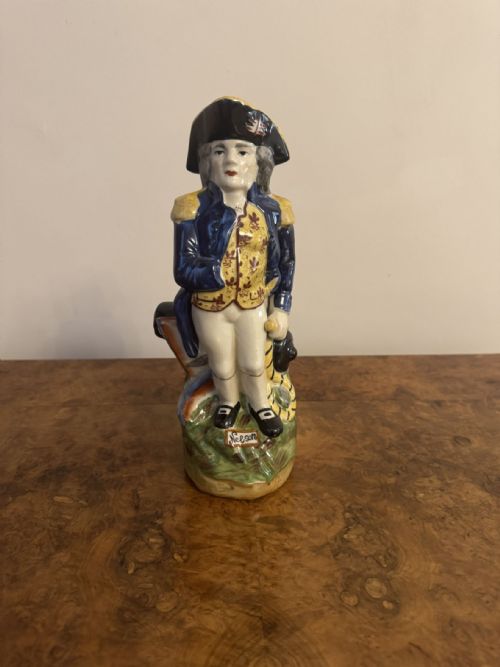
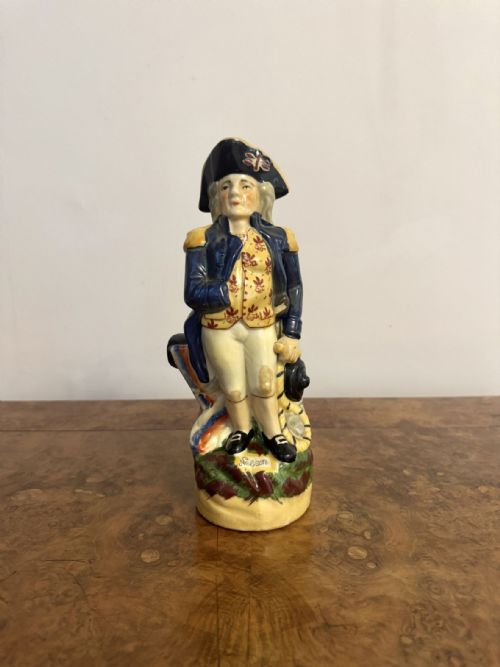
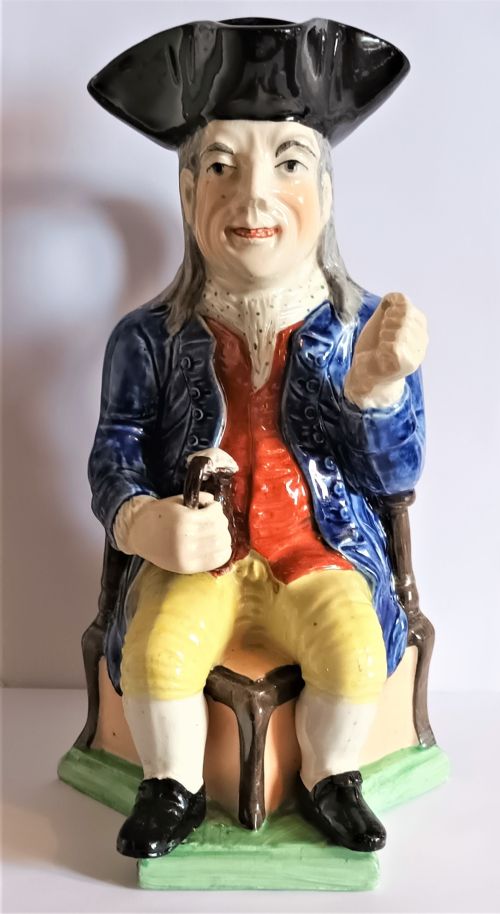
A blue ceramic toby jug portrays a seated, robust character holding a mug and a pipe, often taking the form of historical figures like Lord Nelson or regional archetypes such as the Squire and the Snuff Taker. These ceramic vessels emerge from periods spanning the eighteenth and nineteenth centuries, including Georgian and Victorian eras, as well as Dutch Delftware traditions.
Collectors searching for a blue ceramic toby jug most frequently encounter Staffordshire pottery and Dutch Delft examples rendered in tin-glazed earthenware and earthenware bodies. The forms range from traditional drinking jugs and pitchers to smaller pepperpot figures and combined vase formats.
How they were made
Makers shaped these figures from earthenware and tin-glazed earthenware, applying ceramic glaze and enamel paint to colour the garments and facial details. The blue colouring appears through specialised glaze and paint techniques characteristic of Dutch Delftware and Staffordshire potteries.
Blue Ceramic Toby Jug Retail Price Guide 2026
Typical asking prices for blue ceramic toby jug among the pieces listed under this phrase on Sellingantiques today, from the lower quarter to the upper quarter. They describe what is for sale here now, not the wider market.
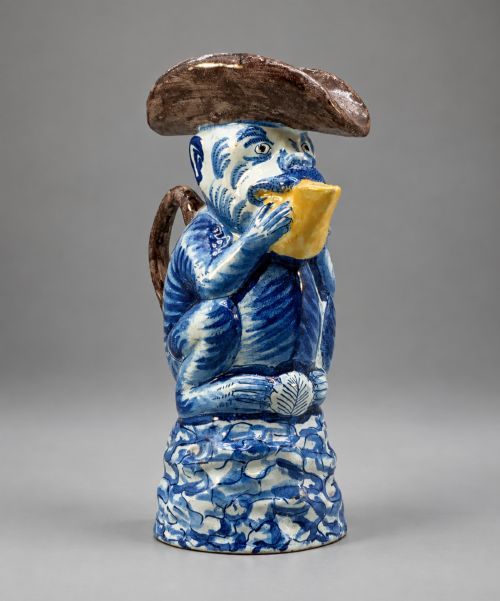
Among the seated characters, a monkey takes a turn holding the jug.
What varies in quality
The depth and consistency of the blue glaze or enamel paint application also separate standard examples from finer works, particularly where hand-painted details define the clothing and accessories.
Stevenson and Hancock Derby·Pieter Verburg
The Blue Ceramic Toby Jug Glossary
- Tin-glazed earthenware
- Earthenware covered with a glaze made opaque by the addition of tin oxide, providing a white surface suitable for blue painting. This technique underpins traditional Delftware production.
- Staffordshire pottery
- Earthenware and stoneware vessels produced in the numerous potteries of Staffordshire, England. These works include the figures and jugs popular in the Victorian period.
- Dutch Delftware
- Tin-glazed earthenware made in the Netherlands, heavily influenced by Chinese porcelain exports. Pieces often feature blue painting on a white background.
- Enamel
- Vitrified glass material fused to the ceramic surface during a low-temperature firing. This adds vibrant secondary colours to the blue base of the jug.
Blue Ceramic Toby Jug: Frequently Asked Questions
What is a toby jug?
A toby jug is a pottery pitcher modelled in the shape of a seated person, traditionally a stout, cheerful figure holding a mug of beer and a pipe. These vessels combine functional pouring duties with figurative sculpture.
Most examples depict recognisable archetypes like the Squire or historical commanders, serving as both drinking vessels and mantelpiece ornaments in past centuries.
How old are these jugs?
The pieces span the eighteenth and nineteenth centuries, originating from Georgian and Victorian periods. Dates often range from the seventeen-fifties through to eighteen-eighty.
Stylistic shifts in clothing, hats, and the application of blue glaze help distinguish earlier eighteenth-century Delft examples from later Victorian Staffordshire pottery.
Were they used for drinking?
These jugs served as functional vessels for serving ale and other beverages at tables and in taverns. The hollow interior and handle made them practical for pouring.
Over time, many transitioned into decorative display items, and smaller variants were even produced specifically as pepperpots rather than beverage containers.
How do I display them?
These jugs suit placement on sturdy wooden shelving, mantels, or within glass-fronted cabinets where their figurative modelling and blue colouration stand out. Their three-dimensional form benefits from surrounding space.
Keep them away from direct heat sources and unstable edges, as the earthenware bodies and protruding handles require secure placement.