




Victorian Staffordshire Toby Jug
A victorian staffordshire toby jug brings colourful character and robust earthenware presence straight to a shelf, capturing classic figures and animals from the nineteenth century.
Victorian Staffordshire Toby Jug
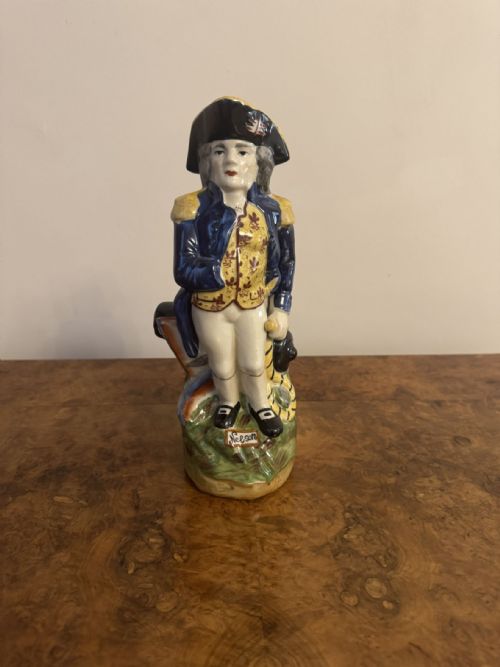
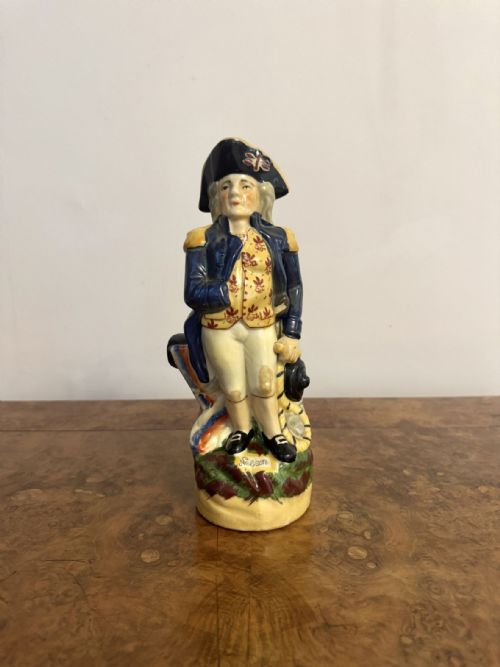
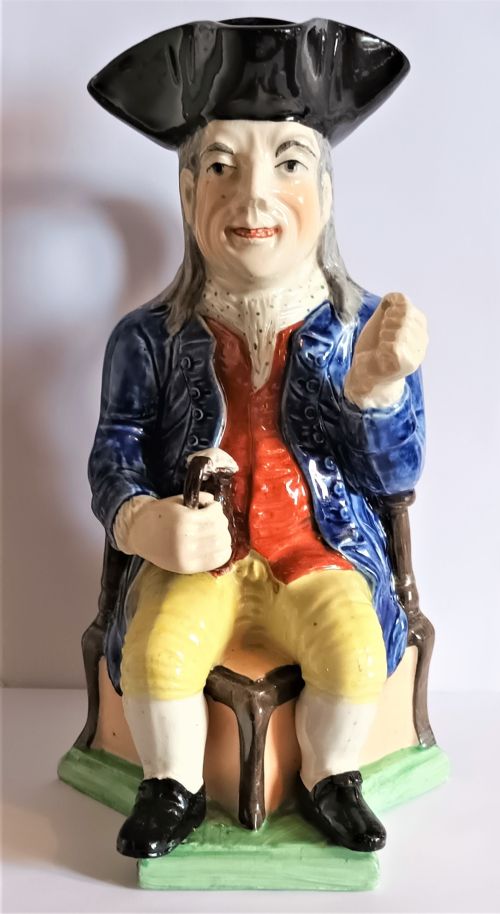
A victorian staffordshire toby jug represents a traditional seated ceramic figure holding a mug and a pipe or jug, shaped by potteries during the nineteenth century. These vessels portray notable historical figures like Lord Nelson alongside popular character types including the Squire and Mr Snuff.
Collectors frequently encounter forms depicting animals such as spaniels, alongside practical variations like pepperpots and water jugs. The examples listed here span production dates from eighteen sixty through to nineteen hundred, showing the enduring popularity of these ceramic figures.
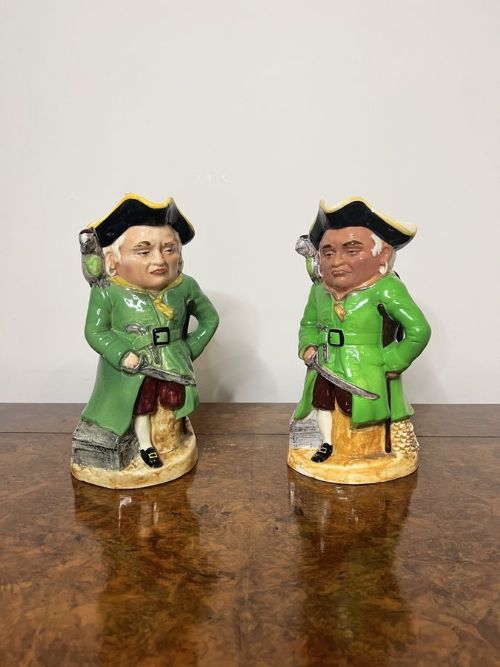
Buyers seeking a victorian staffordshire toby jug find themselves choosing between distinct individual characters and paired items. Each piece embodies the distinct ceramic output of Staffordshire potteries during the Victorian era.
How they were made
Makers shaped these earthenware vessels using ceramic moulds before applying a protective glaze. This glazed ceramic body provided a smooth surface ready for the addition of enamel paint details.
Victorian Staffordshire Toby Jug Retail Price Guide 2026
Typical asking prices for victorian staffordshire toby jug among the pieces listed under this phrase on Sellingantiques today, from the lower quarter to the upper quarter. They describe what is for sale here now, not the wider market.
Listings feature items dated across the nineteenth century, spanning eighteen sixty to nineteen hundred.
What varies in quality
The standard of a victorian staffordshire toby jug rests upon the crispness of the mould and the detail in the hand painting. Finer examples display carefully applied enamel colours that clearly define facial expressions and clothing textures.
The precision of the glaze application and the preservation of the painted surface dictate the visual appeal of each piece. Superior items retain strong, vibrant enamel colours without excessive wear across the ceramic body.
The Victorian Staffordshire Toby Jug Glossary
- Earthenware
- A porous pottery body fired at lower temperatures, commonly utilised for nineteenth century Staffordshire figures. This material forms the thick foundation of every toby jug.
- Enamel
- Opaque glass paint fused to the ceramic surface during a secondary firing. It provides the bright red, blue, and yellow coats seen on Victorian figures.
- Glaze
- A glassy coating fused to the ceramic body through heat. It waterproofs the earthenware and imparts a glossy sheen to the jug.
- Staffordshire Pottery
- The geographic region in England famous for mass ceramic production during the Victorian period. Potteries here produced the characteristic character jugs and figures collected today.
- Toby Jug
- A pottery jug modelled as a stout, jovial person usually wearing a tricorn hat. These vessels double as functional pitchers and decorative character figures.
Victorian Staffordshire Toby Jug: Frequently Asked Questions
What is a victorian staffordshire toby jug?
A victorian staffordshire toby jug is a ceramic vessel shaped as a seated character, produced in English potteries during the nineteenth century.
These earthenware pieces typically depict historical figures, fictional characters, or animals with painted enamel decoration.
How were these jugs used?
These ceramic vessels served as functional pitchers for water or ale while simultaneously acting as decorative mantelpiece ornaments.
Smaller iterations, such as pepperpots and specialised jugs, functioned as tablewares during Victorian meals.
How do I identify a period piece?
Identification relies on examining the earthenware body, the application of ceramic glaze, and the specific hand-painted enamel details typical of nineteenth-century Staffordshire manufacturing.
Subject matters like Lord Nelson, Mr Snuff, and specific animal figures help confirm the Victorian production era.
What characters are commonly found?
Common subjects include Lord Nelson, the Squire, Mr Snuff, and festive figures alongside spaniels and various water jug designs.
Potteries also produced female quart jugs and pepperpot figures during the same Victorian timeframe.