


Antique Ceramic Landscape Art
Antique ceramic landscape art brings pastoral scenes and topographical views into the room through painted earthenware, porcelain and faience.
Antique Ceramic Landscape Art
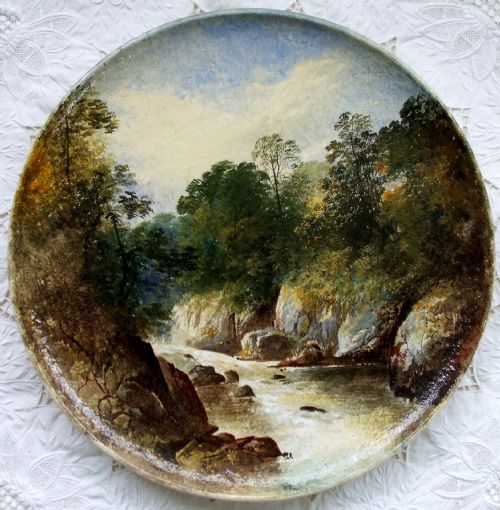
Antique ceramic landscape art comprises decorative plaques, wall art, vases and plates featuring painted views of natural and architectural scenery. These pieces bridge the gap between fine art painting and pottery production, translating scenery onto a glazed ceramic ground.
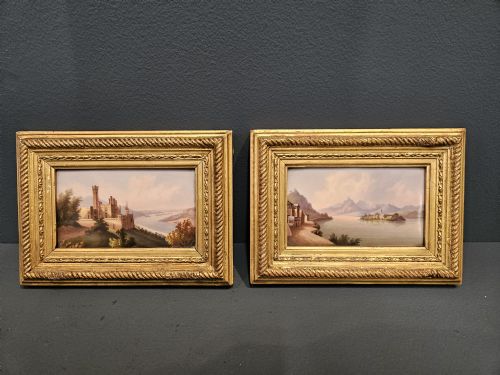
The versions most commonly met on this page span the nineteenth century and the early twentieth century, taking the form of framed Copeland pottery plaques or Royal Worcester plaques. Makers such as Royal Doulton and Clarice Cliff also contribute vases and plates decorated with landscape motifs.
Originating from English factories alongside Italian workshops and Japanese Meiji period kilns, these objects reflect diverse regional approaches to ceramic painting. Whether mounted on walls or displayed as cabinet pieces, they preserve topographical and imaginative views across varied ceramic bodies.
How these pieces were made
Makers utilised earthenware, porcelain and faience as the primary ceramic bodies for landscape decoration, shaping them into plates, plaques and vases. Painters then applied enamel and paint directly onto the surface, often firing the piece multiple times to fix the detailed pigments.
Some works incorporate giltwood frames to mount heavy ceramic plaques for wall display, while others rely purely on the glaze and shape of the vessel to frame the view. Surface finishes range from high-gloss transparent glazes to matte enamel pigments that mimic the texture of canvas oil paintings.
Materials recorded across current items include porcelain, earthenware, faience, enamel, glaze, giltwood, glass and paint.
What varies in quality
The distinction between standard commercial output and superior work rests entirely upon the skill of the brushwork and the ambition of the composition. Master painters working for major potteries achieved remarkable depth and perspective within restricted ceramic surfaces, whereas lesser pieces rely on mechanical transfer printing or hasty brushwork.
Signatures of named artists and factory marks significantly elevate the standing of a piece, denoting studio production rather than factory line output. The preservation of the enamel colours without fading or flaking, alongside the integrity of the original ceramic body and any mounting, dictates the overall calibre.
William Yale·Royal Doulton·Clarice Cliff·Royal Worcester
The Antique Ceramic Landscape Art Glossary
- Faience
- Tin-glazed earthenware originating from European traditions, providing an opaque white ground suitable for detailed painted landscape scenes. It offers a distinct matte texture compared to hard-paste porcelain.
- Earthenware
- Porous pottery fired at lower temperatures, serving as the heavy structural base for many large nineteenth-century decorative plaques and wall art. It requires a thorough glaze layer to achieve a waterproof and paintable surface.
- Enamel
- Vitreous coloured glass fused to the ceramic body during firing, used by painters to build up rich landscape details. These pigments retain their brilliance over centuries if protected from abrasion.
- Plaque
- A flat or slightly curved ceramic tablet designed specifically for display on a wall rather than functional use. They often receive the most ambitious landscape painting because their flat surface mirrors canvas.
- Meiji Period
- The era in Japanese history spanning from eighteen sixty-eight to nineteen twelve, known in ceramics for intricate Satsuma earthenware vessels decorated with detailed scenery. These pieces demonstrate distinct regional glazing and gilding techniques.
Antique Ceramic Landscape Art: Frequently Asked Questions
Were these ceramic landscapes meant for display?
Decorative plaques and cabinet plates were produced primarily for visual appreciation in domestic interiors rather than daily utility. Their delicate enamel painting and fine porcelain bodies suited drawing rooms and parlours.
Vases and sandwich sets bridged the gap between utility and display, combining functional vessel forms with elaborate hand-painted topographical views. Their placement in the home depended on whether the owner wished to use them or simply admire the artwork.
How do I identify Victorian ceramic art?
Nineteenth-century English pieces often bear impressed factory marks, registration numbers or handwritten titles identifying specific geographical locations on the reverse. Copeland pottery and similar firms frequently noted the exact valley or view alongside the artist signature.
The painting style on Victorian examples tends towards naturalistic depiction, capturing specific British scenery with careful brushwork. Examining the back of a plaque or plate usually reveals the primary clues to its nineteenth-century origins.
What is Satsuma ceramic art?
Satsuma ware is a type of Japanese earthenware characterised by a crackle-glaze ivory body decorated with intricate enamels and gilding. Originating from the Satsuma Province, these pieces often feature detailed landscape and figurative scenes.
During the Meiji period, Satsuma makers produced extensive decorative vases and vessels for export to Western markets. Their distinct craquelure glaze and dense pictorial composition set them apart from contemporary European porcelain.