
Antique Ceramic Centerpiece Bowl
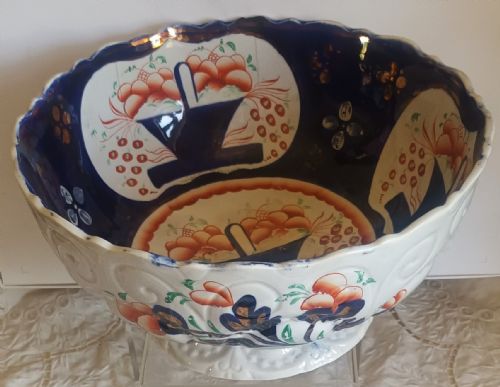
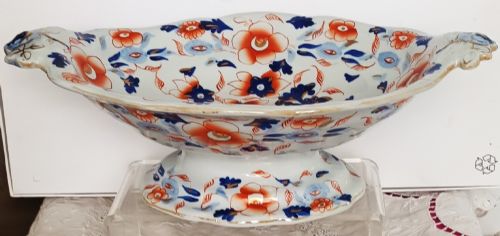
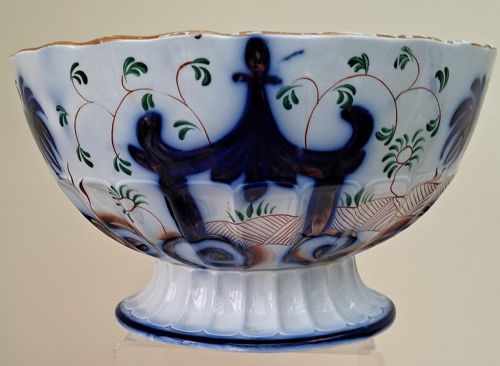
An antique ceramic centerpiece bowl brings a table focus through hand-painted detail and raised pedestal forms.
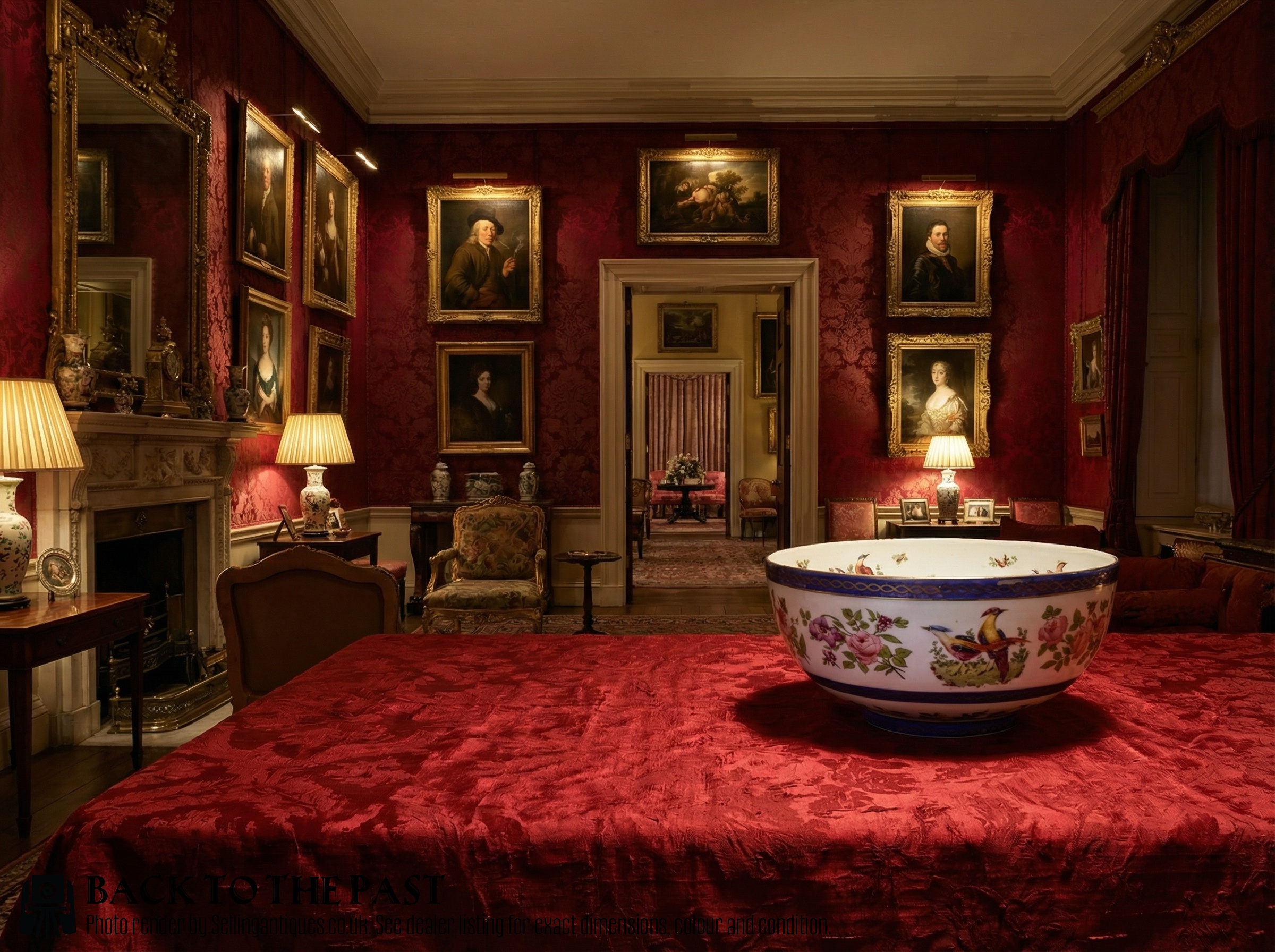
Antique Ceramic Centerpiece Bowl
An antique ceramic centerpiece bowl serves as a table focal point, drawing from Georgian, Victorian, and Edwardian periods.
Makers utilised earthenware, ironstone, and porcelain forms, often incorporating decorative handles or raised stands for dining room displays.
Materials and production
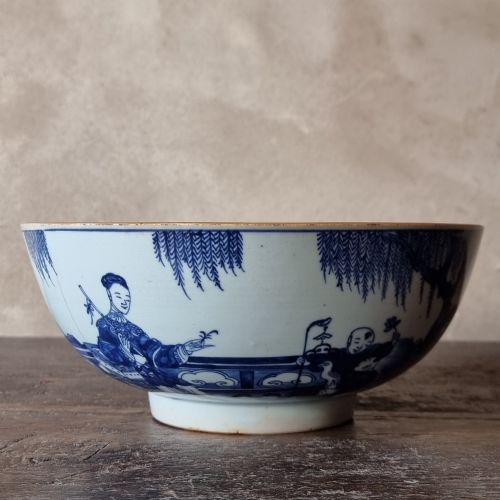
Potters shaped porcelain, earthenware, and ironstone body clays before applying detailed hand-painted scenes, enamels, and transfer prints.
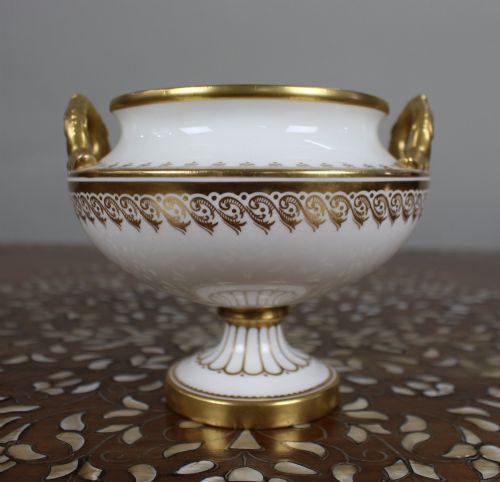
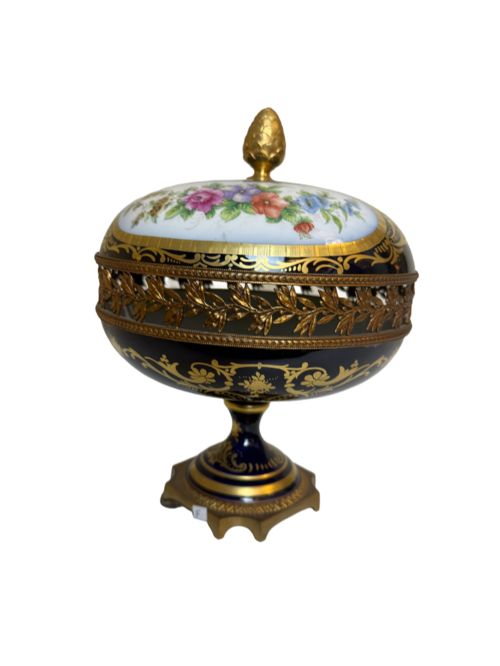
Gilt bronze mounts, gold leaf, and surface gilding provide metallic contrast against white and coloured ceramic bodies.
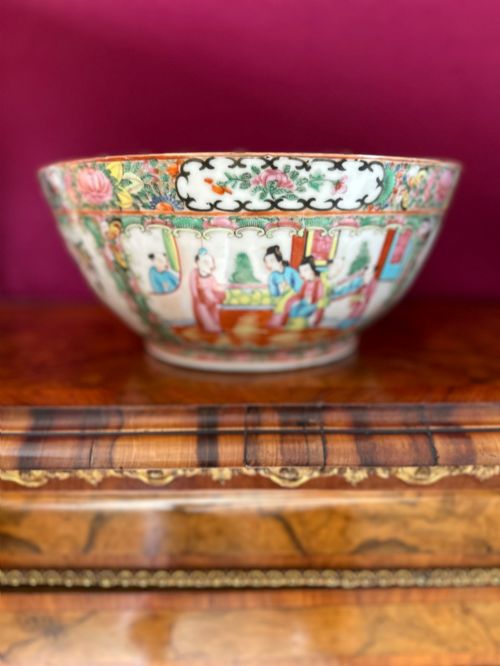
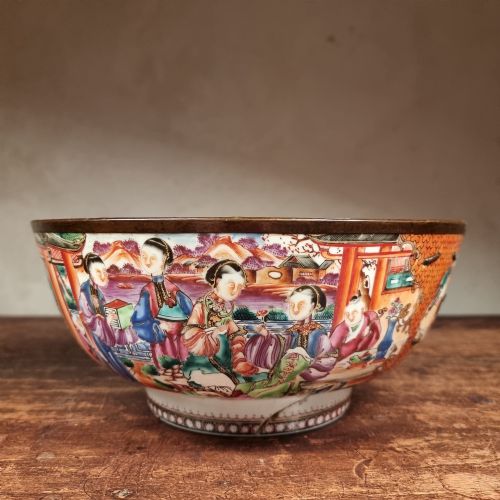
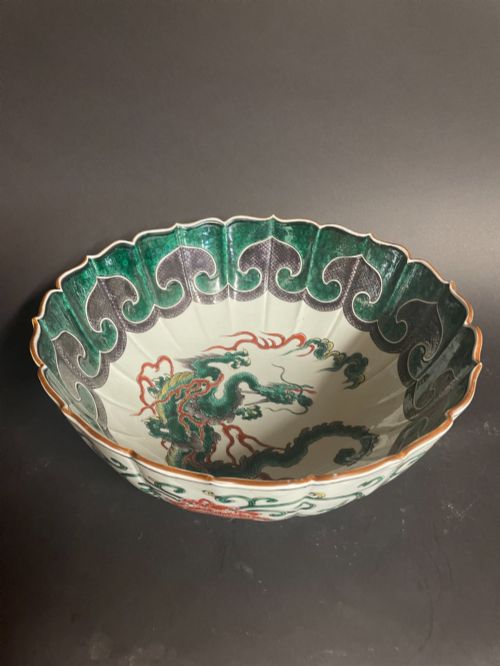
Glazing seals the earthenware and porcelain surfaces, while specialised firing achieves the deep blue and polychrome tones seen in Chinese export and Japanese Imari wares.
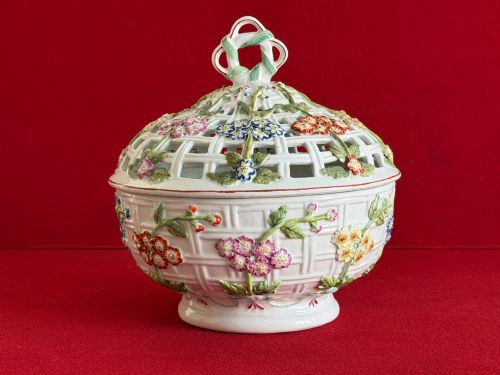
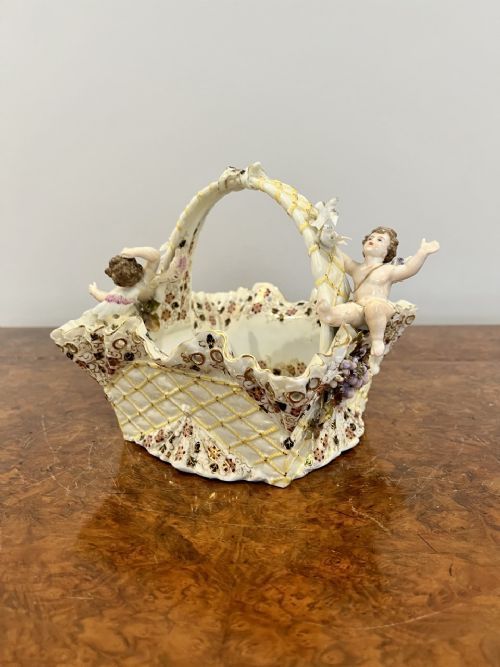
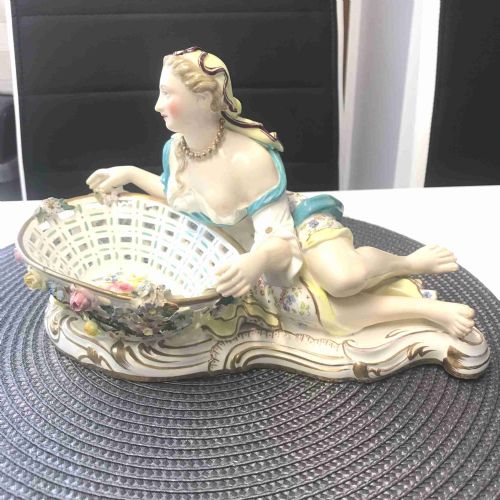
Victorian potters occasionally added porcelain cherubs and tiny raised flower petals that demand careful dusting with a soft brush.
Judging the range
Superior examples display crisp modelling in raised elements like flower encrustations, cherubs, and handles rather than smoothed or softened details.
Hand-painted brushwork varies from loose, hurried strokes to precise, multi-coloured floral sprays and figurative scenes executed by skilled studio hands.
The integration of metal mounts, such as champlevé enamel and ormolu frames on French porcelain, distinguishes high-tier decorative pieces from standard table pottery.
Coalport·Derby·Sèvres·Meissen·Royal Vienna·Mason’s·Wedgwood·Minton·Worcester·Doulton Burslem·Royal Worcester
The Antique Ceramic Centerpiece Bowl Glossary
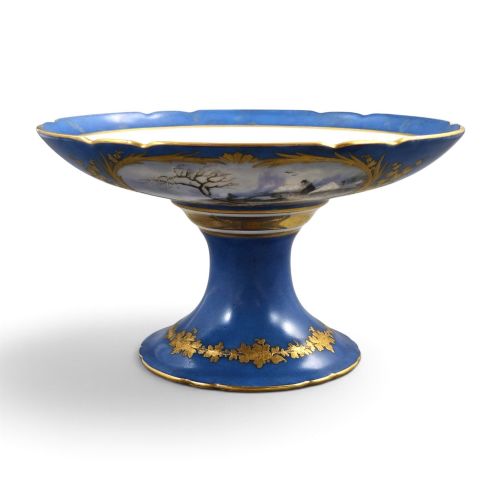
- Tazza
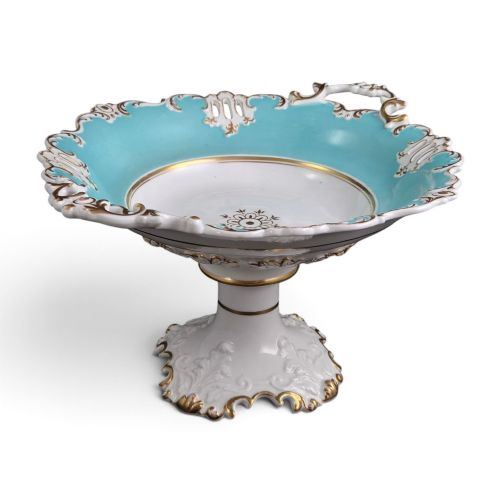
- A shallow ornamental bowl raised on a central foot or pedestal. This elevated form displays fruit or sweetmeats.
- Comport
- A footed dish or bowl used on dining tables for serving fruit or sweet dishes. They often match large dinner services.
- Imari
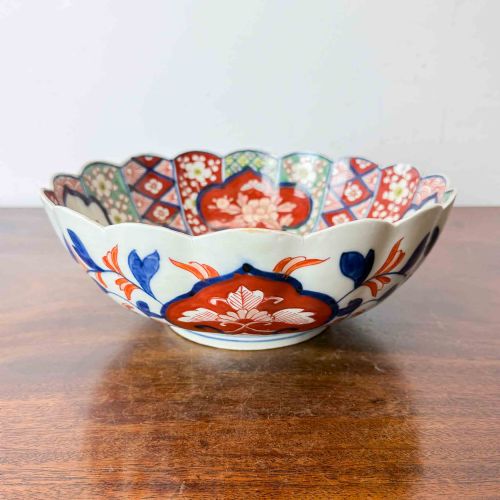
- A style of Japanese porcelain featuring deep underglaze blue and iron red, frequently highlighted with gold. The palette is rich and distinct.
- Majolica
- Earthenware covered with an opaque tin-lead glaze and brightly coloured enamel pigments. Minton produced notable examples in this technique.
- Famille Rose
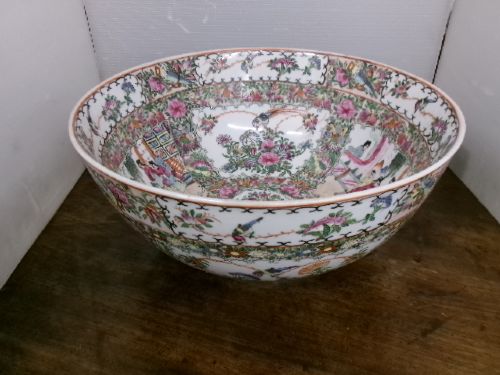
- A palette of Chinese porcelain decoration characterised by opaque pink enamel colours. It gained prominence during the Qing dynasty.
Antique Ceramic Centerpiece Bowl: Frequently Asked Questions
What is a tazza?
A tazza is a shallow ornamental bowl supported by a single central pedestal or foot. These elevated vessels were designed to hold fruit or sweet items on formal dining tables.
They appear in porcelain and earthenware across the Victorian and Georgian periods, often featuring decorative handles or scalloped edges.
How were punch bowls used?
Punch bowls held large quantities of mixed beverages during social gatherings and communal dining events in the eighteenth and nineteenth centuries. Guests ladled the drink directly from the central vessel into individual cups.
Many examples originate from Chinese export kilns, displaying intricate hand-painted floral or figuran motifs suited to display.
What is Imari porcelain?
Imari porcelain refers to Japanese wares decorated with a distinct palette of deep underglaze blue, iron red, and supplementary gilding. The style originated in Japan and heavily influenced European ceramic design.
These pieces often feature complex geometric and floral panels covering the entire surface of the bowl.
How do I care for antique ceramics?
Antique ceramics require gentle handling and should be washed by hand in lukewarm water using mild soap, avoiding harsh scrubbing. Submerging pieces with metal mounts or gilding can damage the secondary materials.
Display them away from direct sunlight and temperature fluctuations to protect surface enamels and gold leaf from fading or cracking.