
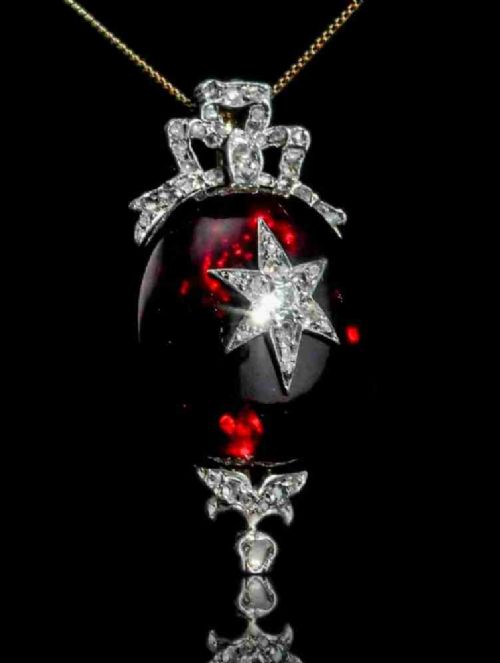


Antique Celestial Jewellery
Antique celestial jewellery captures the night sky in gold, silver, and diamonds, offering buyers wearable stars that defined late-nineteenth-century romanticism.
Antique Celestial Jewellery
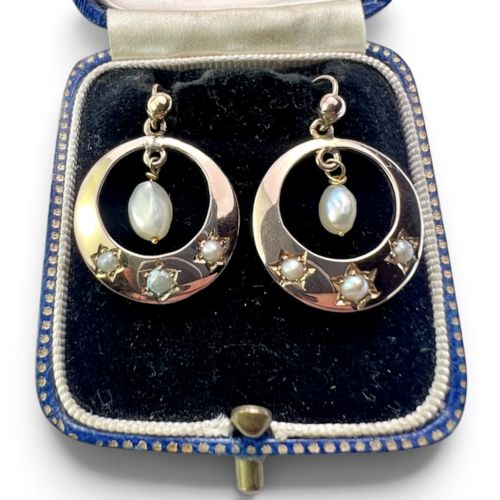
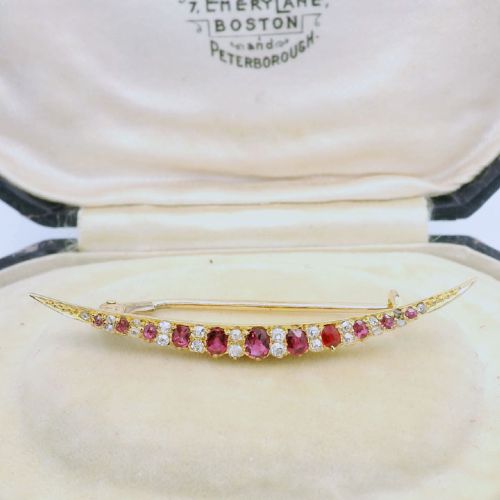
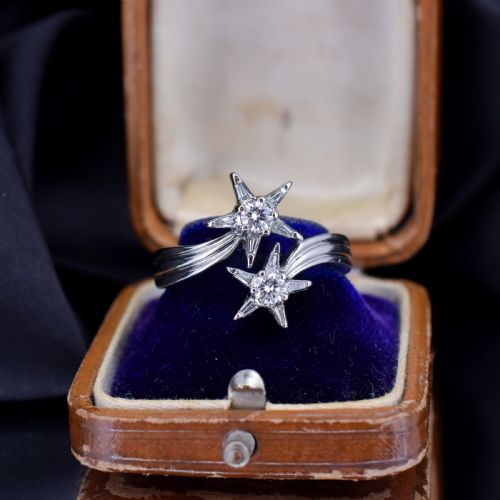
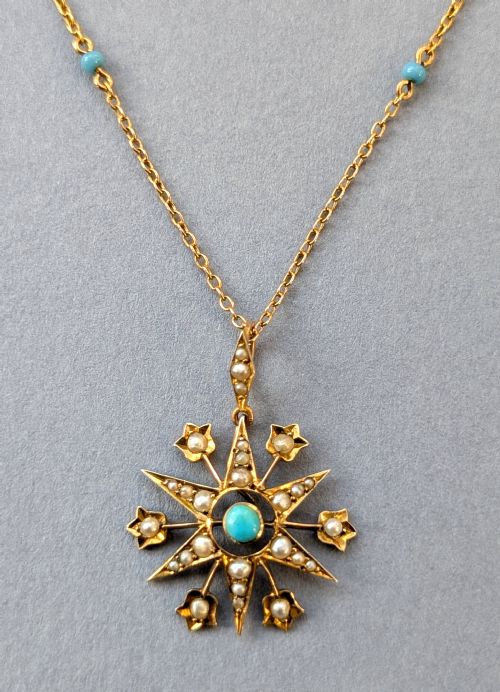
Antique celestial jewellery centres on starburst and crescent motifs that draw directly from nineteenth-century romantic and astronomical fascinations. These pieces take the form of rings, convertible brooches and pendants, and grand tiaras designed to catch the candlelight.
The Victorian era dominates the pieces seen here, particularly items originating around eighteen-eighty to eighteen-ninety. Buyers frequently encounter versatile starburst designs engineered to shift between lapel ornaments and pendant necklaces.
Rings in this category combine deep blue enamel or turquoise cabochons with bright old-cut diamonds to mimic planetary bodies and distant stars. Each survival from this period reflects a Victorian obsession with the cosmos translated into fine adornment.
Materials and construction
Craftsmen built these pieces using a combination of precious metals, pairing fifteen-carat and eighteen-carat yellow gold with nine-carat gold and sterling silver settings. Silver toppings on gold mounts help reflect light to maximise the brilliance of old-cut diamonds.
Gems are frequently set against richly coloured backdrops, utilising blue enamel and turquoise cabochons to create contrast with sparkling diamond clusters. Old-cut stones are held in delicate claw or foil-backed collet settings that characterise late Victorian bench work.
Antique Celestial Jewellery Retail Price Guide 2026
Typical asking prices for celestial jewellery among the pieces listed under this phrase on Sellingantiques today, from the lower quarter to the upper quarter. They describe what is for sale here now, not the wider market.
Every item listed in this category originates from the Victorian era, spanning the late nineteenth century around eighteen-eighty to eighteen-ninety.
Judging quality and design
Quality rests in the precision of the stone arrangement and the multi-functional engineering of convertible mounts that allow brooches to transform securely into pendants. Finer examples display balanced proportions in their graduating diamond rays and deep, unblemished enamel work.
The Antique Celestial Jewellery Glossary
- Old-cut diamond
- A hand-faceted diamond cut before modern machinery, featuring a smaller table, higher crown, and open culet designed to glow softly under artificial light.
- Cabochon
- A gemstone shaped and polished rather than faceted, presenting a smooth, rounded surface that works well with opaque stones like turquoise.
- Convertible jewellery
- Pieces designed with hidden loops, screw fittings, or detachable frames so a single item functions as both a brooch and a pendant.
- Enamel
- Vitreous glass fused to metal under high heat to produce deep blue or coloured backgrounds behind gemstone stars.
Antique Celestial Jewellery: Frequently Asked Questions
How were convertible star brooches worn?
Convertible star brooches offered Victorian wearers multiple styling options by transitioning easily from lapel pins to pendant necklaces.
Clever hidden mechanisms allowed owners to remove the brooch pin or attach a bail for a chain without disrupting the starburst design.
What metals are common in these pieces?
Victorian celestial pieces frequently utilise a mix of yellow gold and sterling silver.
Silver was often used to top gold mounts because its white colour enhanced the brightness of old-cut diamonds.
How do I care for Victorian enamel rings?
Victorian enamel and gemstone rings require gentle handling to protect the glass surface from impact and harsh chemicals.
Avoid submerging enamel jewellery in water and store pieces separately to prevent scratching the softer gold and turquoise elements.