






Antique Caucasian Floor Runner
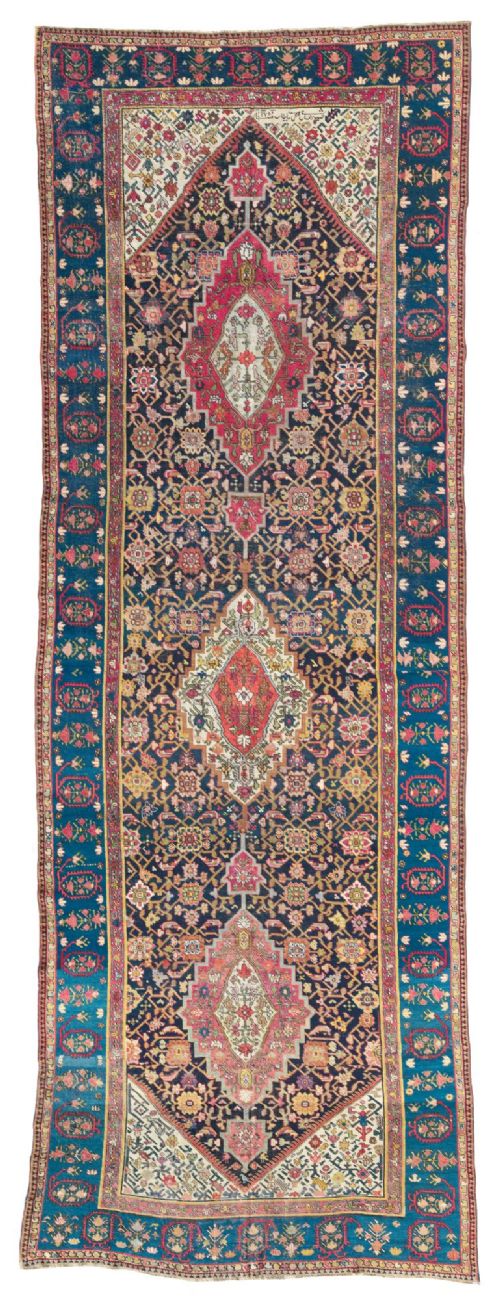
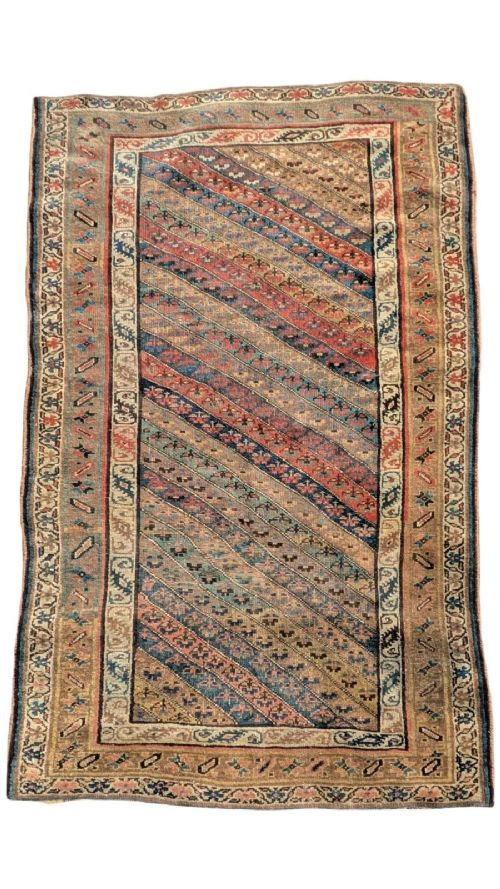
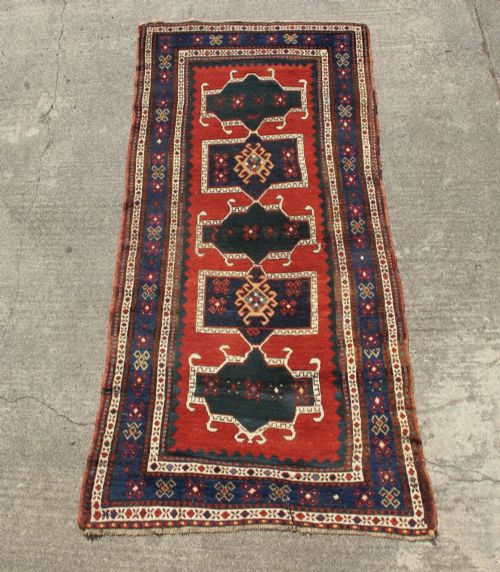
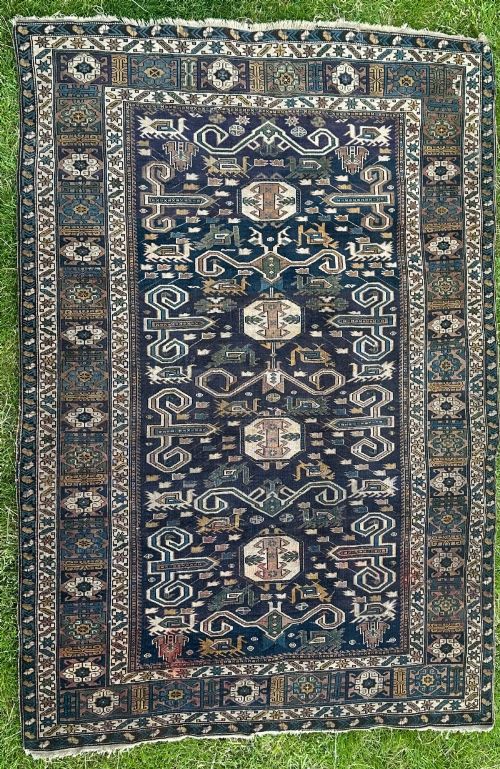
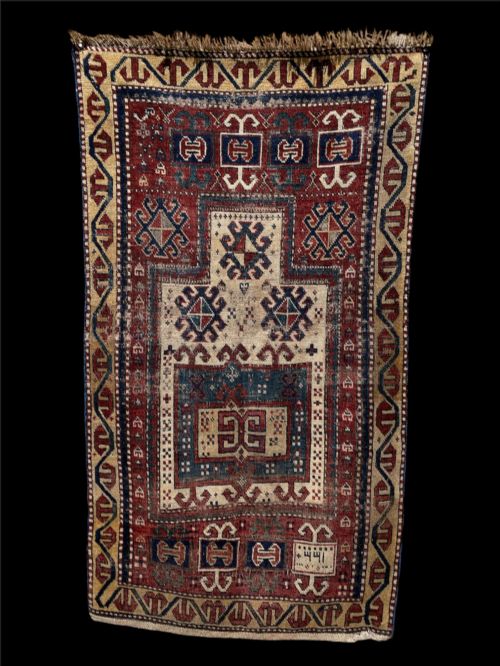
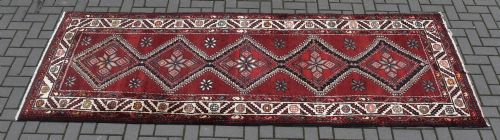
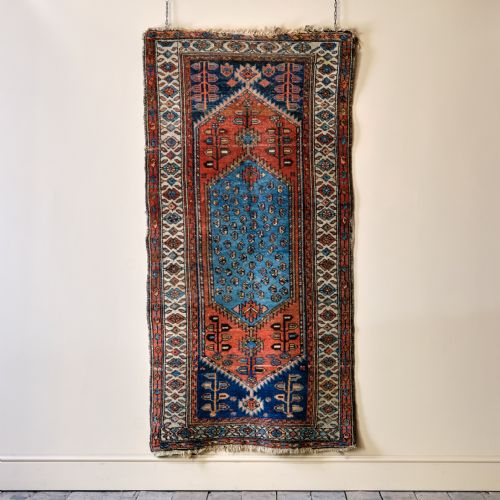
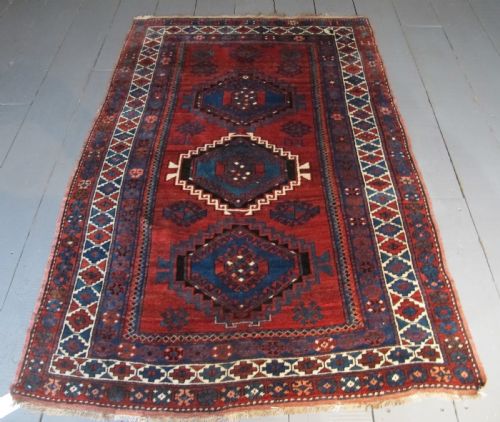
An antique caucasian floor runner brings geometric motifs, bold colour and tribal character directly to a hallway or narrow space.
Antique Caucasian Floor Runner
An antique caucasian floor runner is a long, narrow textile woven in tribal regions of the Caucasus during the nineteenth and early twentieth centuries. These pieces were traditionally utilised in corridors and long rooms, bringing practical warmth to wooden floorboards while displaying distinctive regional patterns.
The selections available span various tribal groups and weaving centres, including Kazak, Shirvan, Karabagh and Gendje types. While many examples take the form of broader rugs or carpets, narrow formats specifically suited to hallways appear frequently across the periods recorded.
Makers drew upon traditional vocabularies featuring hooked medallions, Lezghi stars, floral lattices and striped boteh motifs. These designs reflect the distinct cultural identities of weavers working within domestic and nomadic environments.
How they were made
The construction of these runners relies on hand-knotted and flat-weave techniques executed using natural materials. Weavers utilised wool for the pile and foundation yarns, frequently incorporating hand-spun wool that accepts dye with subtle tonal variations.
Cotton also appears in the foundational structures of certain pieces, providing stability alongside the wool. Artisans applied natural dyestuffs to create the saturated reds, blues, ivories and yellows that define the visual character of these textiles.
Listings span production dates from the 1870s through the 1930s, documenting traditional wool and hand-spun wool materials.
What varies in quality
Quality in these runners rests upon the crispness of the drawing, the saturation and depth of the natural dyes, and the density of the knotting. Finer examples display precise execution of complex geometric medallions and clear, unmuddy colour contrasts.
The handling of wool and the integrity of the original borders also distinguish finer weaving. Pieces that retain their balanced proportions and uncompromised edges demonstrate superior craftsmanship from their originating regions.
The Antique Caucasian Floor Runner Glossary
- Kazak
- A style of rug originating from the western Caucasus, known for bold geometric designs, primary colours and hooked medallions. These pieces often exhibit a robust pile and spontaneous tribal character.
- Shirvan
- A classification for textiles woven in the eastern Caucasus, typically characterised by fine knotting, intricate geometric patterns and sophisticated colour palettes. They frequently feature detailed star motifs and narrow borders.
- Karabagh
- A regional grouping from the south-central Caucasus that encompasses diverse designs, including striped boteh patterns and realistic or stylized floral elements. These textiles often display rich brownish or terracotta grounds.
- Soumak
- A flat-weaving technique where the weft threads are wrapped around the warp threads to create a durable surface without a cut pile. Soumak carpets present a smooth face with a distinct ribbed texture on the reverse.
- Boteh
- A traditional teardrop or almond-shaped motif with a curved upper end, widely used in oriental carpets. In Caucasian weaving, this symbol appears in repeating rows or structured arrangements.
Antique Caucasian Floor Runner: Frequently Asked Questions
Where should I place an antique runner?
These narrow textiles suit hallways, corridors and galley kitchens where a long format provides both floor protection and visual interest.
Their sturdy wool construction handles regular foot traffic while introducing historic pattern to transitional spaces.
How do I care for wool runners?
Regular gentle vacuuming without a rotating brush roll keeps dust from settling into the wool pile. Professional cleaning by a specialist in antique textiles ensures the natural dyes remain stable.
Using a quality underlay prevents slipping and cushions the foundation against hard flooring.
What defines Caucasian tribal designs?
The aesthetic relies on rectilinear geometry, including polygons, crosses, hooked medallions and stars rather than flowing curves. Weavers arranged these symbols from memory within traditional regional frameworks.
Strong primary hues balanced against ivory or dark grounds create the characteristic visual impact.
How do I identify a Kazak rug?
Kazak examples are distinguished by their larger scale geometric motifs, open layouts and saturated primary colours like red and blue. The wool is typically thick and the weave has a heavier handle.
Such characteristics separate them from the finer, more intricate compositions found in eastern Caucasian workshops.