

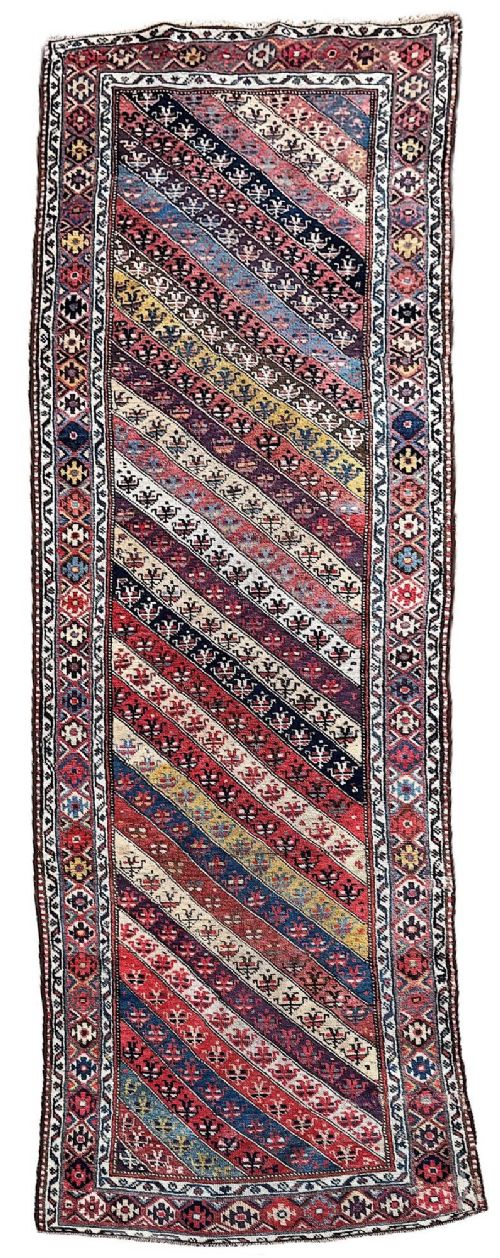


Vintage Shirvan Tribal Runner
These vintage shirvan tribal runner selections bring geometric Caucasian design and remarkable natural dyes straight to your floor.
Vintage Shirvan Tribal Runner
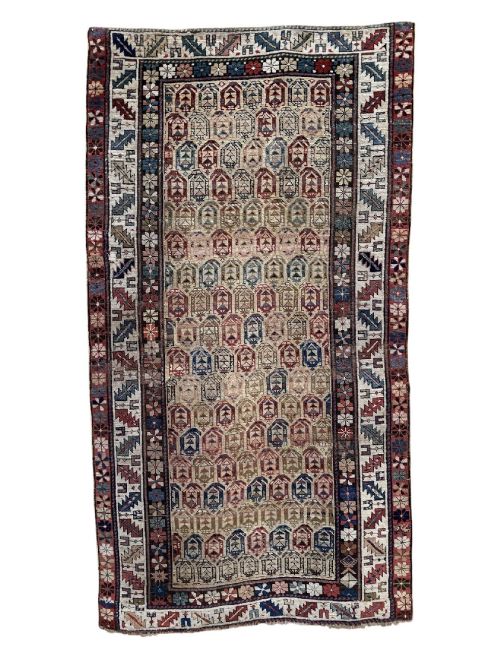
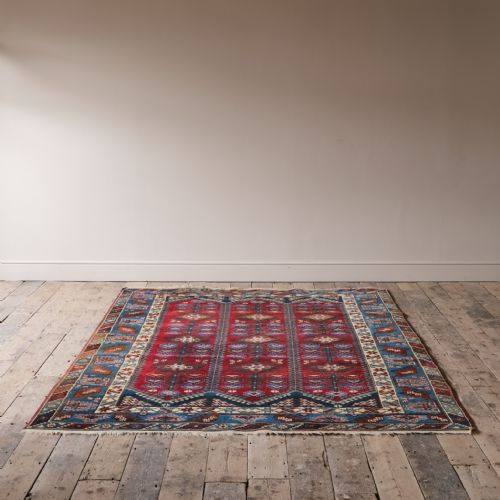
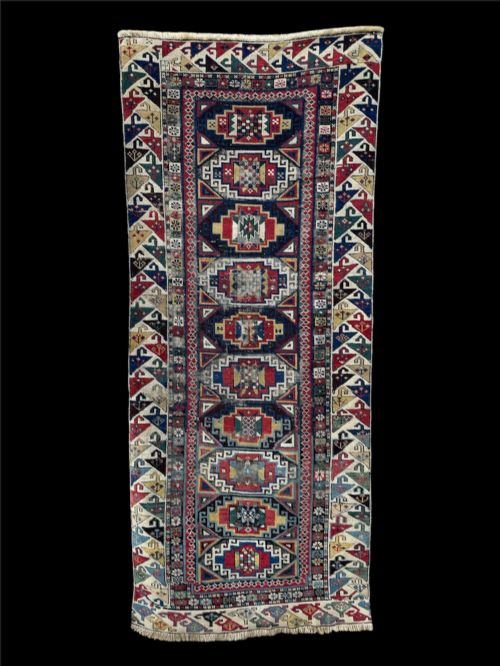
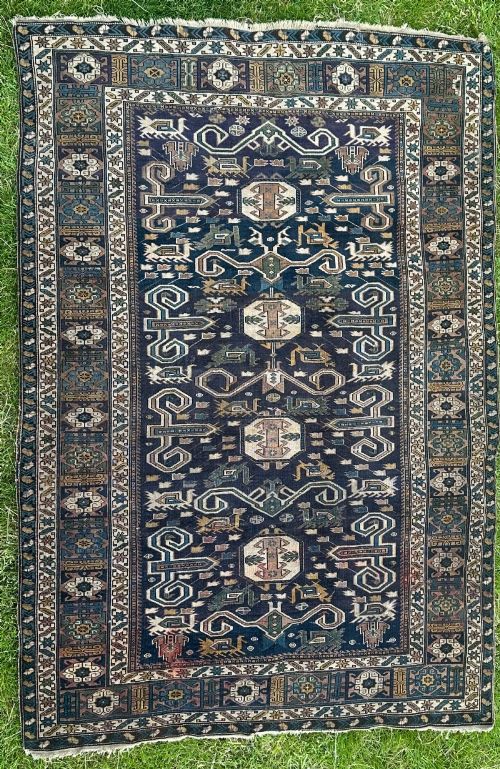
When you search for a vintage shirvan tribal runner, you are looking at narrow, hand-knotted floor coverings originating from the Eastern Caucasus during the nineteenth and early twentieth centuries. These textiles include traditional Caucasian narrow runners, kilims, and long rugs displaying distinctive geometric motifs and tribal iconography. The examples seen here span from the 1880s through to 1910, reflecting the rich weaving traditions of the Shirvan region and surrounding areas.
Buyers most commonly encounter wool-piled runner rugs and flatwoven kilims characterised by structured patterns, banded designs, and characteristic regional borders. While some pieces take the form of narrow corridors suitable for hallways, others present as elongated carpets or fragments preserved from earlier centuries. The palette relies on soft colours derived from natural dyes, giving each piece a grounded, earthy presence.
How they were made
These textiles are constructed primarily from hand-spun wool and cotton foundations, utilising traditional hand-knotting and flatweaving techniques. Weavers employed natural dyes to achieve the varied colour palettes seen across the region, resulting in rich tones that age gracefully over time.
The structure involves wool pile tied onto sturdy cotton or wool warps and wefts, creating durable floor coverings designed for practical daily use. Flatwoven kilim examples omit the pile entirely, relying instead on interlocking weft threads to form sharp geometric patterns.
Vintage Shirvan Tribal Runner Retail Price Guide 2026
Typical asking prices for vintage shirvan tribal runner among the pieces listed under this phrase on Sellingantiques today, from the lower quarter to the upper quarter. They describe what is for sale here now, not the wider market.
One recorded piece includes a precise date of 1310, translating to 1892, woven permanently into its Surhani garden design.
What varies in quality
Quality in these rugs rests on the fineness of the knotting, the crispness of the geometric drawing, and the condition of the wool pile. Tighter foundations and precise execution of intricate tribal motifs indicate superior craftsmanship from the weaver.
The choice and preservation of natural dyes also dictate the visual appeal, with well-preserved colour and scarce design variations distinguishing the more notable examples from standard production.
The Vintage Shirvan Tribal Runner Glossary
- Shirvan
- A regional designation for rugs and textiles woven in the Eastern Caucasus, known for structured geometric patterns and fine wool.
- Kilim
- A flatwoven textile produced without a pile, utilising interlocking weft techniques to create crisp, geometric surface designs.
- Runner
- A long, narrow carpet format specifically proportioned for corridors, hallways, and narrow spaces.
- Natural Dyes
- Colourants sourced from plants, minerals, and insects, producing organic hues that mellow softly with age.
- Warp
- The vertical foundation threads stretched tightly on the loom, carrying the structure of the rug.
Vintage Shirvan Tribal Runner: Frequently Asked Questions
Where were these rugs made?
These textiles originate from the Caucasus region, specifically the Shirvan area in the Eastern Caucasus.
Weavers in local communities produced these tribal rugs and runners using traditional regional designs passed down through generations.
How do I care for my runner?
Protect your wool runner by placing it in low-moisture areas and using a suitable underlay to prevent sliding.
Vacuum gently without using beater bars and consult a specialist for professional cleaning when necessary.
What materials are used?
The pieces are constructed using hand-spun wool for the pile and surface designs, supported by cotton or wool foundations.
Natural dyes provide the varied colour palette seen throughout the regional weaving traditions.
How do I date a piece?
Dating relies on stylistic markers, structural analysis, and historical records associated with nineteenth and early twentieth-century Caucasian weaving.
Specific production periods span from the 1880s through to the early decades of the 1900s.