

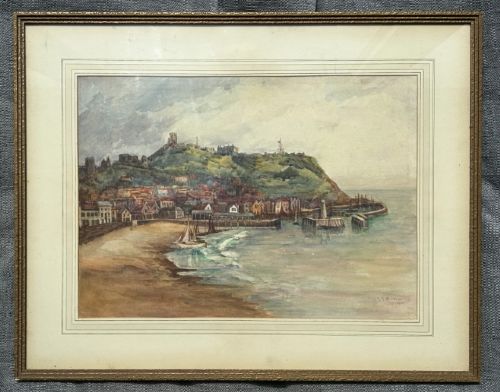
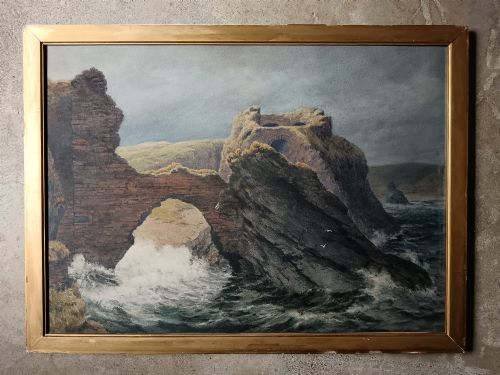


Antique Castle Landscape Art
Antique castle landscape art captures centuries of historic architecture and scenery in oil, watercolour, and mixed media.
Antique Castle Landscape Art
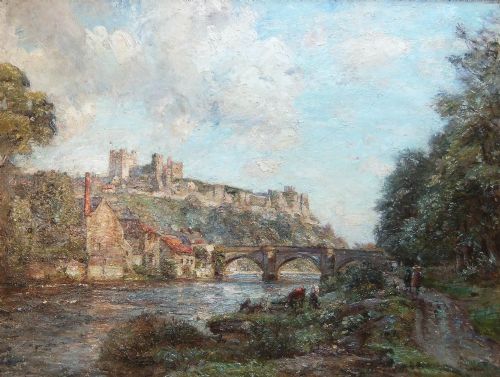
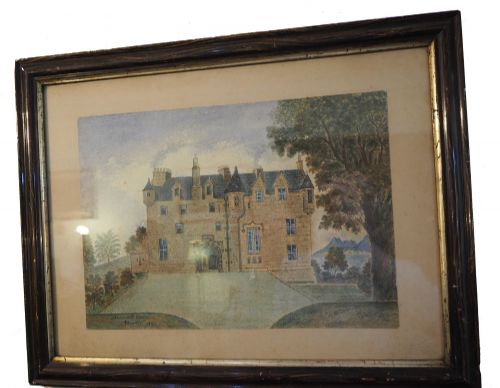
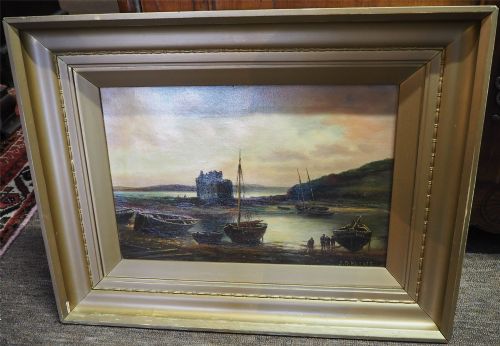
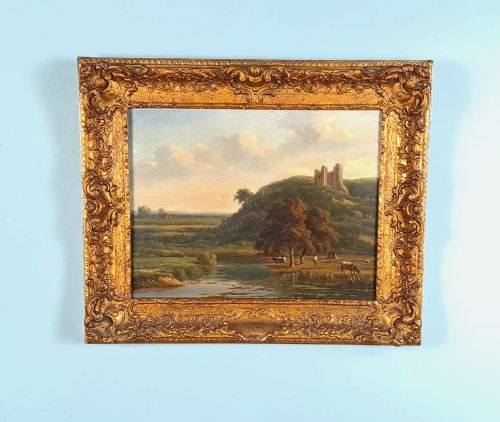
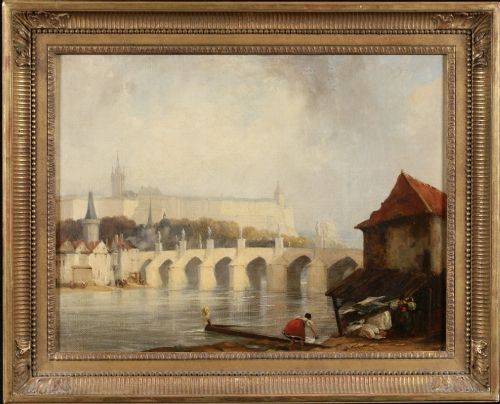
Antique castle landscape art encompasses paintings, watercolours, and decorative works depicting historic fortresses, ruins, and country houses set within riversides, coastal views, and dramatic natural scenery.
The selections available here lean heavily toward nineteenth-century Victorian watercolours and oil paintings, alongside eighteenth-century canvases and early twentieth-century British works.
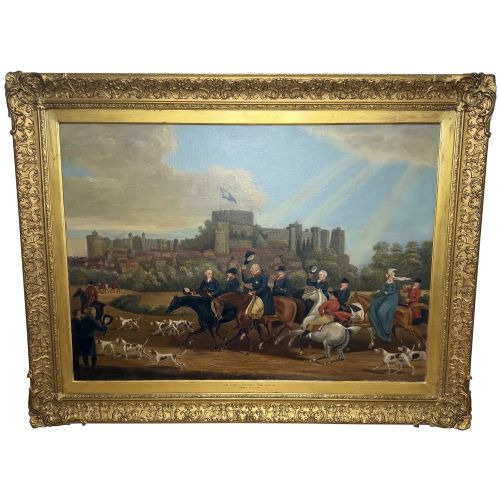
Subjects range from specific British landmarks like Windsor, Bamburgh, and Edinburgh structures to continental European scenes and imaginative romantic settings.
How they were made
Artists utilised oil on canvas, oil on board, and watercolour pigments applied to paper, capturing atmospheric light and fine architectural details of stone walls and battlements.
Many works incorporate traditional framing using giltwood, while alternative mediums such as handpainted porcelain vases, carved Welsh slate, and cork work dioramas demonstrate diverse artisanal techniques.
Subjects documented across the archive include Welsh slate folk art alongside traditional British and European oil paintings.
What varies in quality
Quality rests upon the artist's ability to render the structural precision of masonry alongside the atmospheric mood of the surrounding landscape and sky.
The finesse of brushwork, the preservation of original pigments on paper or canvas, and the integrity of period framing distinguish masterworks from simpler topographical records.
Angelo Maria Crivelli·T C Hofland·Thomas Cooper Moore·David Cox Jnr·William Mellor·George Gregory·George Morland·Claude Thomas Stanfield Moore·Karl Herrle·William Wyld·Samuel Sidley·Thomas Whittle the Younger·George Lambert
The Antique Castle Landscape Art Glossary
- Oil on canvas
- Pigments bound in drying oil applied to a stretched fabric support. This medium allowed artists to build rich textures and deep colours.
- Watercolour
- A paint consisting of colourants suspended in a water-soluble vehicle, typically applied to paper. It offers luminous, transparent washes ideal for atmospheric skies and water.
- Giltwood
- Wood carved and coated with a thin layer of gold leaf or gold paint. Frames finished in this manner were designed to complement the grandeur of oil paintings.
- Romanticism
- An artistic movement emphasising emotion, individualism, and awe of nature. Works in this style often present dramatic ruins under moody skies.
Antique Castle Landscape Art: Frequently Asked Questions
What periods do these castle paintings come from?
The pieces span from the eighteenth century through the Victorian era and into the early twentieth century. Artists across these periods interpreted historic fortifications through changing aesthetic lenses.
Earlier works often lean towards classical prospects, while nineteenth-century pieces embrace romanticism and dramatic weather effects.
How were these landscape watercolours displayed?
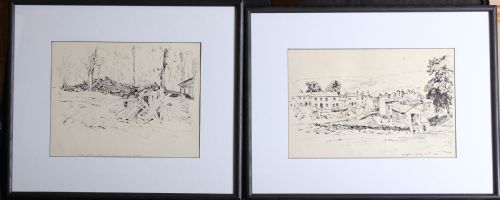
Victorian watercolours were traditionally mounted behind glass within protective wooden frames, often accented with gilt mouldings. This method shielded the delicate paper and pigments from atmospheric moisture and dust.
Framing choices frequently reflected the interior decor standards of country houses and domestic parlours.
Are all the depicted castles real places?
Most artworks record identifiable British and European fortresses, including Windsor Castle, Bamburgh Castle, and Prague Castle. Artists often travelled to these historic sites to sketch accurate architectural details.
Some compositions merge real structures with imaginative coastal or river surroundings to heighten the romantic mood.
What other mediums besides canvas feature castles?
Beyond standard paintings on canvas and paper, artisans applied castle imagery to decorative objects. Examples include handpainted porcelain vases, carved Welsh slate hearth pieces, and intricate cork work dioramas.
These varied items demonstrate the widespread cultural fascination with historic architecture during the nineteenth century.