


Original Autumn Landscape Painting
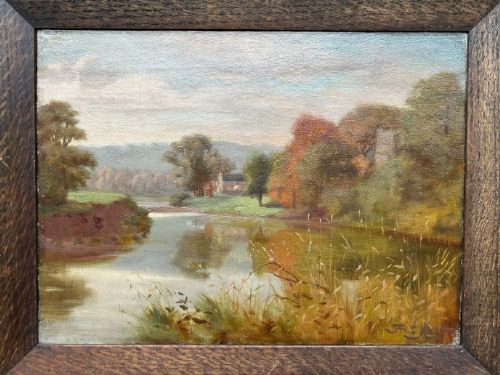
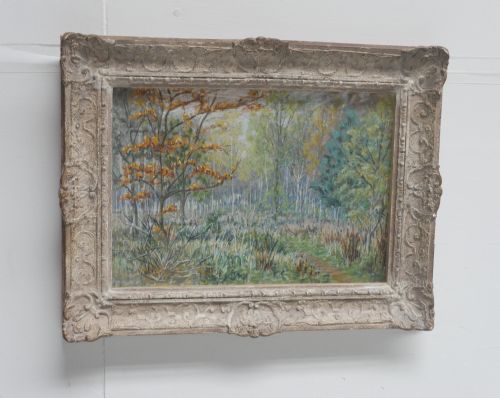
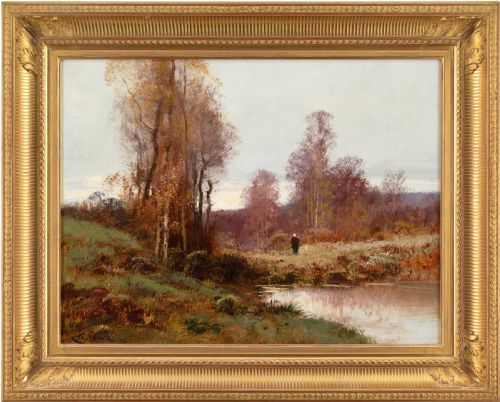
An original autumn landscape painting captures the shifting foliage and seasonal light of the cooler months across various historical periods.
Original Autumn Landscape Painting
An original autumn landscape painting depicts seasonal scenery through mediums such as oil, watercolour, and pastel on canvas, wood panel, board, or paper. Buyers seeking an original autumn landscape painting encounter works ranging from late nineteenth-century Victorian naturalism to mid-twentieth-century British impressionism and post-war styles.
The subjects span river valleys, woodland scenes, and farming countrysides across English, Scottish, Irish, Canadian, and Danish settings. Works frequently record specific locations like Yorkshire, Durham, and Staffordshire from the decades between the Victorian era and the nineteen-sixties.
How they were made
Artists applied oil paint or watercolour using brushwork that captures the varied textures of woodland foliage and water surfaces. Canvases, wood panels, and stiff boards serve as the primary supports for these landscape compositions.
Framing often complements the period style, utilising wood and ornate decorative mouldings to house the painted scenes behind glass where watercolours or pastels require protection.
The listings span works created across the nineteenth and twentieth centuries, incorporating oil, watercolour, and pastel mediums on canvas, wood, board, and paper.
What varies in quality
The handling of natural light and seasonal atmosphere dictates the visual depth of the composition. Skilled brushwork accurately conveys the distinctive reddish-brown hues of autumn trees and the damp air of riverbanks.
Provenance and signature clarity also influence the standing of a piece, alongside the condition of the canvas, panel, or paper support and any accompanying period frame.
Frederick Marriott·Charles Clair·Samuel Timmins·Arthur Herbert Rigg·George Graham·Owen Bowen·William Mellor·Walter Follen Bishop·Edmund George Warren·Berthe des Clayes·John Falconar Slater·Robert Lesley Howey·Charles James Adams·Frederick W Jackson·Ernest Higgins Rigg·J McIntyre·Hans Kappel Øvre·George Sykes·Ernest Moore·Augustus William Ennes·Everett W Mellor·Fred Merriman·Percy Lancaster·Charles Ashmore·Florence F Wilmot
The Original Autumn Landscape Painting Glossary
- Oil on canvas
- Pigments bound in a drying oil applied to stretched fabric. This combination allows for rich colour blending and textured impasto work.
- Watercolour painting
- Pigments suspended in a water-soluble vehicle applied to paper. It relies on the white of the paper to shine through translucent washes.
- Wood panel
- A rigid wooden support used by artists before canvas became dominant. It provides a stable surface for detailed landscape painting.
- Impressionism
- An art movement focused on accurate depiction of light in its changing qualities. It often employs visible brushstrokes and open compositions.
- Victorian Naturalism
- An artistic approach emphasising detailed observation of the natural world. It avoids idealized compositions in favour of topographical accuracy.
Original Autumn Landscape Painting: Frequently Asked Questions
How do I hang a heavy oil painting safely?
Ensure your wall fixings are secured directly into wall studs or utilise appropriate heavy-duty cavity anchors suited to your wall type. Heavy wooden frames require sturdy picture wire or D-rings attached firmly to the frame itself rather than just the stretcher bars.
Position the painting at eye level to best appreciate the brushwork and tonal depth of the landscape. Keep the piece away from direct sunlight and radiators to protect the canvas and oil pigments from environmental damage.
Can I display watercolours in direct sunlight?
Watercolour paintings and pastels are sensitive to ultraviolet light which can fade pigments over time. Display them away from windows receiving direct sun, or use glass treated with UV-filtering properties.
Keeping humidity levels stable in the room also prevents paper warping and foxing spots from developing over the decades.
What is the difference between oil and watercolour?
Oil paint utilises a slow-drying oil binder that allows artists to rework areas, blend rich colours, and build thick textured surfaces on canvas or wood panels. Watercolour uses water-soluble binders on paper, creating luminous translucent washes that dry quickly.
Oils are typically displayed without glass protection, whereas watercolours require framing behind glass to shield the paper from moisture and dust.
How do I identify the period of a landscape?
Examine the materials, stretcher construction, framing style, and any artist signatures or inscriptions on the reverse of the canvas or board. Stylistic clues such as the looser brushwork of mid-century pieces or the tighter detail of Victorian naturalism also help date the work.
Comparing the recorded location or subject matter with known exhibition dates for the artist provides further chronological context.