



Antique Carved Wall Appliques
These antique carved wall appliques bring warmth and period character to a room, offering functional illumination through finely worked wood and gilt surfaces.
Antique Carved Wall Appliques
When you search for antique carved wall appliques, you encounter lighting fixtures, sconces, and architectural elements designed to mount directly onto vertical surfaces. Most examples on this page date from the nineteenth and early twentieth centuries, though earlier centuries appear in carved wood and giltwood forms.
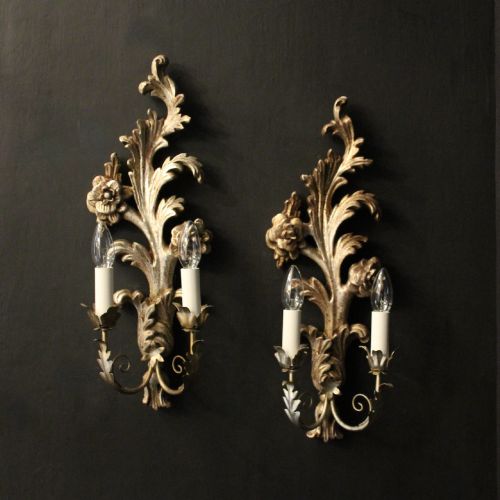
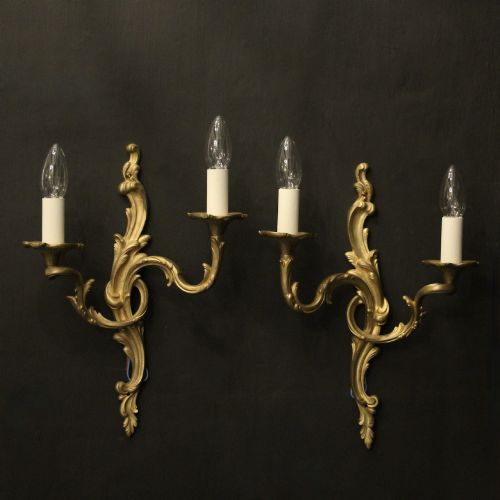
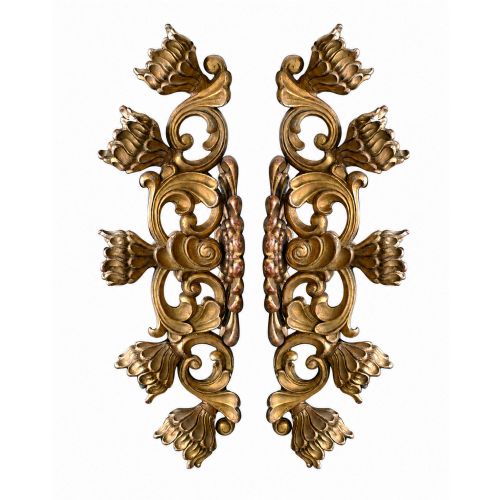
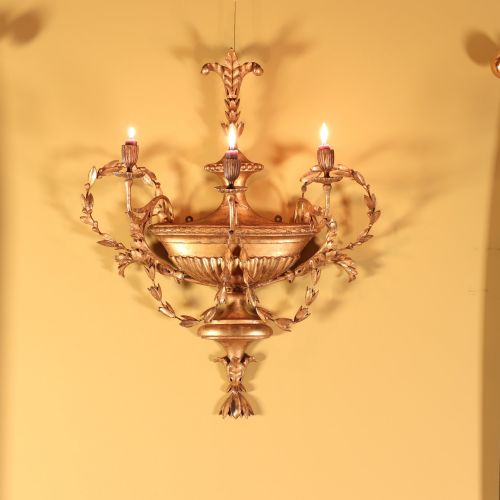
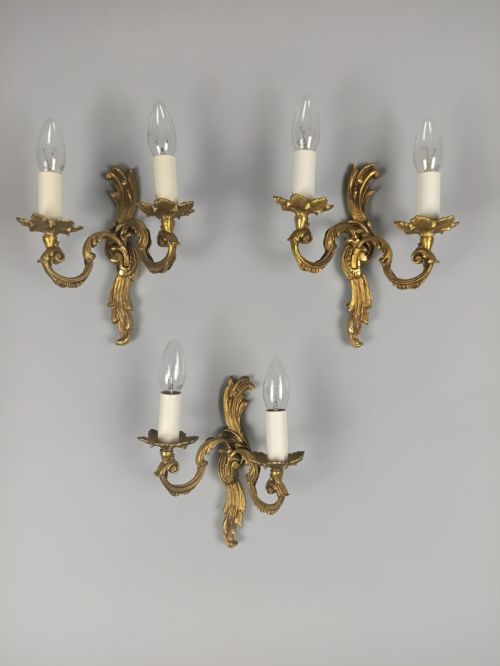
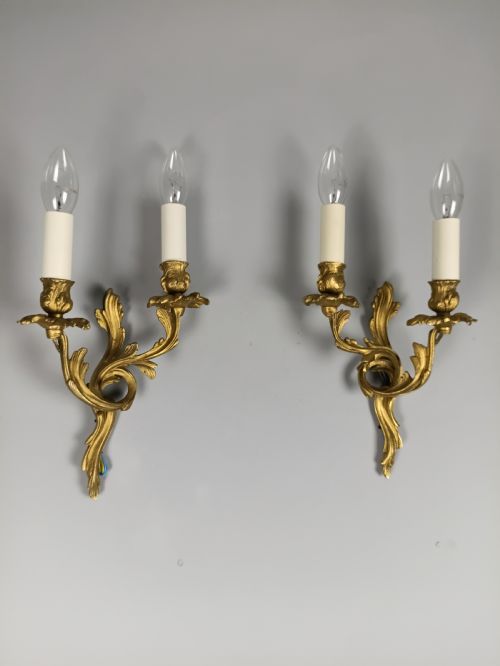
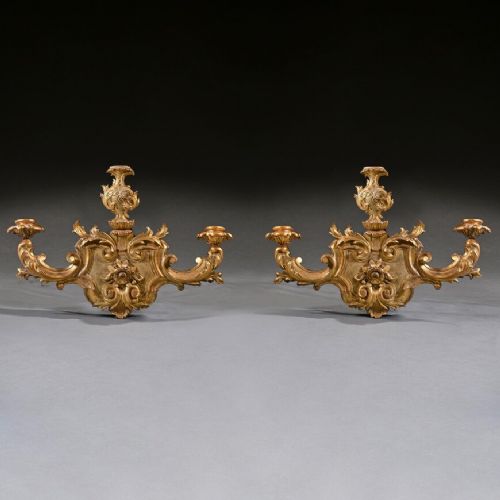
The selection ranges from French Rococo gilt bronze fittings to Italian Florentine giltwood pairs and heavy carved oak architectural fragments. These pieces typically take the form of single or multi-arm wall lights, mounted brackets, and carved panels intended to hold candles or electric bulbs.
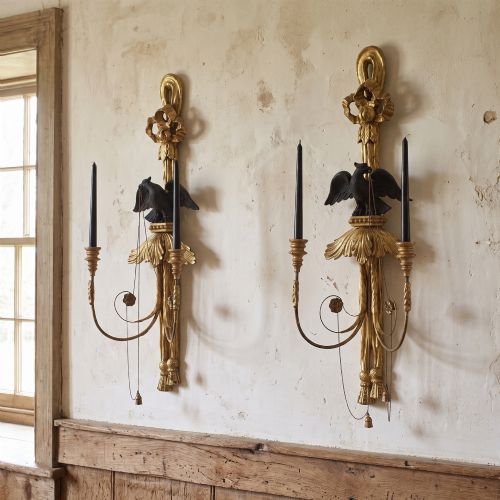
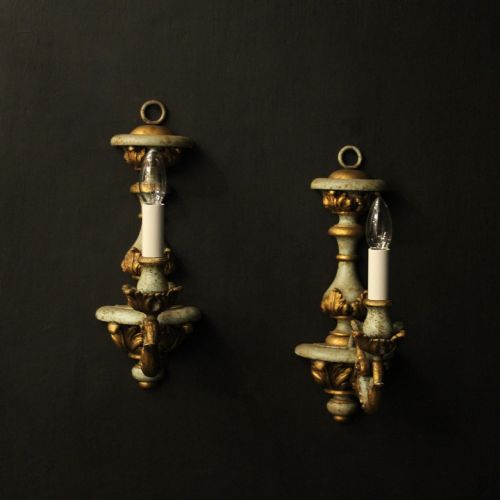
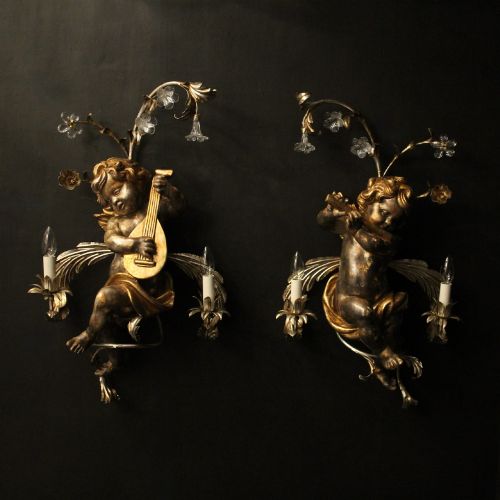
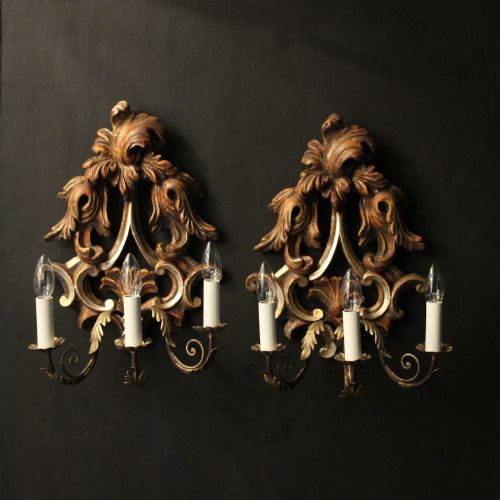
Geographic origin defines much of what is available, with French and Italian workshops dominating the selection through distinct regional styles. Buyers find everything from delicate ribbon-carved giltwood to polychrome figures and robust architectural terminals.
Materials and construction methods
Makers relied heavily on timber bases carved from woods like oak, limewood, and pine, often finished with layers of gesso to prepare the surface for gilding. Gold leaf and silver leaf were then applied over bole, creating the reflective surfaces characteristic of Florentine and French appliques.
Metal components introduce cast brass, ormolu, and gilt bronze, particularly in French Rococo and nineteenth-century designs where metal arms project from wooden or cast backplates. Polychrome paint finishes also appear directly on the carved wood, providing colour alongside metallic leaf.
Listings feature pieces spanning the seventeenth century through the 1930s, constructed in giltwood, brass, carved wood, and gesso.
Assessing quality in carved wall fittings
The depth and crispness of the carving dictate the visual impact of an applique, separating deeply undercut foliage and figures from softer, machine-milled or heavily worn work. Finer pieces retain the sharpness of the sculptor's chisel in details like acanthus leaves, ribbons, and putti.
The integrity of the surface finish marks the distinction between ordinary and superior pieces. Original gold leaf or silver gilt patination holds depth and warmth, whereas unsympathetic modern over-painting flattens the contours of the carved gesso beneath.
The Antique Carved Wall Appliques Glossary
- Giltwood
- Wood that has been coated with gold leaf over a prepared gesso ground. This finish provides a bright, reflective surface popular in Baroque and Rococo design.
- Gesso
- A plaster-like mixture applied to wood surfaces to create a smooth base for gilding or painting. It allows carvers to achieve crisp details before applying gold leaf.
- Ormolu
- Finely chased and gilt bronze used for decorative mounts and lighting fixtures. The technique was particularly prominent in French workshops during the eighteenth and nineteenth centuries.
- Polychrome
- Painted in several colours. This finish is frequently found on Italian wooden wall lights and carved figures from the nineteenth and early twentieth centuries.
- Sconce
- A wall-mounted lighting fixture designed to carry candles or electric lamps. The term is often used interchangeably with wall light in period listings.
Antique Carved Wall Appliques: Frequently Asked Questions
How do I wire antique wall lights?
Most antique wall lights originally held candles and have since been adapted for electricity at various points in time. A qualified electrician can safely run modern wiring through the existing channels without damaging the structural wood or metal.
When purchasing pairs or sets, check the backplates to see how previous installations accommodated wall fixings and wiring conduits.
What is the difference between a sconce and a wall bracket?
A sconce specifically refers to a wall-mounted fixture designed to hold candles or light bulbs. Wall brackets often served a purely architectural or decorative supporting role, though many historic pieces function as both.
In marketplace listings, these terms frequently overlap depending on whether the object includes projecting candle arms or remains a solid carved panel.
How can I tell Italian appliques from French ones?
Italian appliques, particularly those from Florence, often feature bold giltwood carving with deep acanthus motifs, polychrome highlights, and sometimes Murano glass elements. French examples tend toward refined ormolu mounts, structured ribbon crestings, and precise Rococo symmetry.
Examining the underlying timber and the application of the gesso helps clarify the regional workshop traditions behind each piece.