
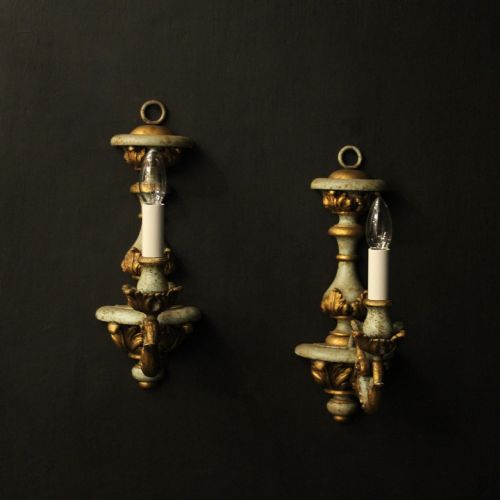


Gilt Polychrome Sconces
These gilt polychrome sconces bring dramatic colour and metallic warmth to a room, offering functional wall illumination through traditional European craftsmanship.
Gilt Polychrome Sconces
When you search for gilt polychrome sconces, you encounter decorative wall lights and girandoles designed to hold candles or electric fittings while adding ornamental presence to a wall. Most examples found here originate from Italy and France, spanning periods from the eighteenth century through to the early twentieth century.
The dominant forms on this page include pairs of single-arm and twin-arm wall lights, alongside related figures and candlesticks. These fixtures typically mount directly to panelled or plastered walls, casting a warm glow across period interiors.
Italian Florentine, Baroque, Rococo, and Neoclassical styles appear frequently alongside French provincial and chateau designs. Buyers searching for gilt polychrome sconces will find that Italian twentieth-century reproductions and revivals form the majority of the available selection.
How they were made
Carved wood serves as the primary structural foundation for these wall fixtures, shaped by hand into scrolling arms, floral motifs, and architectural backplates. Artisans applied layers of gesso to smooth the wooden surfaces before adding fine details in gold leaf and polychrome paint.
Porcelain also appears in specific figural pieces, shaped and hand-painted with coloured glazes before being fired in kilns. The combination of metallic leaf and pigmented paint creates the characteristic dual finish of these decorative works.
Several pairs include painted wooden fruit tucked among the carved foliage, offering a permanent harvest on the wall.
What varies in quality
The finesse of the initial wood carving determines much of the visual depth, separating crisply articulated acanthus leaves and scrolls from softer, more generalised moulded shapes. Superior examples exhibit deliberate hand-tooling that catches light unevenly across the gilded surfaces.
The application and preservation of the polychrome pigments and gold leaf dictate the overall richness of the piece. Finely preserved layering shows subtle tonal variation rather than flat, uniform colour.
The Gilt Polychrome Sconces Glossary
- Polychrome
- Painted in several colours. This surface treatment often combines with metallic leaf to create vibrant decorative contrasts.
- Gilt
- Covered thinly with gold leaf or gold paint. It reflects candle or ambient light to brighten darker corners of a room.
- Girandole
- A decorative wall bracket for candles carrying a mirror or ornamental backplate. These fixtures multiply the effect of available light.
- Gesso
- A plaster mixture applied to wood surfaces as a base for painting and gilding. It provides a smooth ground for intricate detail work.
- Acanthus
- A carved ornamental motif based on the foliage of the Mediterranean plant. It frequently decorates the structural arms of these wall lights.
Gilt Polychrome Sconces: Frequently Asked Questions
How do I mount antique wall sconces safely?
These wooden and metal fixtures require secure wall anchors suited to your specific wall construction, whether lath, plaster, or masonry. Ensure the backplate bears the weight securely before trusting any internal wiring.
Consult a qualified electrician if you intend to convert candle-holding sconces to modern electrical power. Professional installation protects the fragile antique structure from accidental damage.
Are these sconces meant for candles or electricity?
Many traditional wall lights and girandoles were originally designed for wax candles rather than bulbs. Examining the nozzle and drip pan reveals whether the piece retains its original burning configuration.
Later adaptations often introduce electrical wiring through the central wooden body. Collectors frequently choose to preserve the original candle sockets for decorative display purposes.
How do I clean polychrome and gilt surfaces?
Dust these delicate wooden surfaces gently using a soft, dry artist's brush or feather duster. Avoid applying water or chemical cleaning agents directly to the painted and gilded areas.
Moisture can lift fragile gesso and gold leaf from the wood substrate. Regular, gentle dusting preserves the historic finish without risking abrasion.
How do I distinguish Italian styles from French ones?
Italian pieces on this page frequently draw upon Baroque, Rococo, and Florentine traditions, featuring bold, theatrical carving and rich polychrome palettes. The forms often display exuberant asymmetry and deep surface relief.
French provincial and chateau designs tend towards slightly restrained proportions and provincial rustic charm. Examining the specific floral motifs and structural symmetry helps identify the regional origin.