
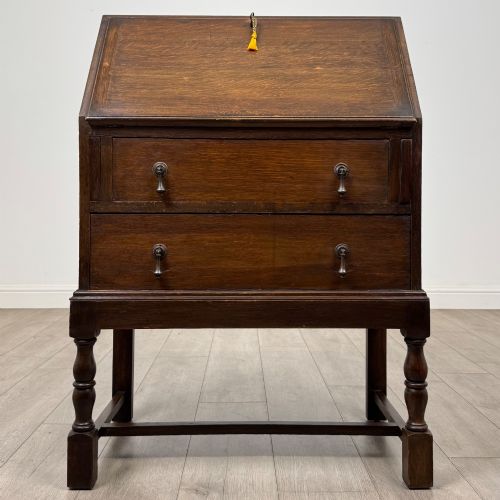
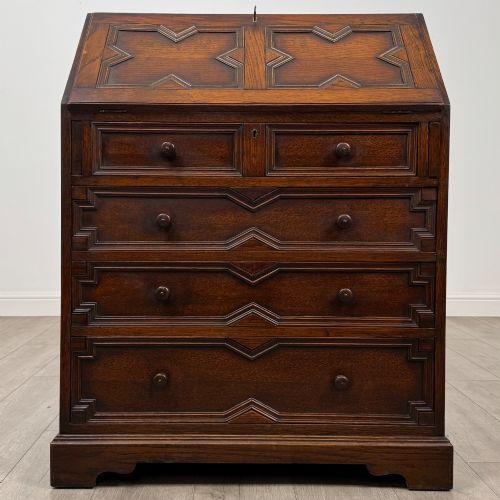
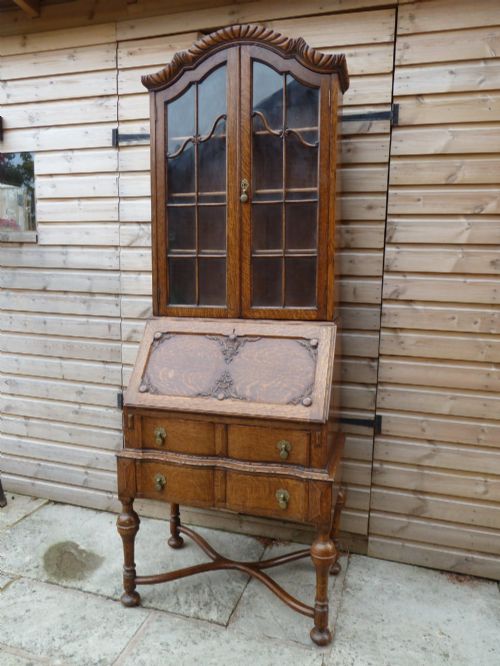
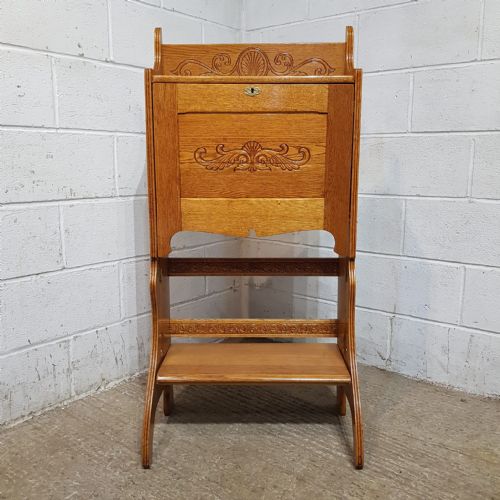


Antique Carved Slant Desk
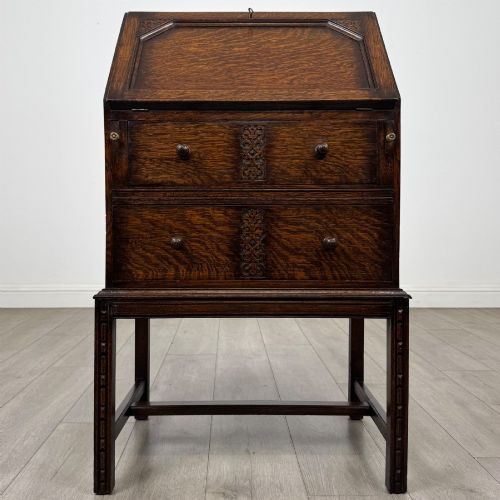
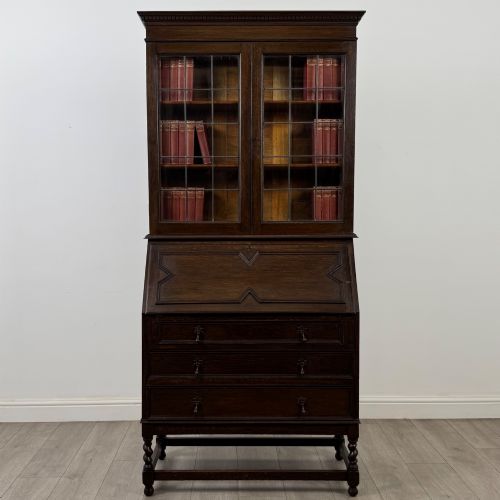
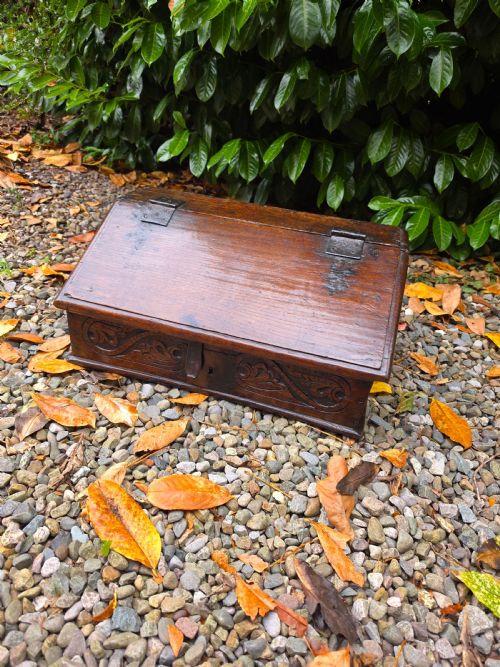
An antique carved slant desk brings timber writing furniture into daily life, offering hinged slopes and fitted compartments.
Antique Carved Slant Desk
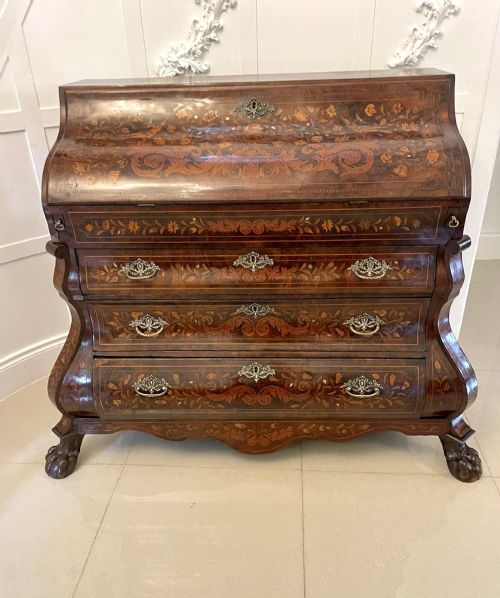
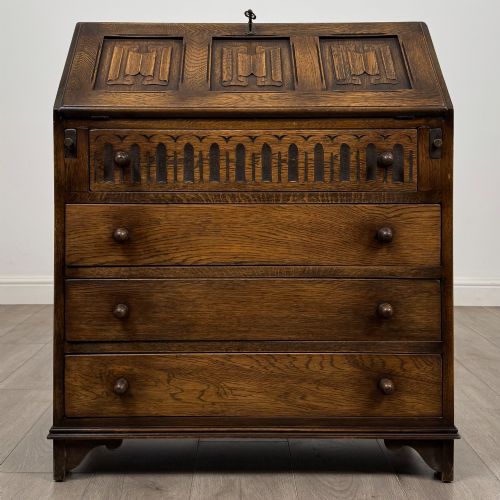
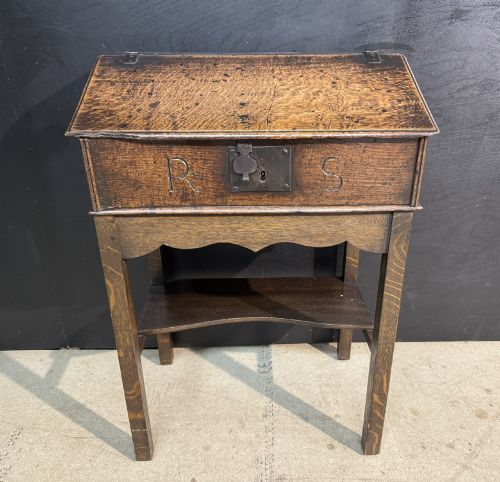
An antique carved slant desk encompasses writing furniture designed with sloping lids for paperwork, ranging from compact boxes to large bureau bookcases. The selection spans centuries from the seventeenth century through the Victorian and Edwardian eras, reflecting changing domestic habits in study and correspondence.
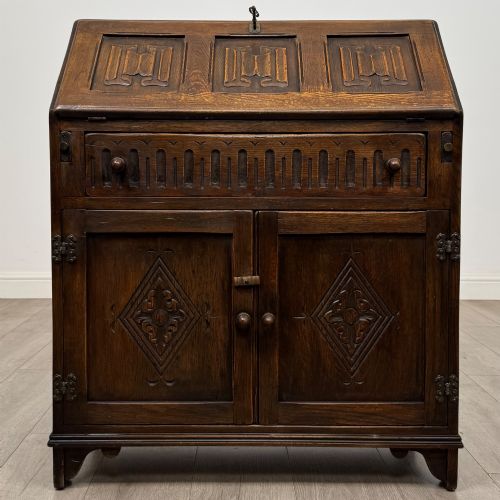
Oak dominates the earlier vernacular and revival examples, often displaying heavy carving such as linenfold or Green Man motifs. Walnut, mahogany, and rosewood appear frequently in later bureau and Davenport forms, carrying marquetry or plain polished surfaces.
Evaluating craftsmanship
The sophistication of the internal stationery compartments separates standard utility pieces from exceptional examples. Elaborate pigeonholes, hidden compartments, and fitted satinwood interiors indicate greater workshop investment.
The crispness and depth of hand carving determine visual success, particularly on revival pieces where mechanical work lacks vitality. Timber selection also dictates grade, with dense burr walnut veneers and figured mahogany representing the higher tiers.
Several Victorian desks incorporate fierce Green Man carvings peering out from beneath the writing slopes.
The Antique Carved Slant Desk Glossary
- Slant desk
- A piece of furniture featuring an angled hinged lid that opens to reveal a writing surface and small drawers.
- Bureau
- A desk with a sloping flap enclosing documents, often raised on legs or storage drawers.
- Davenport
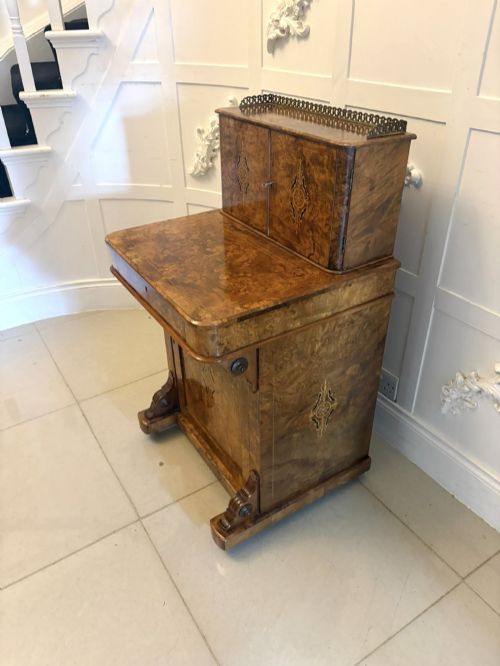
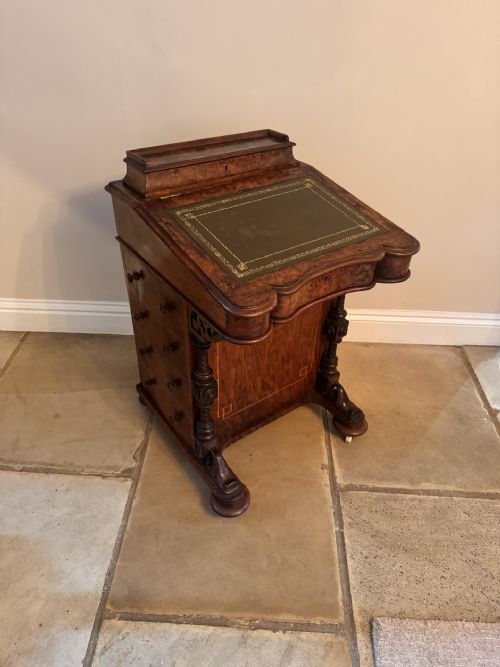
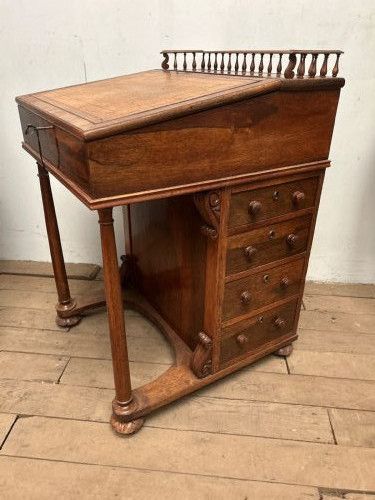
- A compact writing desk featuring a sloped top above a pedestal of drawers, originating in the nineteenth century.
- Marquetry
- Decorative veneer patterns formed from thin pieces of wood, ivory, or shell applied to a carcase.
- Linenfold
- A style of carved wooden panel resembling folded vertical folds of cloth, common on early oak furniture.
Antique Carved Slant Desk: Frequently Asked Questions
How do I use an antique slant desk today?
These desks accommodate modern laptops and stationery inside their sloping compartments just as they held ledgers centuries ago. The height suits upright seating for writing and administrative tasks.
Protect the writing surface using a blotter if the leather or polished wood is delicate. Internal compartments keep small items organised while concealing work when the lid closes.
What is the difference between a bureau and a Davenport?
A bureau typically sits on a chest of drawers or a frame, opening to expose a wide writing flap supported by pull-out lopers. It provides substantial surface area and storage.
A Davenport is much more compact, combining a slant top with a pedestal of side drawers designed for seated use. The writing slope often lifts independently from the base.
How can I tell a 17th century desk from a later revival?
Early seventeenth century pieces display hand-riven timber, vernacular construction marks, and distinct peg joinery without modern adhesives. The patination shows centuries of natural wax accumulation.
Revival pieces from the Edwardian period adopt historical motifs like Jacoben panels or linenfold carvings but utilise machine-cut elements and standardised fittings. The interior timber choices and backboards usually reveal the true manufacturing era.
What maintenance do these wooden desks require?
Keep wooden surfaces away from direct heat sources and strong sunlight to prevent veneer cracking and timber shrinkage. Occasional feeding with a quality wax preserves the polish.
Check the hinges on the writing slope periodically to ensure they support the weight without straining the surrounding wood. Avoid using liquid cleaning products on antique polishes.