
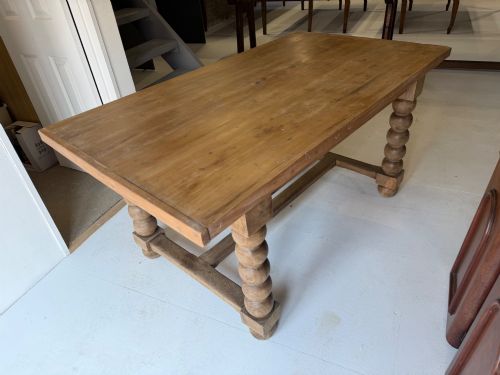
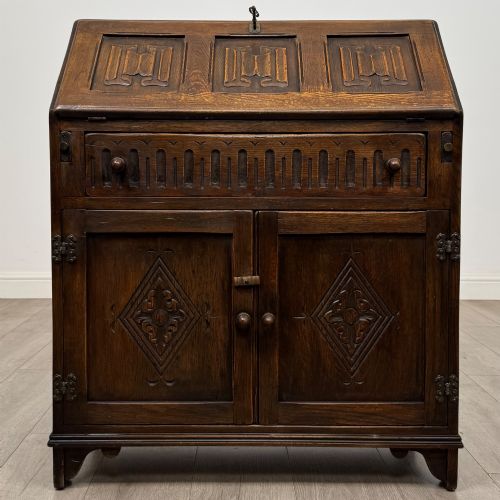
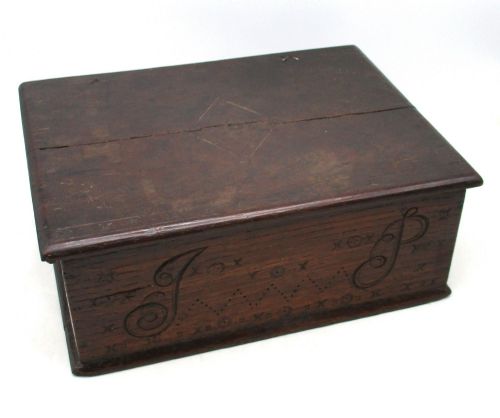
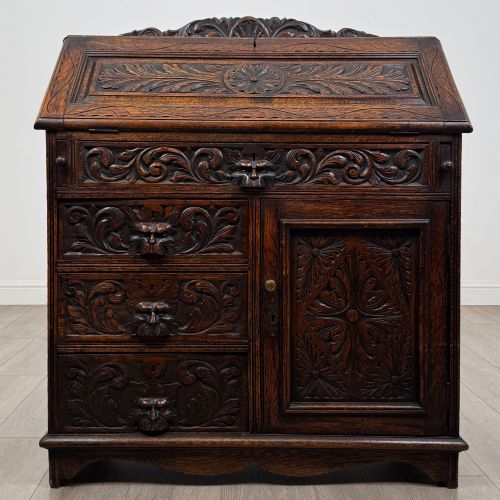

Antique Carved Oak Desk
These antique carved oak desk pieces bring solid Victorian craftsmanship and rich timber grain into a room, offering sturdy surfaces built for daily writing.
Understanding the antique carved oak desk
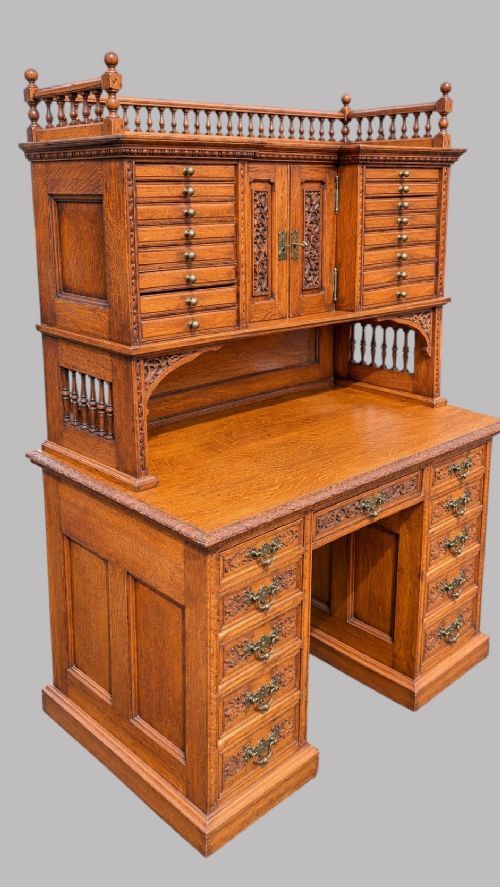
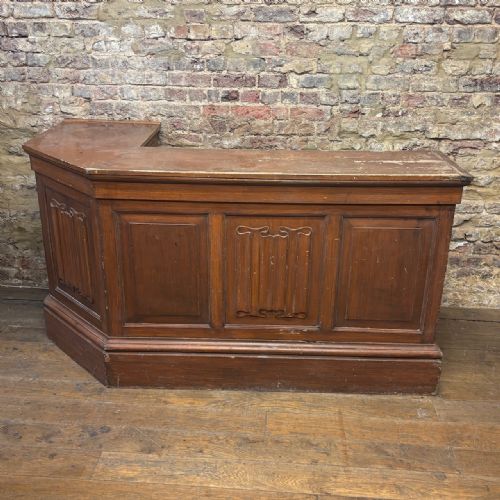
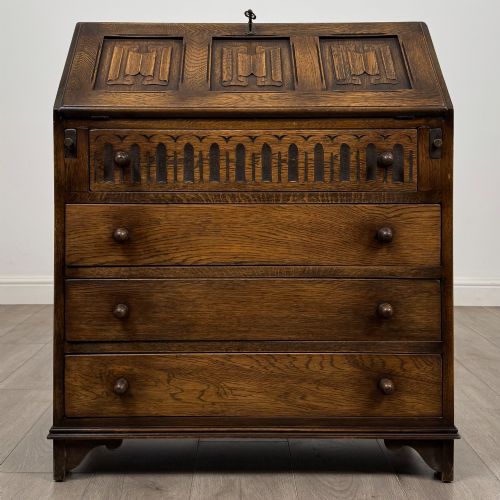
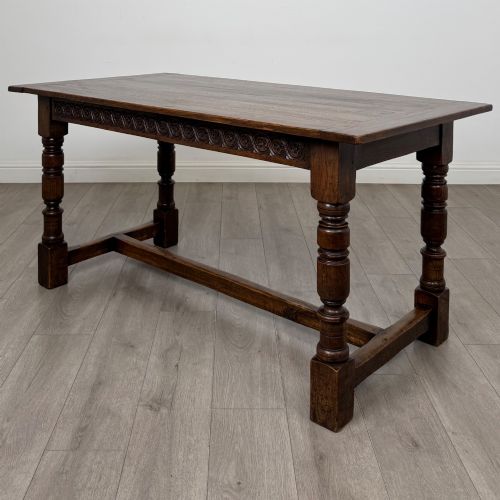
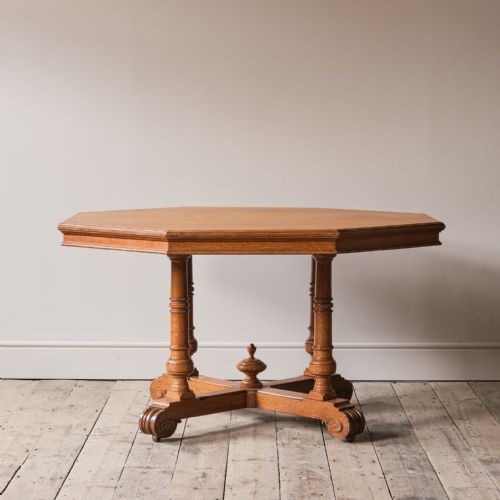
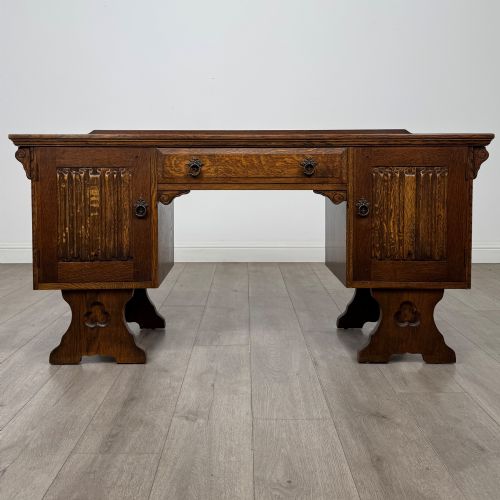
An antique carved oak desk encompasses writing tables, pedestal forms, Davenport desks, and bureau styles produced primarily across the nineteenth century. The Victorian era dominates the selection, bringing heavy timber construction and detailed ornamentation to domestic and library spaces alike.
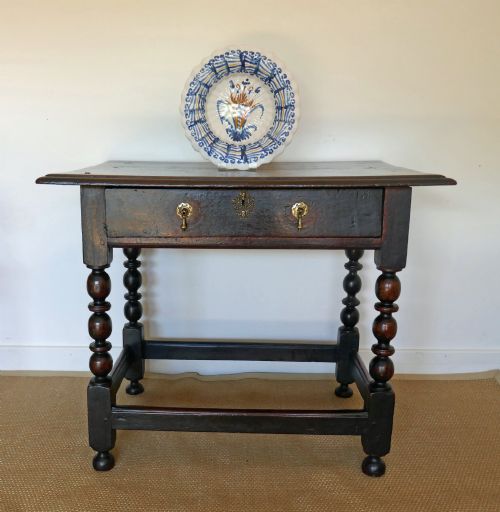
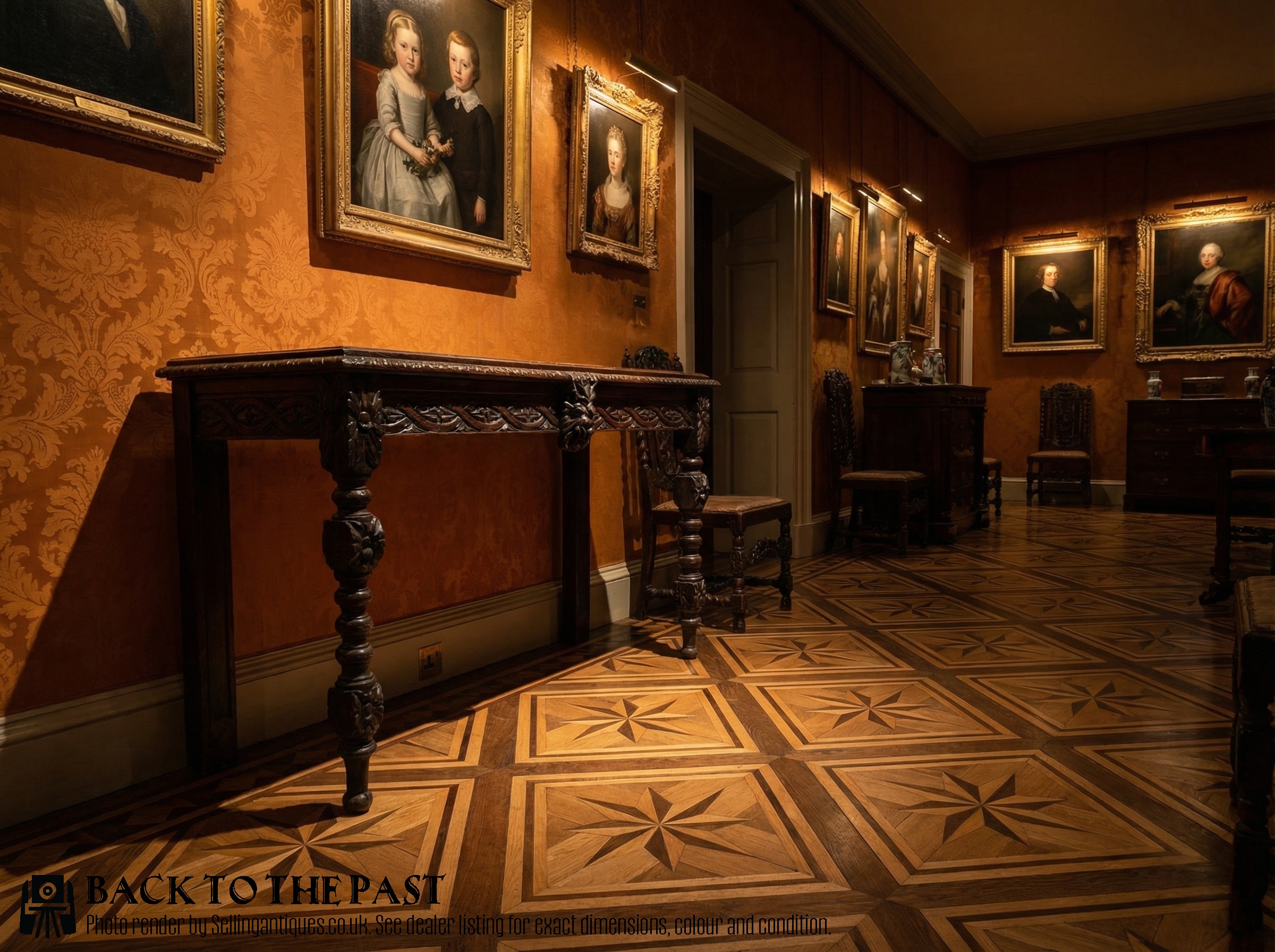
Makers utilised resilient oak to create practical furniture that often incorporated sculptural elements such as green men, lion masks, and tavern scenes. Surviving pieces range from simple hall tables and writing tables to elaborate partners desks and pedestal office desks.
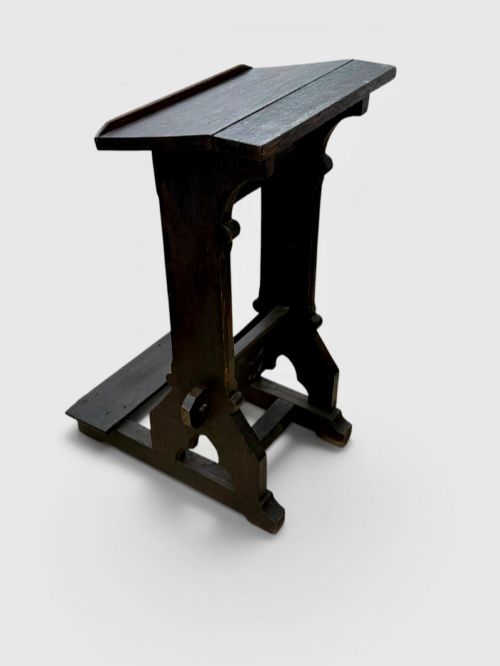
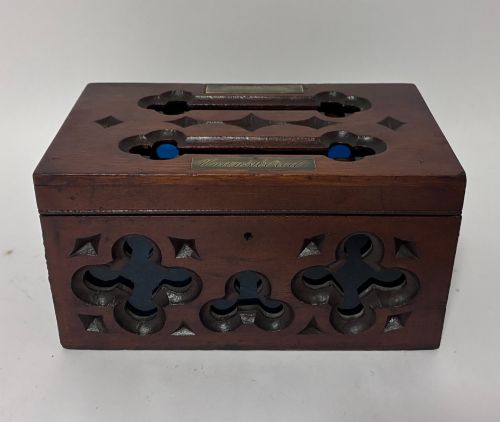
Revival styles heavily influence these items, with Gothic Revival, Jacobean Revival, and Victorian Gothic designs appearing frequently in the evidence. Buyers encounter everything from compact correspondence desks to substantial freestanding library tables.
Materials and construction methods
Craftsmen built these desks using solid oak, a dense and durable timber selected for its strong grain and resistance to heavy wear. Carpenters shaped the wood using traditional joinery techniques suited to the demands of nineteenth-century furniture production.
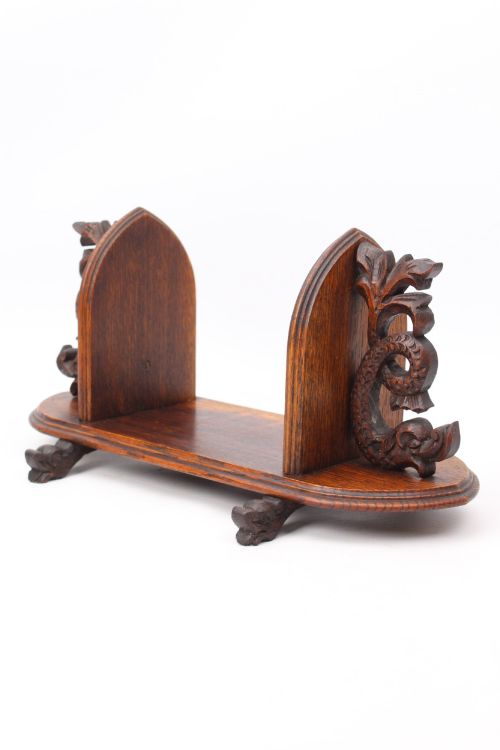
Carving formed a central part of the manufacturing process, with artisans hand-chiselling intricate motifs directly into the oak panels, friezes, and supports. Details such as green man masks and Gothic tracery emerged from the solid wood rather than being applied as separate mouldings.
Keep an eye out for hidden green men peering from the oak carvings, quietly watching over centuries of correspondence.
Distinguishing quality across the range
The sophistication and depth of the hand-carved ornamentation dictate much of the distinction between standard and superior examples. Pieces featuring fully realised sculptural elements like green men or lion masks demand higher levels of artisan skill than plain or lightly moulded furniture.
Structural complexity also separates the categories, moving from simple hall tables and single pedestal formats up to extensive partners desks and fitted bureau units. The integrity of the timber and the retention of original leather writing surfaces further define the better specimens.
Drude and Co
The Antique Carved Oak Desk Glossary
- Oak
- A hard, durable timber with a prominent grain, used extensively for heavy furniture throughout the nineteenth century and earlier.
- Pedestal desk
- A form featuring two supporting columns of drawers or cupboards beneath a wide writing top, often finished on all sides for freestanding placement.
- Green man
- A sculptural motif depicting a human face entwined with or emerging from foliage, frequently carved into Victorian oak furniture.
- Partners desk
- A large double-sided writing table designed for two people to work opposite one another, typically fitted with drawers and cupboards on both faces.
- Gothic Revival
- An architectural and decorative style popular in the nineteenth century that revived medieval forms, pointed arches, and heavy tracery.
Frequently Asked Questions
What periods do these desks come from?
The available evidence shows these pieces date primarily from the nineteenth century and the Victorian era, though earlier examples from the eighteenth century occasionally appear.
Craftsmen working during the Victorian period produced the vast majority of these desks, often drawing on earlier Gothic and Jacobean design motifs.
How were these desks used originally?
These items served as functional writing spaces, library tables, and correspondence centres for writing letters and managing household or business accounts.
Larger pedestal and partners desks accommodated professional use in studies and offices, while smaller hall tables and writing desks functioned in domestic rooms.
What materials are standard for these pieces?
Solid oak serves as the primary material across every listed piece in the archive, valued for its strength and distinctive grain patterns.
Some writing desks and library tables also incorporate leather inserts on the top surface to provide a smooth writing plane.
How do I identify a Victorian Gothic desk?
Victorian Gothic desks display architectural influences from medieval design, featuring pointed arches, tracery, and heavy carved woodwork.
These pieces often include dark oak timber and sculptural details that reflect the mid-nineteenth-century revival of Gothic aesthetics.