

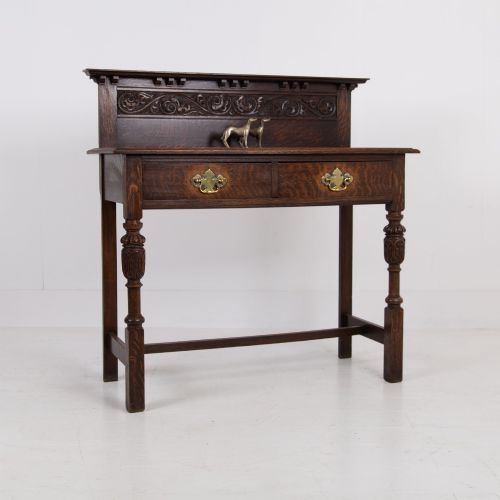
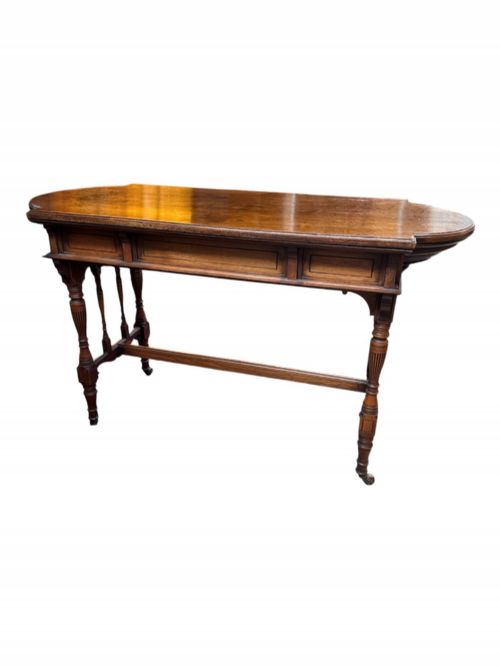
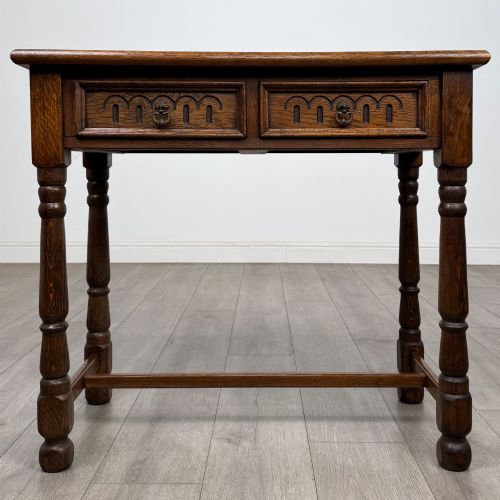
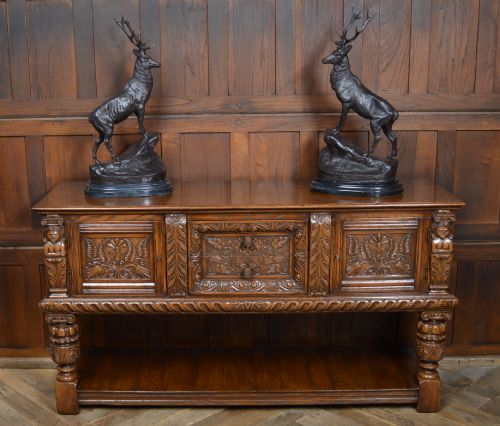
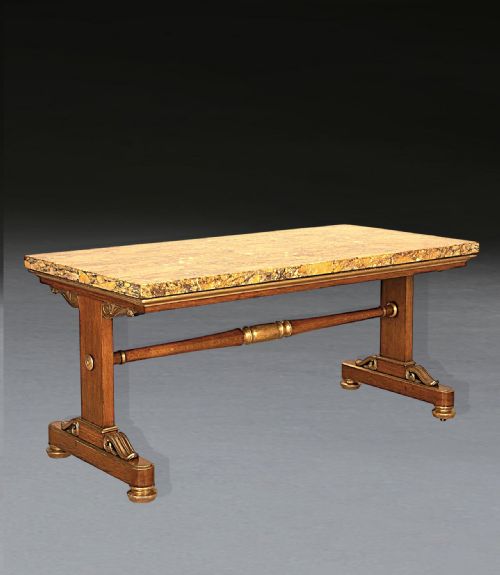


Edwardian Carved Oak Console
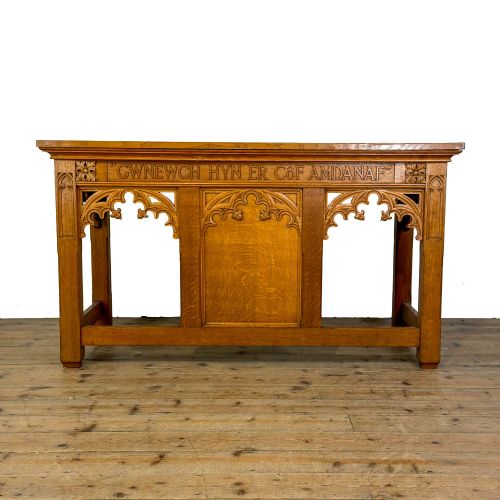
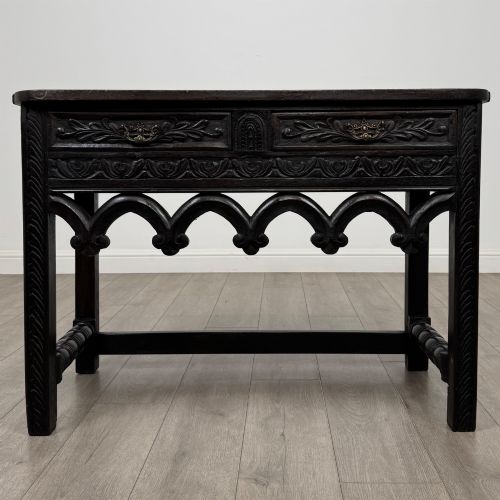
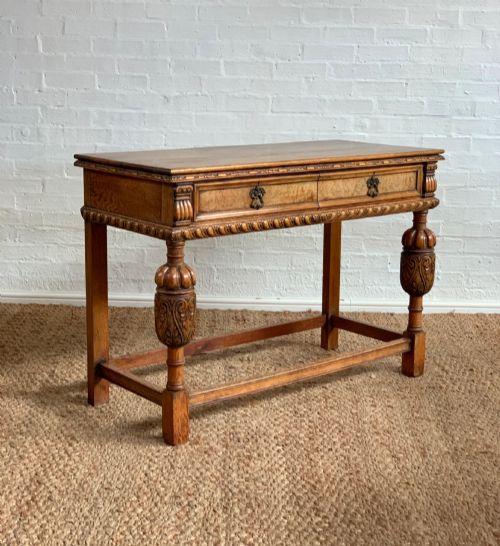
An edwardian carved oak console provides a sturdy anchor for a hallway or reception room, bringing rich grain and deep relief carving into domestic spaces.
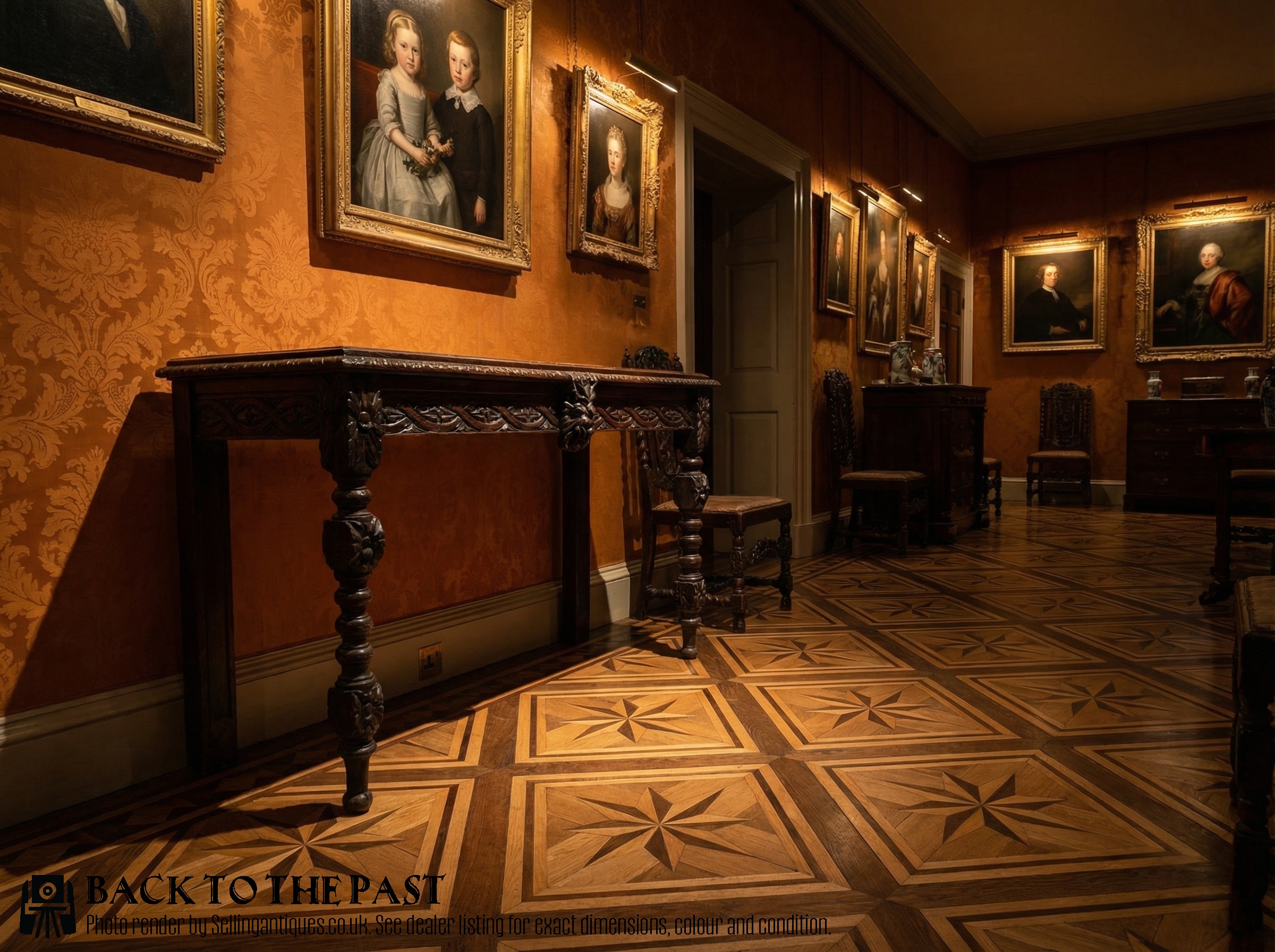
Edwardian Carved Oak Console
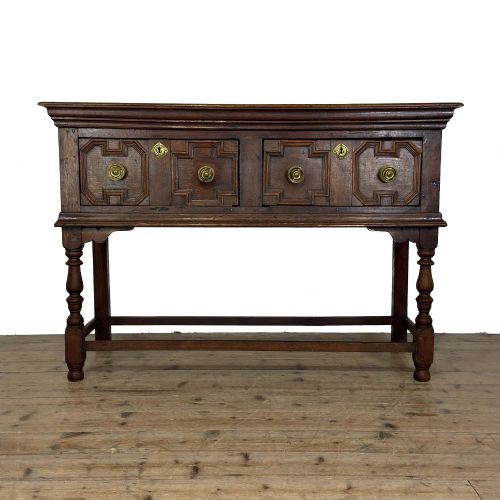
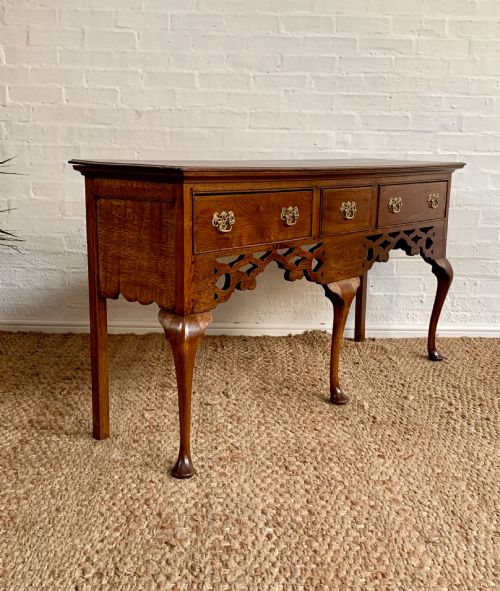
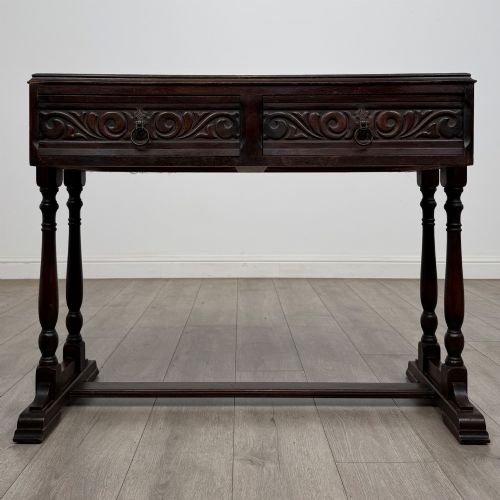
When you search for an edwardian carved oak console, you encounter tables built to stand against hallway and living room walls, often sharing characteristics with side tables, hall tables, and dresser bases. These items emerge primarily from the Edwardian period and the early twentieth century, though nineteenth-century iterations also appear.
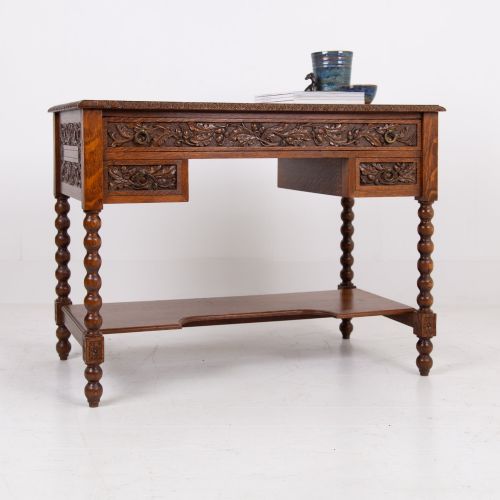
The form ranges from narrow hall surfaces to larger serving tables and dresser bases equipped with drawers and lower pot boards. They serve practical domestic functions while displaying the robust character typical of vernacular and revivalist furniture design.
What varies in quality
Quality rests primarily on the depth and crispness of the carving, distinguishing mechanically produced decoration from skilled hand chiselling. The choice of timber also dictates standard, with quartersawn oak displaying desirable medullary rays that elevate the appearance of the piece.
Proportion and structural integrity separate standard utility pieces from finer examples. Balanced dimensions, well-fitted drawers, and substantial secondary timbers indicate superior cabinetmaking.
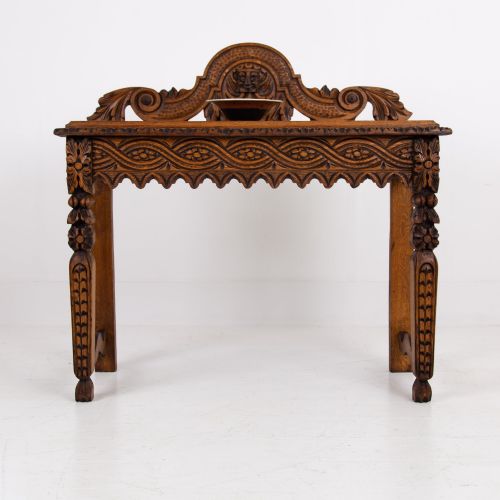
Stumble across a wooden face peering from the leaves of a Green Man carved table and wonder who is watching the post.
Beresford and Hicks London
The Edwardian Carved Oak Console Glossary
- Console table
- A table designed to stand against a wall, frequently secured to it or balanced on front legs. These surfaces suited narrow spaces like hallways and reception rooms.
- Dresser base
- A low cabinet or table featuring drawers and sometimes an open lower shelf known as a pot board. They served utilitarian storage and display roles in domestic interiors.
- Pot board
- An open lower shelf fitted between the legs of a dresser base or sideboard. It provided convenient storage for heavy pots and kitchen or dining utensils.
- Green Man
- A sculptural architectural ornament depicting a human face surrounded by or sprouting from foliage. This motif appears frequently in revivalist carved woodwork.
Edwardian Carved Oak Console: Frequently Asked Questions
Where should I place an edwardian carved oak console?
These tables suit narrow circulation areas such as hallways, entrance passages, and landings where floor space is limited. Their shallow depth allows them to sit against walls without obstructing movement.
They also function effectively in reception rooms or dining spaces as serving surfaces or display stands for lamps and decorative objects.
How do I care for an oak console table?
Protect the timber by dusting regularly with a dry cloth and applying natural beeswax periodically to nourish the grain. Avoid placing the table in direct sunlight or near heat sources to prevent timber splitting.
Use coasters and felt pads under objects placed on the surface to guard against moisture rings and scratches.
What is the difference between a console table and a side table?
Console tables traditionally stood against walls and often required a wall fixture for stability, though many freestanding variants developed later. They focused on decorative presence in formal rooms.
Side tables were generally built as freestanding furniture designed to be moved around a room to serve immediate functional needs.
How do I identify the Edwardian period in oak furniture?
Edwardian furniture produced after nineteen hundred often reinterprets earlier styles like Jacobean and Gothic Revival with lighter proportions and machine-assisted carving. The oak used during this era tends to be clean-grained and finished with warm varnishes or polishes.
Hardware such as brass handles and drawer pulls often reflects the Arts and Crafts influence or simplified Georgian revivals popular at the time.