
Antique Carved Foyer Table
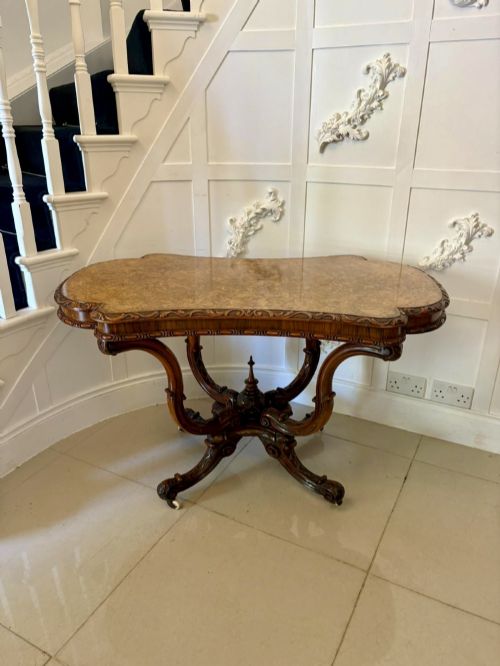
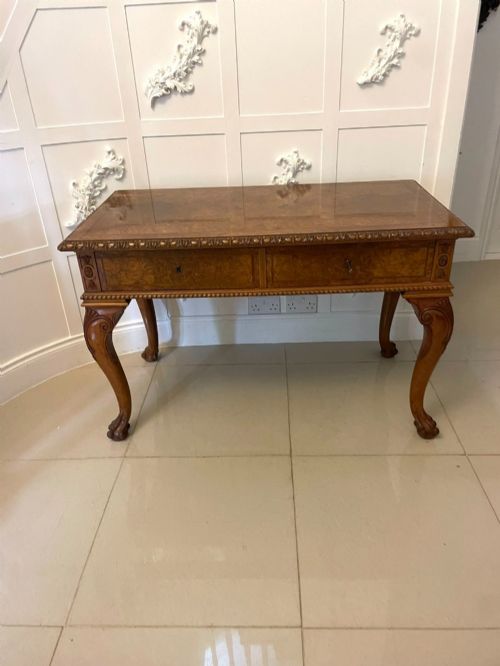
An antique carved foyer table grounds a hallway with timber weight, marble tops and heavy ornamentation.
Antique Carved Foyer Table
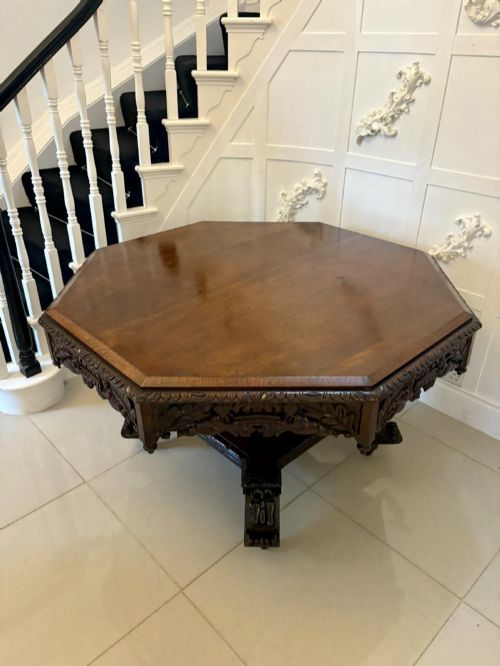
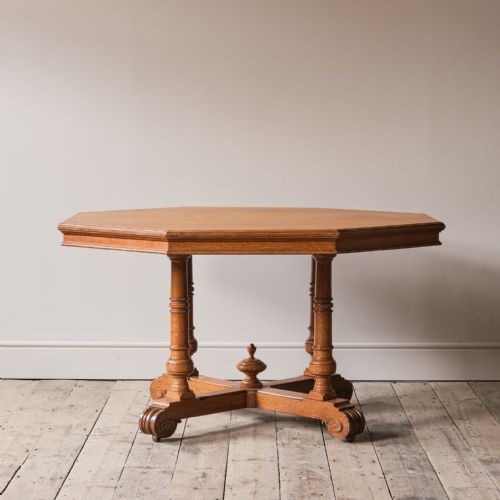
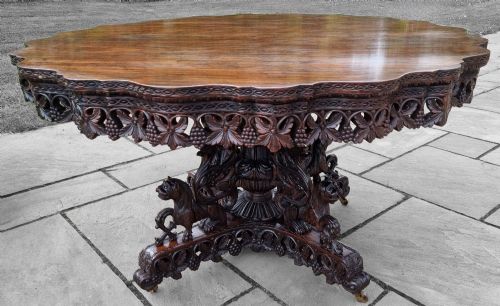
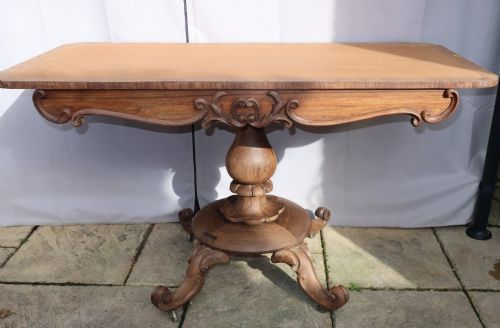
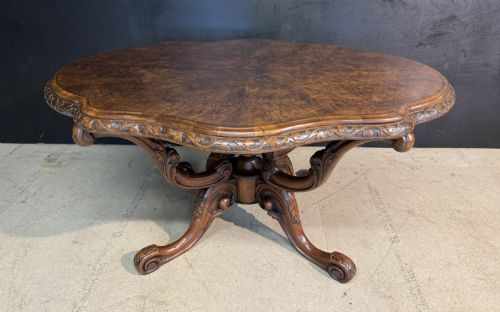
An antique carved foyer table meets visitors in an entrance hall or sits freestanding in a large room as a centre table. The selection spans the nineteenth century through the Edwardian period, drawing on Victorian, French Empire, William IV, and Queen Anne styles.
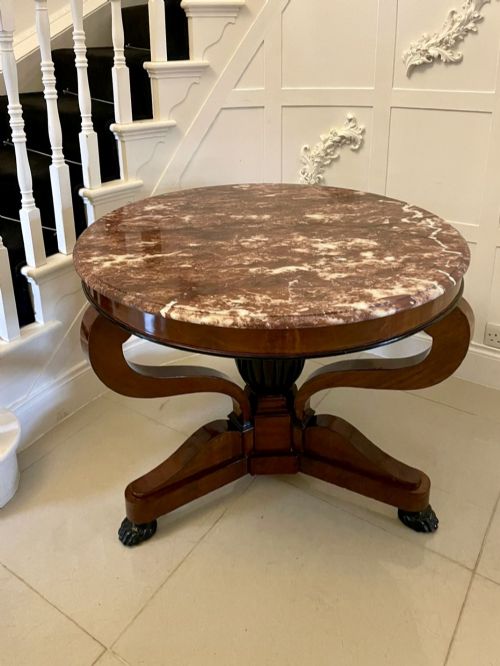
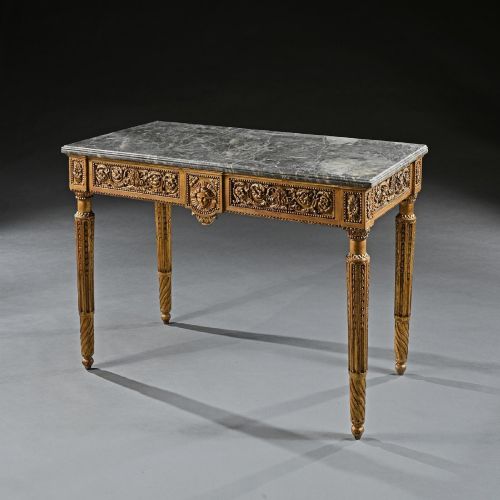
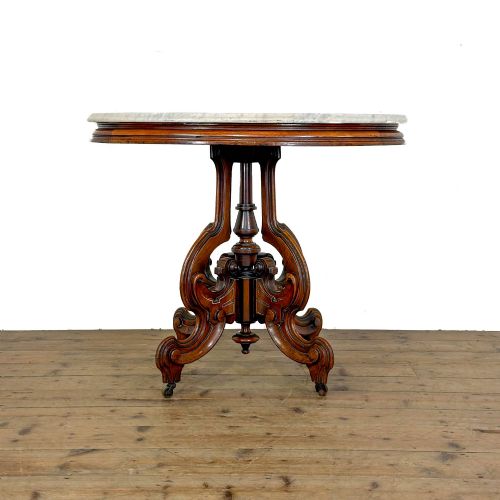
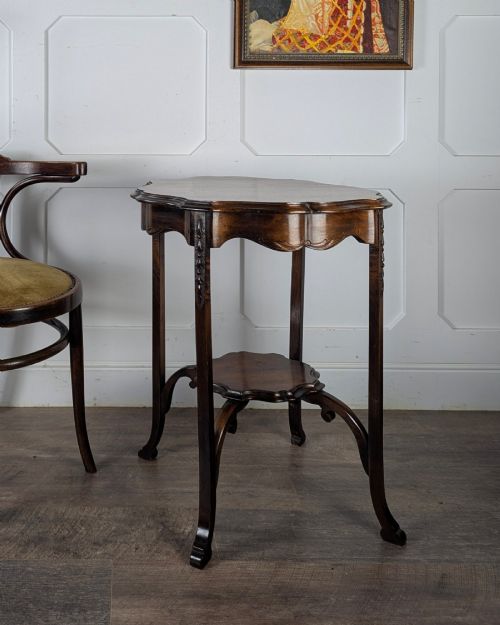
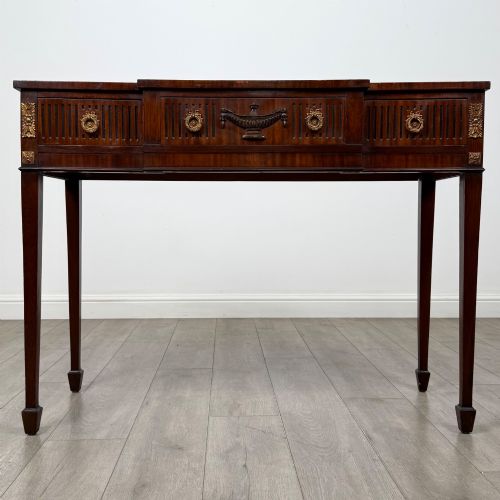
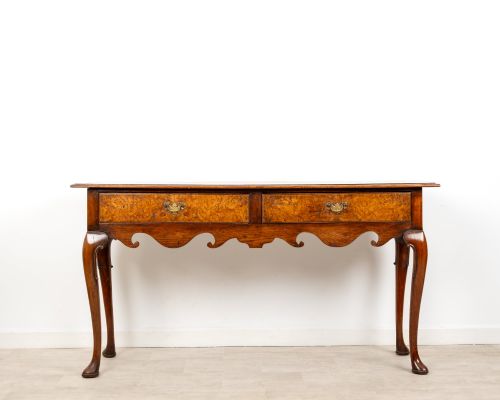
Buyers encounter console tables positioned against walls alongside freestanding centre tables, gueridons, and side tables. Woods like mahogany, burr walnut, rosewood, and oak dominate the forms, frequently paired with marble or giltwood.
How they were made
Cabinetmakers worked dense hardwoods including mahogany, walnut, rosewood, and oak, often applying burr walnut or satinwood veneers to create richly figured surfaces. Hand-carved details define the frames, showing deep relief work on pedestals, aprons, and legs.
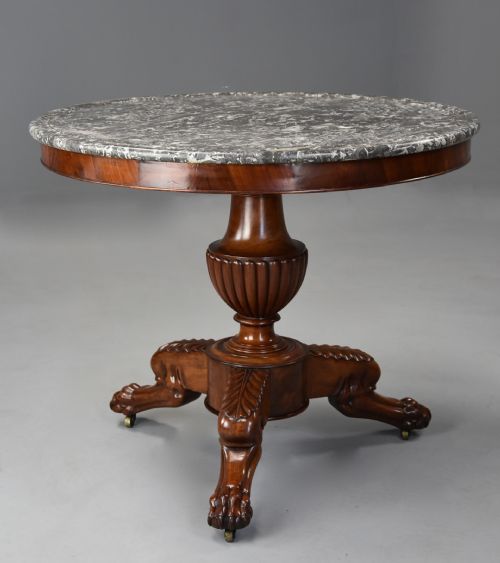
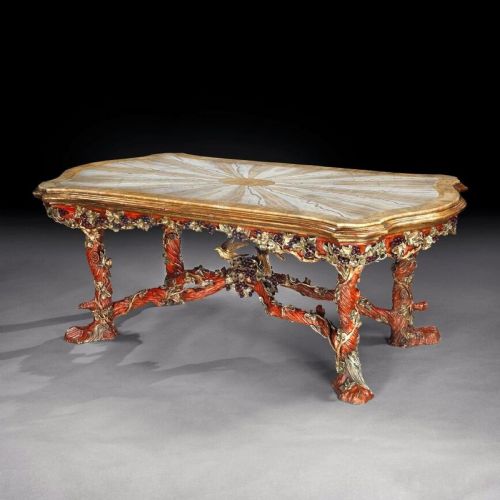
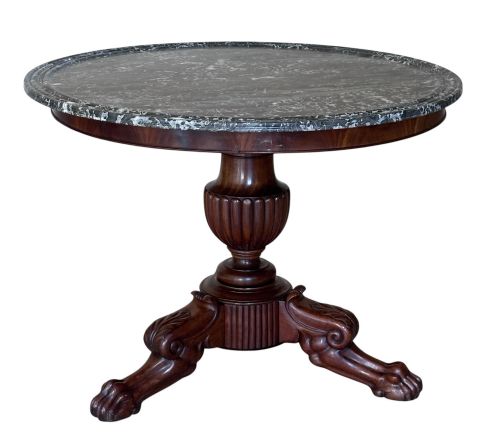
Heavy stone slabs, particularly white or veined marble and Siena marble, were fitted directly into the wooden frames of console and gueridon tables. Giltwood accents and brass mounts added metallic contrast to the dark timber structures.
Several tables feature hidden tilt-top mechanisms, built so guests could fold the surface flat and stash the furniture out of the way when the dancing started.
What varies in quality
The distinction between ordinary and exceptional tables lies in the depth and crispness of the hand-carving and the choice of timbers. Superior pieces employ highly figured burr walnut, padauk, or ebony, paired with heavy original marble tops rather than later replacements.
Construction methods signal standard versus high-tier workshop output, visible in robust joinery, balanced proportions, and refined secondary woods. Tables bearing documented maker attributions command greater interest through advanced cabinetmaking techniques.
Peters of Genoa·Shapland and Petter
The Antique Carved Foyer Table Glossary
- Console table
- A table designed to stand against a wall, frequently secured to it with brackets or resting on front legs. These pieces anchor entrance halls and display decorative objects.
- Gueridon
- A small circular French table supported by a central pillar or multiple legs. They frequently feature marble tops and served historically as candle stands or small display tables.
- Centre table
- A freestanding table intended to be viewed from all sides, placed in the middle of a room. They often act as the visual anchor for large reception spaces.
- Tilt top
- A tabletop hinged to the pedestal base so it can be tilted vertically when not in use. This mechanism allowed tables to be stored against walls to save floor space.
- Giltwood
- Timber that has been coated with a thin layer of gold leaf or gold paint. It appears heavily on frames from French and Regency periods to catch the light.
Antique Carved Foyer Table: Frequently Asked Questions
Where should I place a foyer table?
These tables suit entrance halls, corridors, and large reception rooms where a freestanding centre table or wall-anchored console functions as a focal point.
Position them away from direct heat sources and strong sunlight to protect vulnerable timber veneers and polished finishes.
How do I clean marble tops?
Wipe marble surfaces with a soft, damp cloth and neutral soap, avoiding acidic cleaners or abrasive scourers that etch the stone.
Dry the surface immediately afterwards to prevent water rings and preserve the polished finish of the antique top.
Are these tables freestanding?
Console tables are traditionally designed to stand against a wall and may require attachment for complete stability, whereas centre tables and gueridons stand entirely on their own.
Check the underside and leg configuration to determine whether a piece requires wall fixing.
How do I identify the wood type?
Examine the grain pattern, colour variation, and weight of the timber across the top and apron of the table.
Mahogany shows a reddish-brown linear grain, burr walnut displays swirling knot formations, and rosewood carries dark streaks through a deep brown base.