
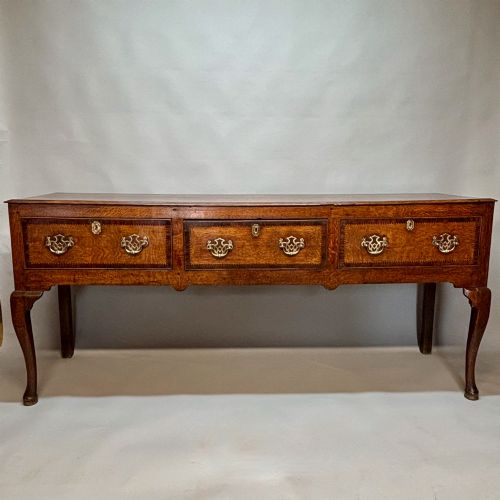
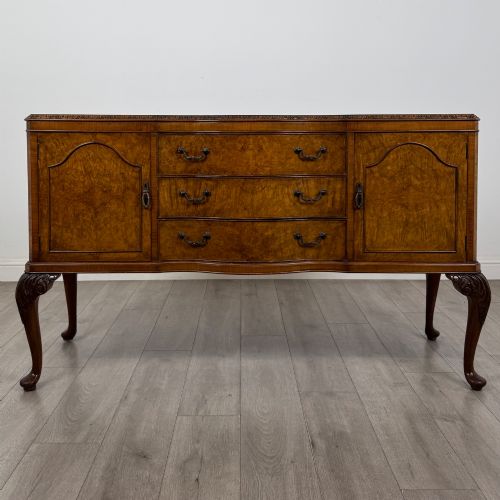
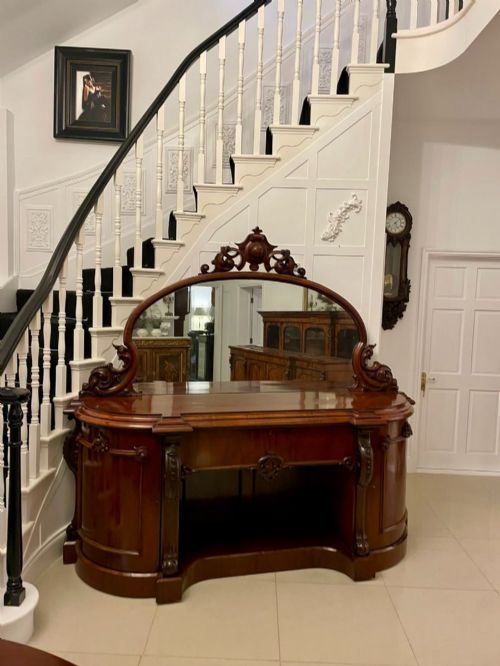
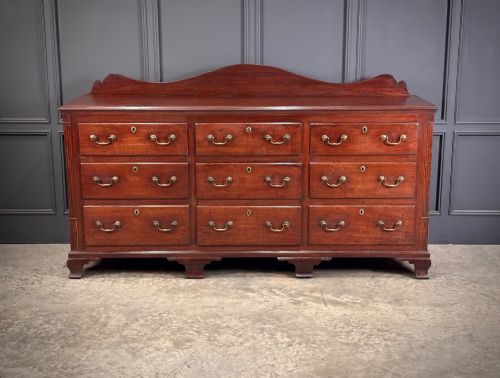
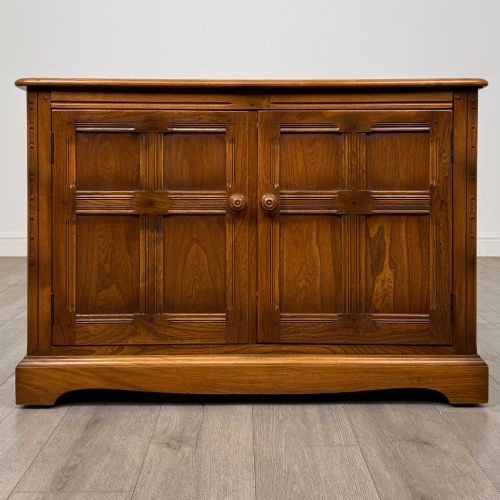
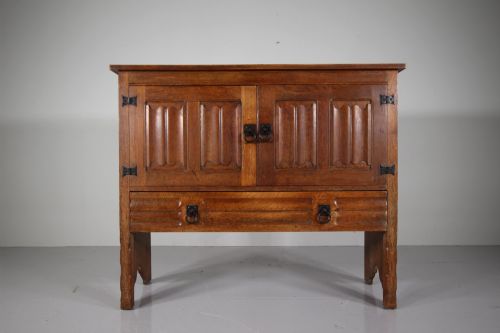
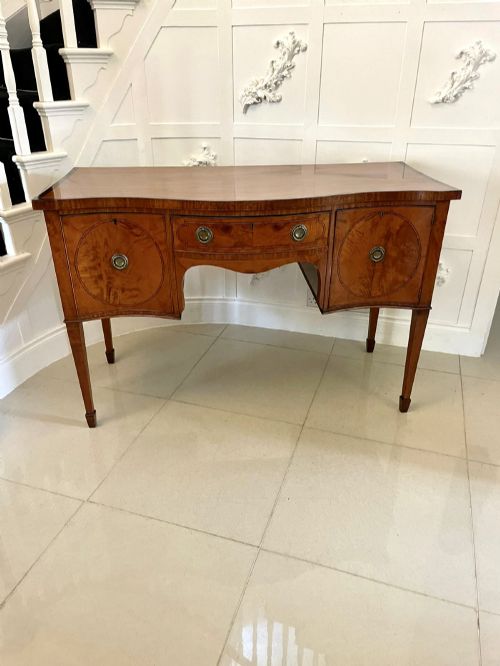
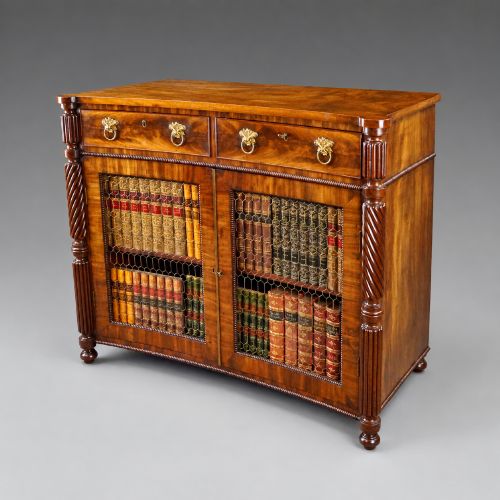
Antique Carved Credenza
An antique carved credenza brings substantial presence to a room, offering deep timbers and mirror backs shaped by nineteenth-century hands.
Antique Carved Credenza
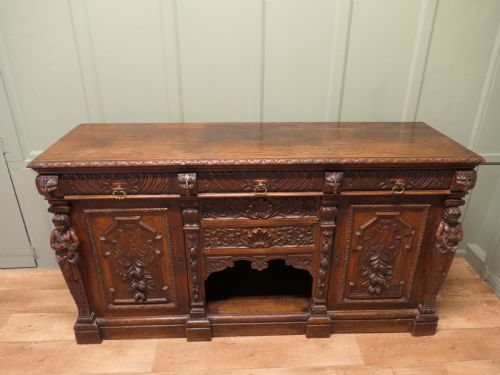
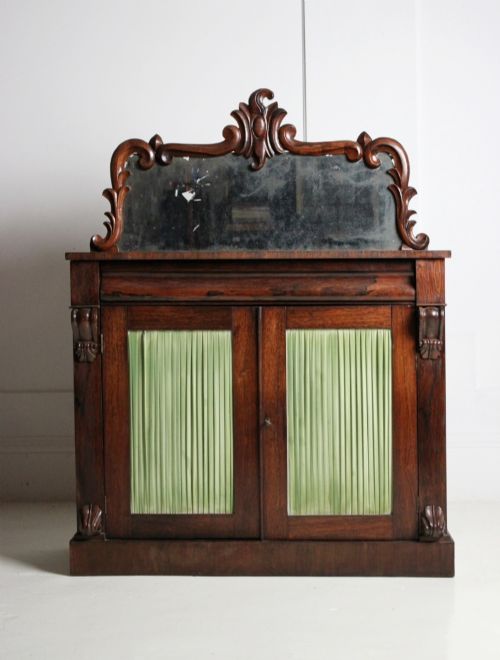
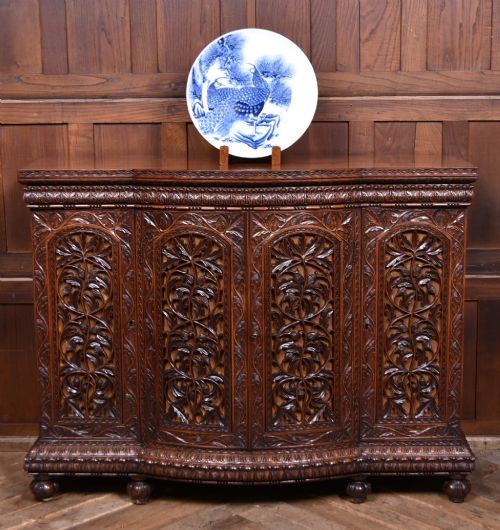
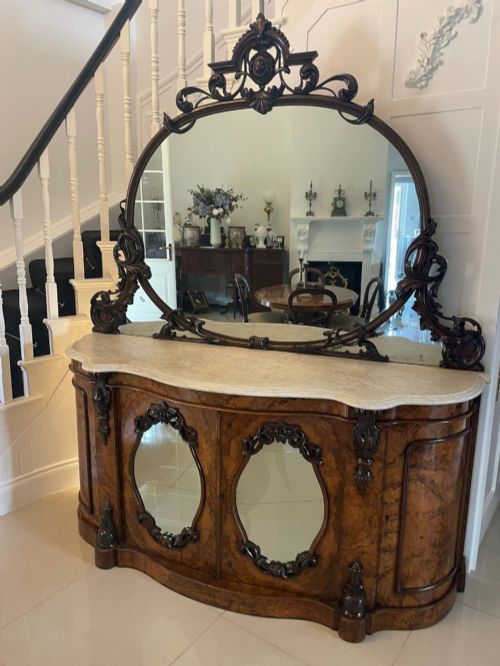
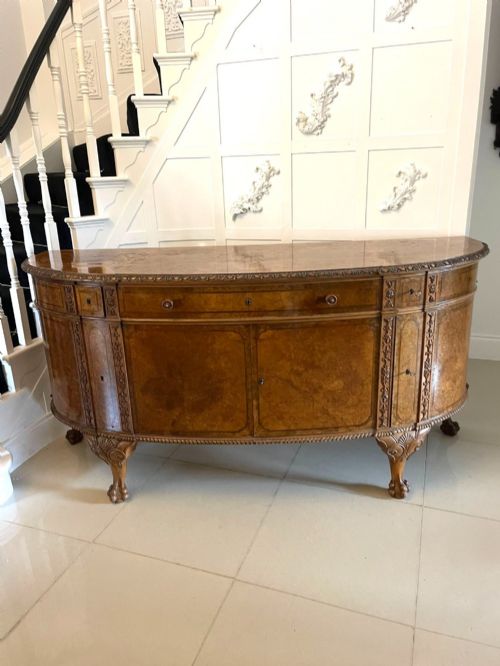
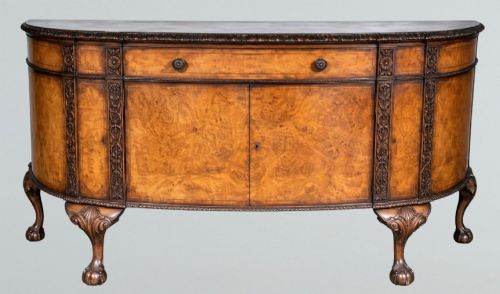
An antique carved credenza typically presents as a substantial timber cabinet or sideboard designed for display and storage in the principal rooms of a house. The examples found here span the Victorian era and the nineteenth century, often merging the definitions of sideboard, chiffonier, and mirror-backed server.
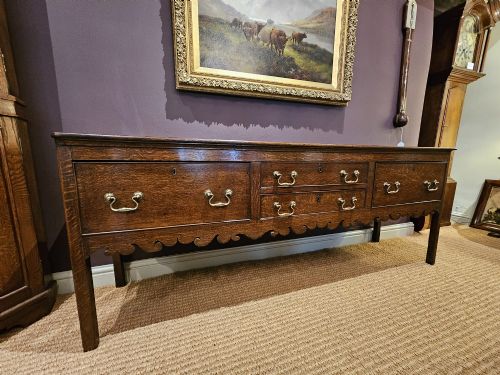
Buyers will frequently encounter Victorian walnut and burr walnut iterations featuring carved mirror backs, alongside robust oak pieces from the Edwardian period. These items served dining rooms and reception rooms, providing surface space for serving and enclosed shelving for china and silver.
Materials and construction methods
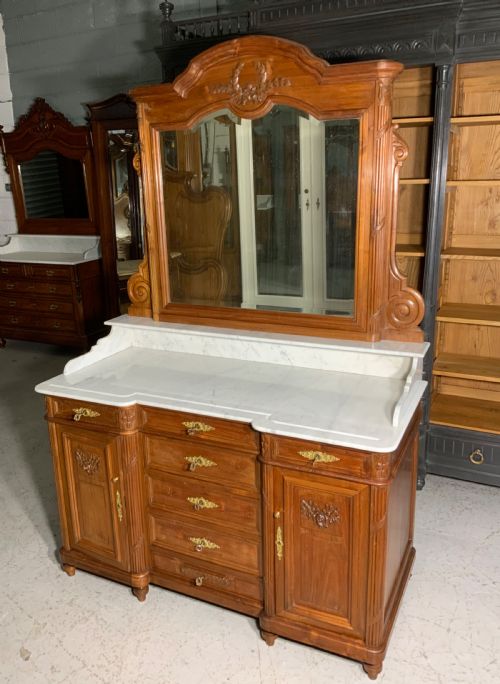
Cabinet makers utilised dense hardwoods such as oak, mahogany, and burr walnut, frequently applying figured veneers over solid secondary timbers to create rich surface patterns. Brass hardware, marble tops, and glass panels appear across various pieces to complement the primary wood.
Joinery relied on traditional framing techniques, while decoration involved deep relief carving executed directly into the timber. Mirror glass, when present, was typically bevelled and set into carved wooden superstructures secured to the main body.
Several dining servers arrive complete with original cutlery sets, proving that past owners guarded their silver just as carefully as their walnut.
Distinctions in craftsmanship and finish
The standard of a piece rests upon the selection of the timber veneers and the depth of the carving. Finely figured burr walnut and symmetrical flame mahogany command attention through the natural grain patterns chosen by the maker.
Structural integrity and the crispness of the chisel work distinguish workshops of higher ambition. The integration of secondary woods, the weight of the marble tops, and the fluidity of the mirror-back frames separate standard utility furniture from exhibition-grade examples.
Shoolbred & Co.·Ambrose Heal for Heal & Son
The Antique Carved Credenza Glossary
- Credenza
- A low cabinet or sideboard, frequently fitted with doors and a mirror superstructure, designed for formal dining rooms.
- Chiffonier
- A compact sideboard or cabinet, generally featuring shelves or a small mirror above a lower enclosed storage section.
- Burr walnut
- A decorative wood obtained from the burl growths of the walnut tree, prized for its swirling, highly figured grain patterns.
- Serpentine front
- A piece of furniture cabinetry characterised by a wavy front contour that curves outward centrally and inward at the sides.
- Flame mahogany
- A veneer cut from the fork of a mahogany tree where the grain pattern resembles flickering flames.
Antique Carved Credenza: Frequently Asked Questions
Where should I place an antique carved credenza?
These large cabinets suit dining rooms, wide hallways, or spacious living areas where their length and height do not crowd the floor plan. They anchor a wall effectively beneath large paintings or above heavy floor coverings.
Ensure the room has sufficient clearance for the doors to open fully, particularly on models with projecting central sections or heavy side cupboards.
How do I care for burr walnut veneer?
Keep polished timber away from direct sunlight and steady heat sources to prevent the thin surface veneers from drying out or lifting over time. Dust gently with a dry, soft cloth and apply quality beeswax polish sparingly.
Avoid liquid cleaners and silicone sprays, as these can penetrate old finishes and soften historical wax layers.
What is the difference between a credenza and a sideboard?
A traditional sideboard focuses on utilitarian storage for dining utensils with flat surfaces for serving, whereas a credenza often incorporates decorative mirror-backed superstructures and display framing. Victorian examples frequently blurred these lines by combining both functions into a single piece.
Buyers will find that nineteenth-century makers often used the terms interchangeably on larger exhibition furniture.
How can I tell Victorian pieces from Edwardian ones?
Victorian furniture tends to feature heavier timbers, darker finishes, and elaborate carved mirror backs with dense ornamentation. Edwardian items frequently display lighter golden oak tones, simpler lines, and occasional Arts and Crafts influences.
Examining the secondary woods inside the drawers and the style of the brass hardware helps confirm the period of manufacture.