
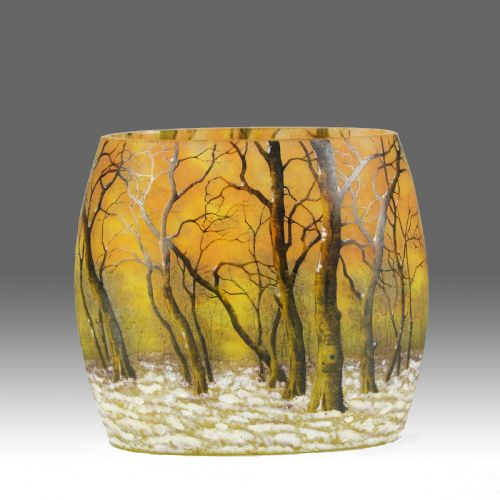


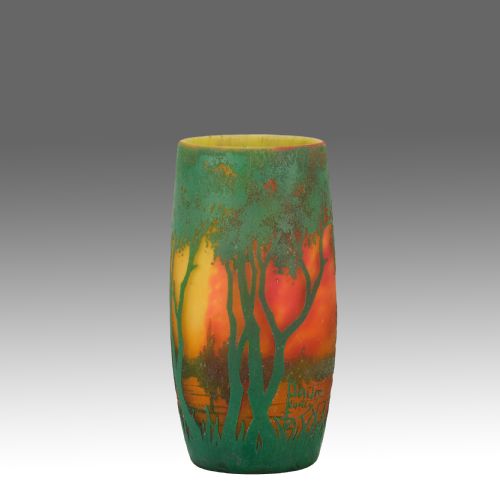


Antique Cameo Glass Vessel
An antique cameo glass vessel brings layered colour and carved botanical or landscape motifs into a room, capturing the peak of French decorative glassmaking.
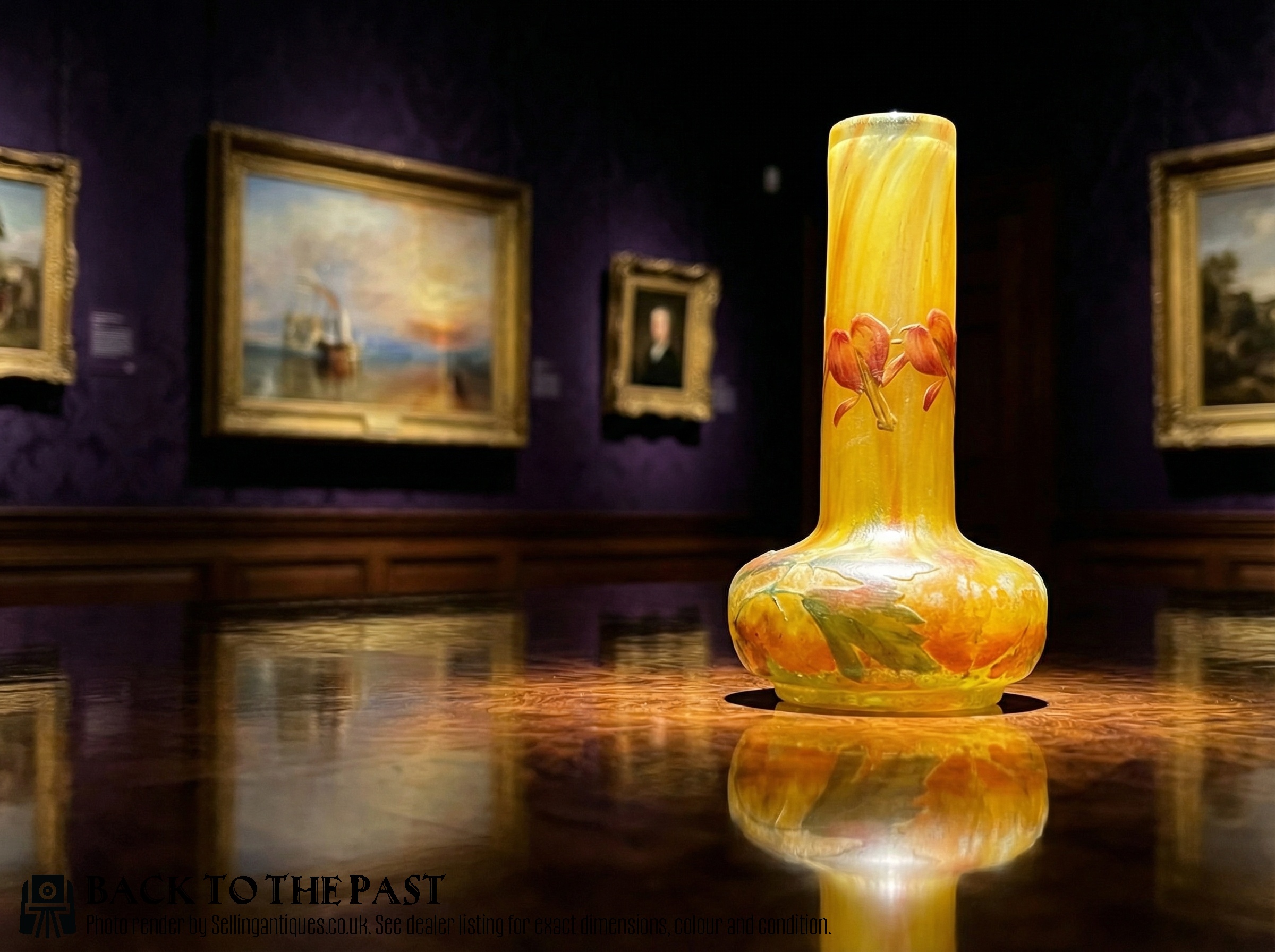
Antique Cameo Glass Vessel
An antique cameo glass vessel is a decorative object formed from multiple layers of coloured glass, carved or etched down to create contrasting relief designs. When collectors search for an antique cameo glass vessel, they typically encounter pieces originating from late nineteenth and early twentieth century France.
The dominant forms on this page are vases and decanters and jugs. These items display distinctive stylistic movements such as Art Nouveau and Art Deco, rendered through intricate botanical and scenic subjects.
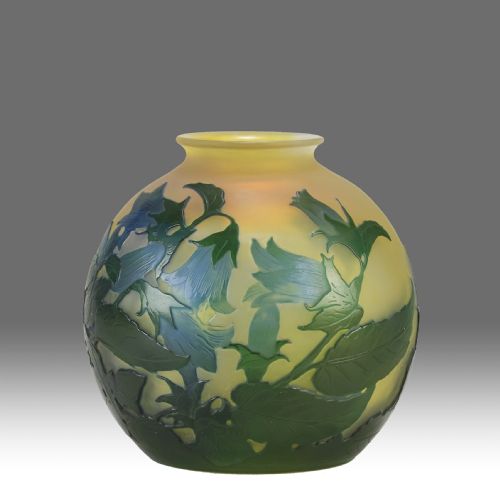
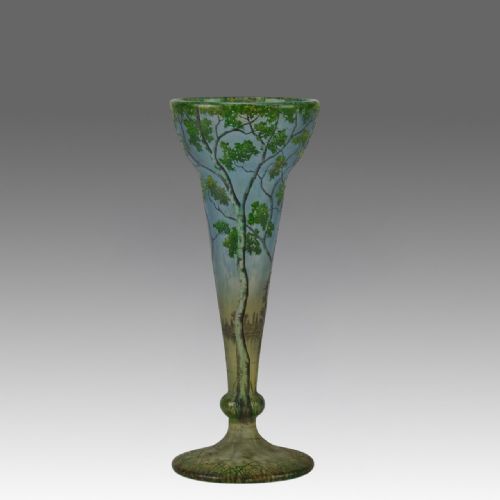
Vessels from this category frequently showcase naturalistic themes including floral species, aquatic motifs, and detailed winter landscapes. Makers employed specialist techniques to build depth, resulting in striking visual contrasts between background and foreground layers.
How they were made
The creation of these vessels relies upon blown glass and powdered glass techniques to fuse distinct layers of coloured glass together while hot. Master artisans then utilise acid-etching and manual carving to cut through the outer layers and expose the contrasting body beneath.
Makers occasionally incorporated enamel and frosted glass treatments to introduce varied surface textures and subtle tonal shifts across the finished piece. This multilayered construction demands precise temperature control and skilled handwork to achieve the desired relief depth.
Materials recorded across the selection include blown glass, cameo glass, acid-etched glass, frosted glass, enamel, and powdered glass.
What varies in quality
The standard of a vessel rests upon the depth and precision of the carved relief, where crisp boundaries between the coloured layers demonstrate superior craftsmanship. Pieces featuring complex landscape scenes or multiple acid-etched applications require greater technical mastery than simpler geometric or monochromatic designs.
Harmony between the chosen glass colours and the naturalistic subject matter dictates the overall visual success of the piece. The finesse of the finishing work, from smooth frosted grounds to cleanly delineated enamel accents, separates standard production items from exceptional studio works.
Emile Gallé·Daum·Daum Frères·Legras·Schneider·Le Verre Francais
The Antique Cameo Glass Vessel Glossary
- Cameo glass
- A vessel formed from two or more fused layers of contrasting coloured glass, carved or acid-etched to create a raised design. This technique requires exceptional skill to expose the inner layer without piercing it.
- Acid-etched glass
- Glass treated with hydrofluoric acid to eat away exposed surfaces and create matte designs or textured backgrounds. It allows makers to achieve intricate patterns rapidly.
- Blown glass
- Molten glass shaped by inflating air through a long metal pipe into a hollow form. This method serves as the primary foundational step for creating vessels.
- Frosted glass
- A translucent glass surface produced by acid treatment or mechanical abrasion to diffuse light evenly. It provides a soft contrast against polished cameo reliefs.
- Powdered glass
- Finely ground glass fused onto the surface of a vessel during manufacture to introduce mottled colour effects or textured backgrounds. This technique enhances the depth of landscape scenes.
Antique Cameo Glass Vessel: Frequently Asked Questions
What is an antique cameo glass vessel?
An antique cameo glass vessel is a decorative blown glass item featuring multiple fused layers that are carved or acid-etched to produce a raised design. These pieces emerged prominently during the late nineteenth and early twentieth centuries in France.
They encompass functional forms such as vases, decanters, and jugs adorned with naturalistic plant motifs and scenic landscapes. Each piece represents a synthesis of traditional glassblowing and advanced chemical treatment.
How do I identify Art Nouveau cameo glass?
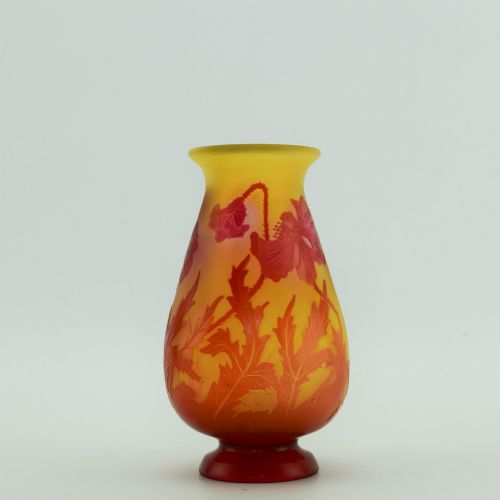
Art Nouveau cameo glass typically exhibits fluid, organic lines inspired by nature, featuring subjects such as clematis, poppies, irises, and aquatic plants. The colour palettes often reflect natural tones found in floral and woodland environments.
Makers such as Emile Gallé and Daum utilised these flowing motifs to wrap around the contours of the vessel. The integration of landscape scenes depicting trees or winter settings further characterises this stylistic period.
What distinguishes Art Deco cameo glass?
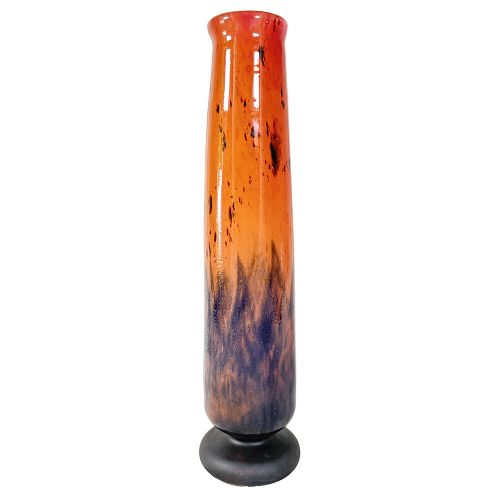
Art Deco cameo glass shifts away from fluid naturalism toward stronger geometric arrangements and bolder, contrasting colour combinations like orange on purple. Vessels from this later period maintain the layered glass technique while presenting a more structured aesthetic.
Producers such as Schneider and Le Verre Francais channelled this modern sensibility into their oviform and tall vases. The resulting objects display crisp lines and vibrant hues suited to early twentieth-century interiors.
How should I display cameo glass vessels?
Displaying these vessels where natural light can pass through the glass highlights the translucent layers and the depth of the carved motifs. Positioning them away from direct, harsh sunlight protects the integrity of the coloured glass and enamel details.
Grouping items of complementary forms, such as banjo vases alongside oviform shapes, creates a balanced visual arrangement. Ensuring stable placement on a flat surface safeguards the delicate blown glass structures.