





Antique Cake Stand Table
An antique cake stand table brings tiered tier-serving utility and formal elegance to afternoon tea, drawing on centuries of mahogany and walnut joinery.
Antique Cake Stand Table
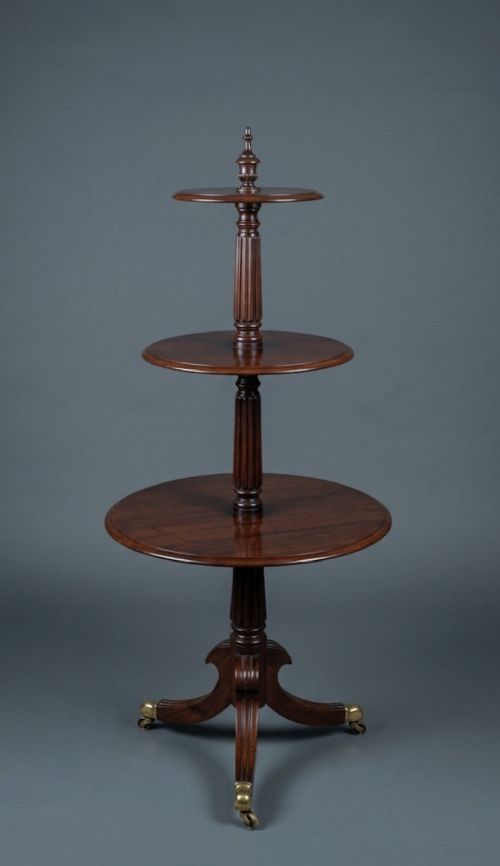
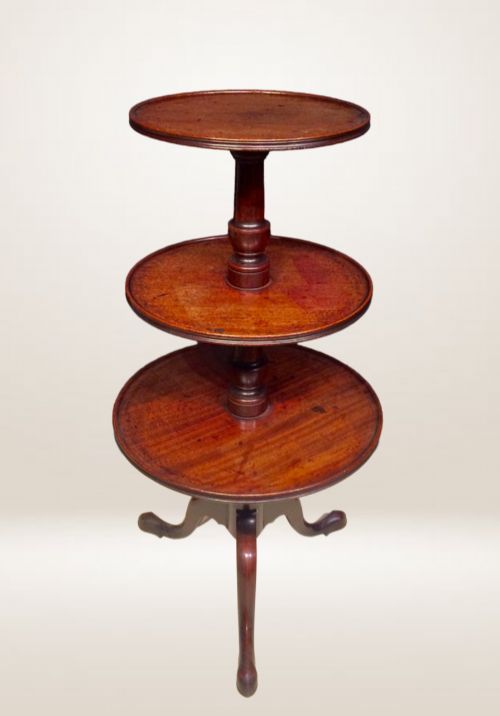
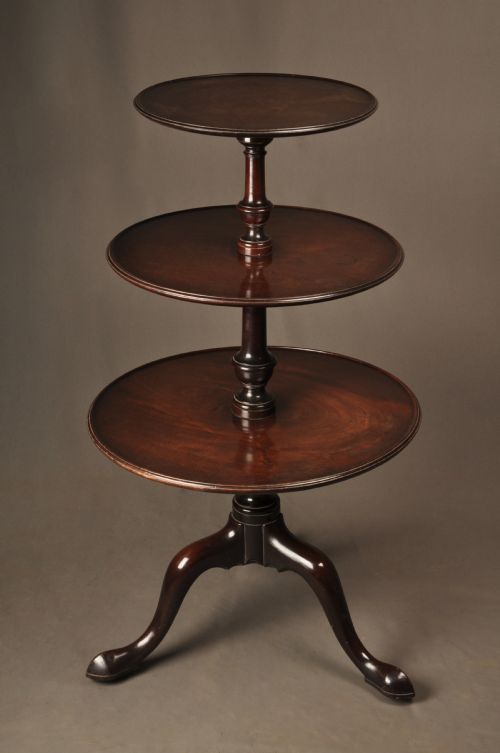
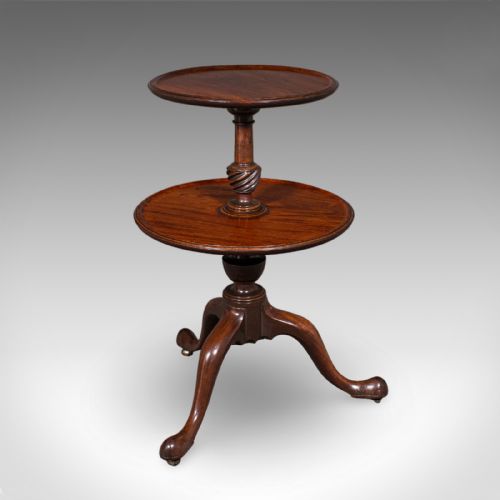
When searching for an antique cake stand table, buyers encounter multi-tiered serving pieces, dumb waiters, and folding occasional tables spanning the Georgian, Victorian, and Edwardian eras. These pieces served practical domestic functions for displaying tea fancies, cakes, and fruit during formal afternoon gatherings.
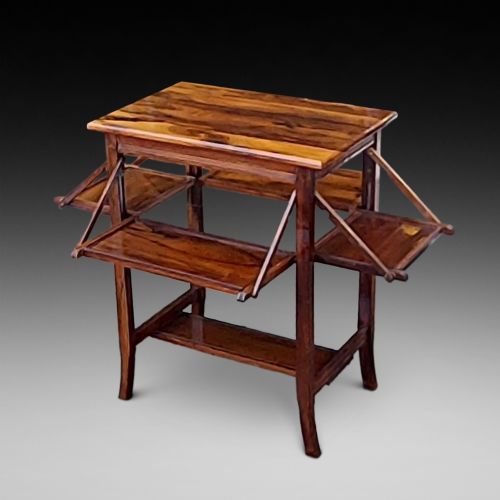
The versions most commonly met on this page include mahogany three-tier dumb waiters, walnut folding tea stands, and inlaid Edwardian serving tables. Originating primarily from English workshops, these items integrate functional pivoting tiers or folding mechanisms suited to entertaining.
Materials and Construction
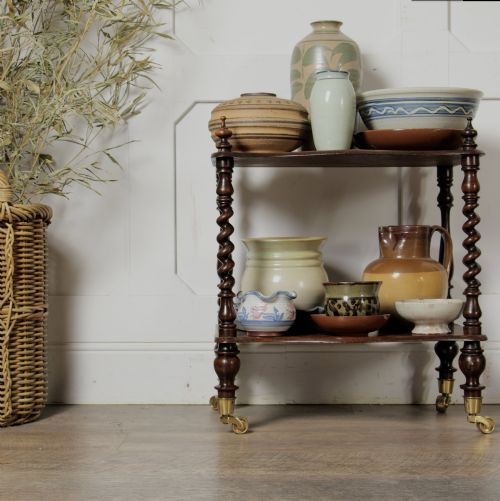
Makers utilised dense hardwoods such as solid mahogany and walnut, frequently shaping timber into circular tiers supported by tripod pedestals or barley twist columns. Brass hardware, silver plate details, and mirrored glass platters appear across various serving stands and plateaux.
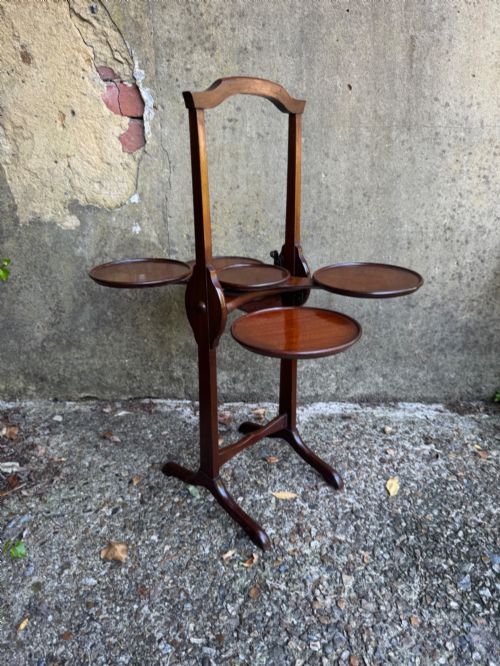
Construction techniques include graduated tier systems mounted on revolving brass spindles, hinged folding frames for tea tables, and delicate inlay work. Joinery relies on traditional turning and pedestal bases designed to hold multiple levels of weight securely.
The documented periods range from the eighteenth-century Georgian era through to the Edwardian period and nineteen-twenty.
Assessing Quality
The top of the range is distinguished by choice mahogany grain, robust revolving mechanisms that move smoothly without wobble, and crisp hand-turning on tripod columns. Finer examples display balanced proportions across multiple tiers and retained original brass castor feet or mirrored inserts.
Lower tiers of quality involve simpler secondary timbers, stiffer folding hinges, or replacement hardware that disrupts the period balance. The presence of later surface decoration or poorly fitted tiers marks a departure from standard period workshop output.
Mappin and Webb·Elkington
The Antique Cake Stand Table Glossary
- Dumb waiter
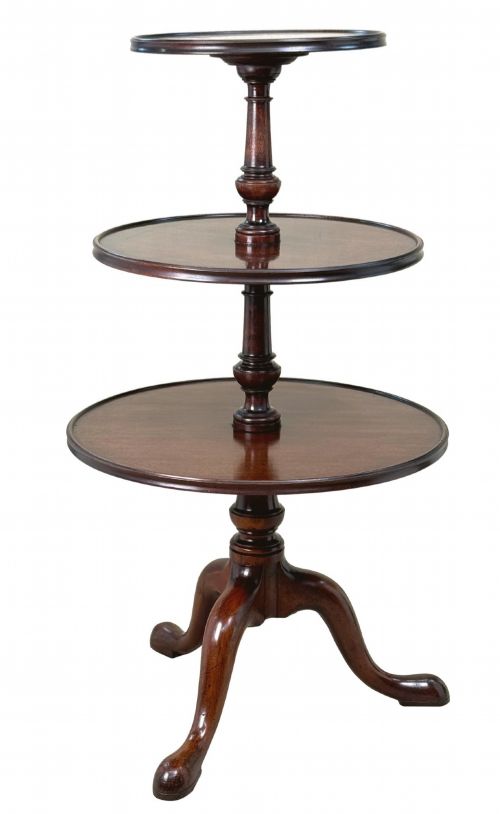
- A freestanding tiered serving table designed to hold food and tableware without requiring a servant present at the table. These typically feature two or three graduating circular wooden tiers on a central pillar.
- Etagere
- A piece of furniture consisting of a set of open shelves for displaying small objects or serving items. These often appear with multiple tiers supported by slender uprights.
- Tazza
- A small, broad, shallow saucer-like dish supported on a stem and foot, utilised for serving cakes and sweetmeats. Silver plate examples frequently feature decorative borders.
- Plateau
- A mirrored table centrepiece placed upon a surface to hold silver or glass vessels. These reflect candle or natural light during dining.
- Lazy Susan
- A revolving tray placed on a table to assist in moving food easily between guests. Edwardian and later variations utilise timber or silver plate.
Antique Cake Stand Table: Frequently Asked Questions
What is an antique cake stand table used for?
These tables served primarily for afternoon tea, presenting cakes, pastries, and tea fancies across multiple tiers or folding surfaces. Households utilised them to keep serving items accessible during social gatherings without cluttering the main dining board.
Today, they function as display surfaces for plants, decorative ceramics, or occasional tea service. Their tiered architecture makes them practical for exhibiting collections within a limited floor footprint.
How do I identify a Georgian dumb waiter?
Georgian versions typically feature heavy mahogany timber with three graduated circular tiers mounted on a central pillar and tripod base. The joinery often includes revolving mechanisms that allow individual trays to turn independently.
Earlier examples from the eighteenth century display robust proportions, substantial brass or iron swivel fittings, and deep patination on the primary wood surfaces.
What materials are common in Edwardian cake tables?
Edwardian pieces frequently incorporate walnut and rosewood, sometimes featuring inlaid stringing and folding mechanisms designed for easy storage. Silver plate platters and mirrored glass inserts also appear across serving tables from this period.
The construction tends towards lighter portable formats, reflecting changing domestic habits around afternoon tea and informal entertaining in the early twentieth century.
Are these tables sturdy enough for daily use?
Most surviving pieces retain solid timber construction, though three-tier pedestals require careful placement on level flooring to maintain balance. Folding tables depend on the integrity of their original hinges and wooden supports.
Placing heavy items on the top tier of a tall tripod stand should be avoided to prevent tipping. Gentle handling preserves the nineteenth-century pivot mechanisms and joinery.