


Traditional Dumb Waiter
A traditional dumb waiter is a tiered serving stand designed to hold food or small items without occupying valuable floor space.
Traditional Dumb Waiter
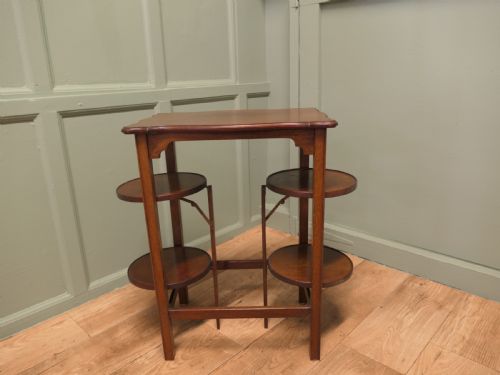
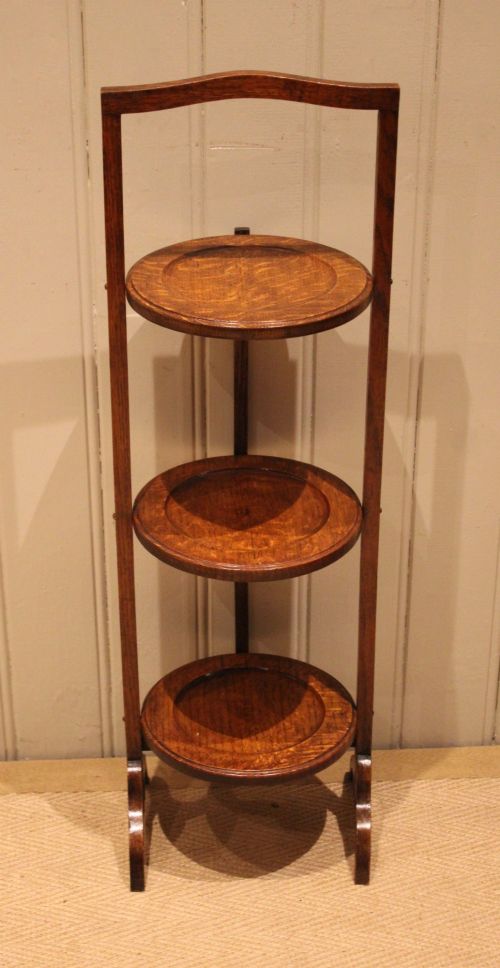
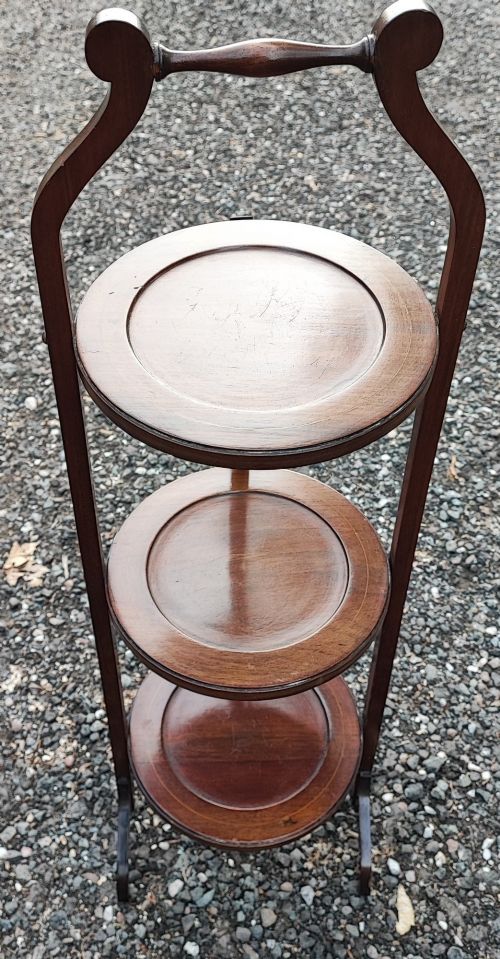
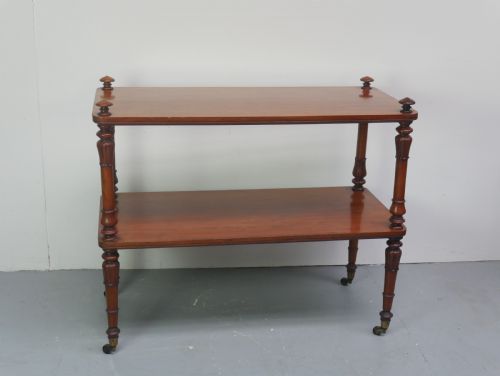
A traditional dumb waiter is typically found as a multi-tiered stand, frequently appearing as a revolving piece on a tripod base or as a standing cake stand with multiple tiers. These items range from Georgian folding designs to Victorian and Edwardian examples made for serving afternoon tea or holding dishes.
The pieces listed on this page span the nineteenth and early twentieth centuries, including George III, Victorian, Edwardian, and Sheraton Revival styles. Buyers will encounter forms such as two-tier and three-tier stands, side tables, and buffets constructed from rich timbers.
Materials and construction methods
These items rely heavily on solid hardwoods like mahogany, oak, and rosewood, often enhanced with satinwood inlay and boxwood details. Metal elements such as brass appear in the hardware, while felt is occasionally utilised within the construction.
Makers employed traditional joinery and turning techniques to create sturdy tripod bases, revolving tiers, and folding mechanisms. The timber was polished to highlight the natural grain, combining structural stability with decorative cabinet work.
The listings on this site feature pieces from the Georgian, Victorian, and Edwardian periods, constructed primarily in mahogany, oak, and rosewood.
Distinguishing quality in tiered stands
Quality rests in the precision of the timber selection, the crispness of any inlaid satinwood or boxwood work, and the smoothness of any revolving or folding mechanism. Heavier, dense hardwoods and balanced tripod bases indicate superior cabinet making.
Finer examples show careful attention to proportions across multiple tiers, whereas simpler pieces rely on plain turned uprights. The depth of the polish and the integrity of the joints determine how well the piece survives daily use.
The Traditional Dumb Waiter Glossary
- Tripod base
- A three-legged support system providing stability for revolving tiers. This design appears frequently on nineteenth-century pieces.
- Metamorphic
- An item that transforms or changes its configuration for different uses. These clever designs adapt to various entertaining needs.
- Sheraton Revival
- A late nineteenth and early twentieth century style drawing on eighteenth century neoclassical motifs. It incorporates delicate inlay and refined proportions.
- Satinwood inlay
- Contrasting light-coloured wood inserted into a darker timber surface to create decorative patterns. It adds visual refinement to mahogany furniture.
Traditional Dumb Waiter: Frequently Asked Questions
What is a traditional dumb waiter used for?
These tiered stands served historically to hold food, dishes, or tea service items during meals when servants were absent. They kept plates and pastries within reach without crowding the dining table.
Today, they function well as display stands for plants, books, or decorative objects in living spaces and hallways.
How do I date a traditional dumb waiter?
Dating relies on identifying the timber, the style of the turned supports, and the presence of period characteristics like satinwood inlay. Georgian and early nineteenth-century pieces often feature simpler, heavier construction, whereas Edwardian and Sheraton Revival examples display lighter, more ornate decoration.
Examining the joinery and hardware also helps place the piece within the Victorian or Edwardian eras recorded in the evidence.
Are all dumb waiters revolving?
Not all traditional dumb waiters revolve, though many nineteenth-century tripod models feature rotating tiers for easy access. Other variations include stationary standing tiers, folding designs, and multi-tiered cake stands.
The mechanism depends entirely on the specific period and the intended function of the piece.
How do I care for mahogany and rosewood tiers?
Maintain these timber surfaces by dusting regularly with a soft, dry cloth and avoiding placement near direct heat sources or strong sunlight. Periodic application of appropriate furniture wax preserves the polish and protects the wood grain.
Handle folding or revolving mechanisms with care to ensure the joints and pivots remain secure.