



18th Century Tier Stand
An 18th century tier stand brings tiered wooden utility to dining rooms and parlours through revolving trays and graduated shelves.
18th Century Tier Stand
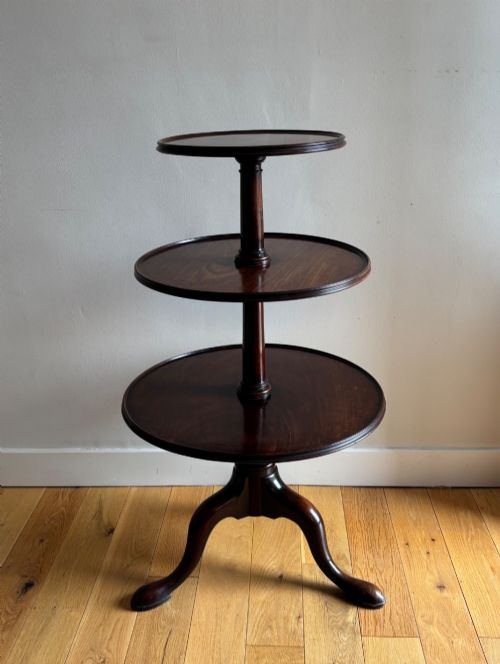
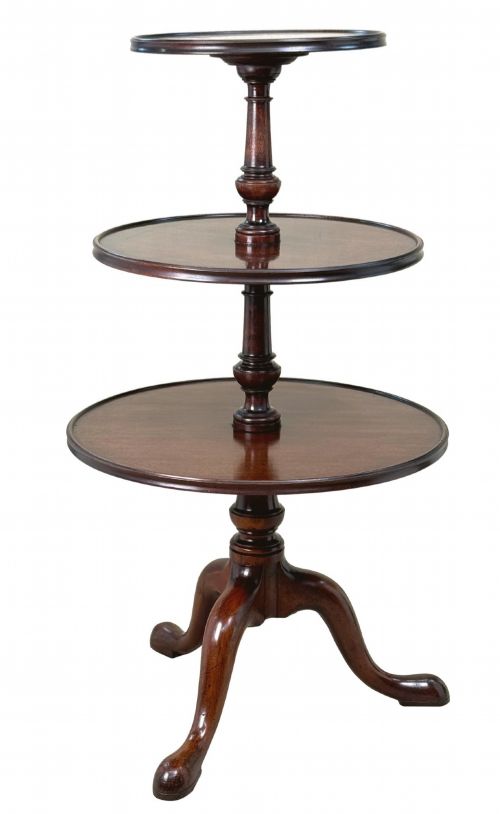
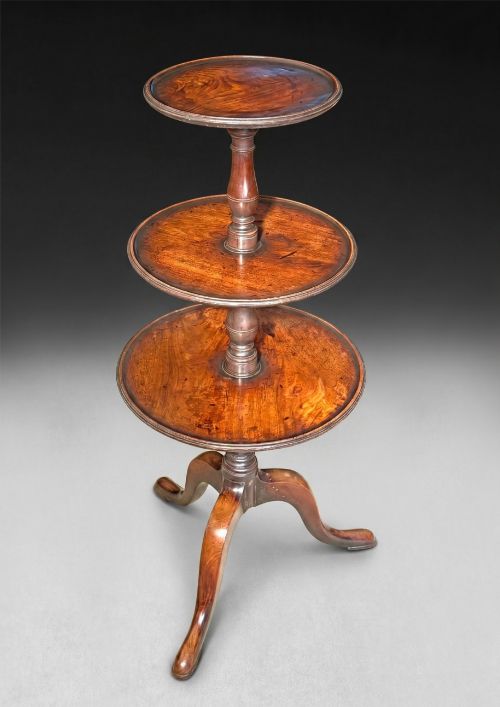
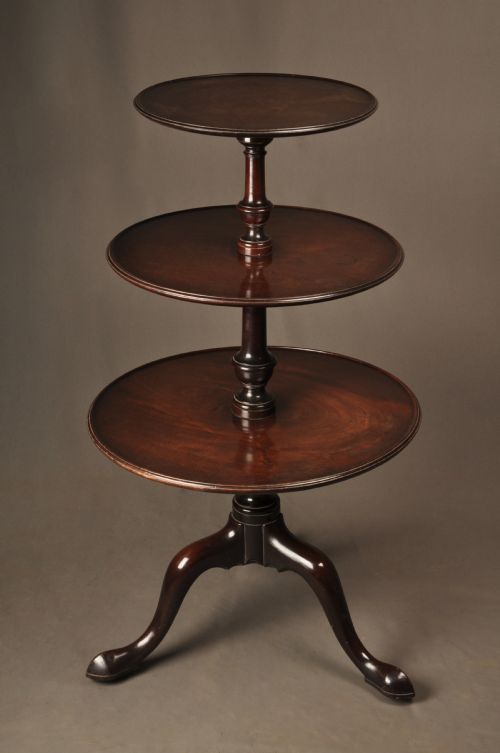
When searching for an 18th century tier stand, buyers encounter pieces primarily identified as dumb waiters, whatnots, and occasional tables spanning the Georgian and George III periods. These versatile multi-level items served dining rooms and reception rooms, providing tiered surfaces for serving food, holding porcelain, or displaying ornaments without requiring extra servants at the table.
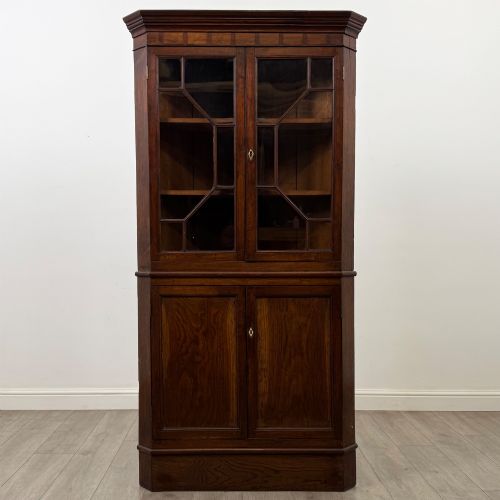
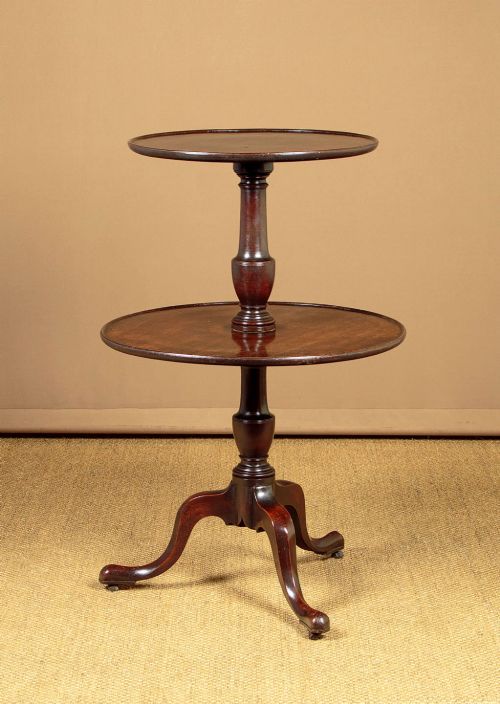
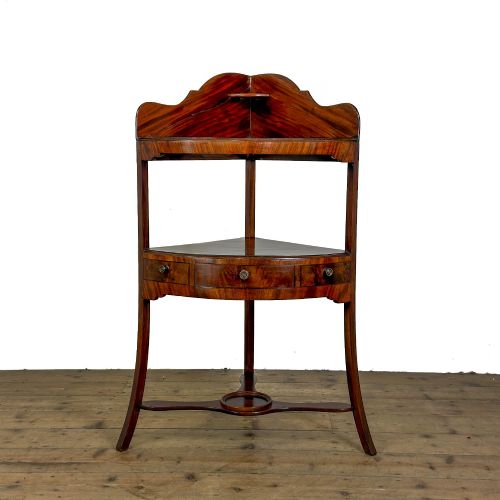
The most common form on this page is the multi-tiered dumb waiter featuring two or three graduated circular trays mounted on a central pillar with tripod legs. Pieces from this era range from simple folding designs and revolving three-tier models to specialised corner cabinets and washstands sharing similar tiered or compartmented principles.
Originating predominantly in eighteenth-century English workshops, these stands reflect the sophisticated social habits of the Georgian period. Cabinet makers utilised native oak and imported timbers to construct functional furniture that combined sturdy engineering with refined aesthetic proportions suitable for formal entertaining.
How they were made
Craftsmen built these tiered stands predominantly using solid mahogany and oak, frequently selecting dense Cuban mahogany for superior turning and carving capabilities. Timber selection dictated the structural integrity of slender central columns and the stability of tripod bases supporting heavy graduated trays.
Joinery techniques relied on precise turning for central pillars, secure pegging for tripod leg joints, and careful edge moulding for circular dish-tops or revolving tiers. Brass castors and hinges appeared on mobile or folding examples, allowing service pieces to move easily across dining room floors.
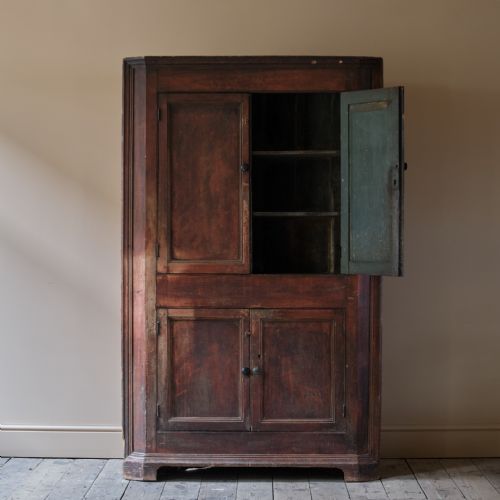
Object types associated with this search span dumb waiters, whatnots, corner cupboards, and occasional tables with multiple tiers.
What varies in quality
Quality in an 18th century tier stand rests upon the choice of timber and the proportion of the graduated tiers relative to the central column. Superior examples exhibit rich grain figures in the mahogany, harmonious scaling between the tiers, and crisp turning on the pillar without structural sagging.
The sophistication of the mechanism also distinguishes better pieces, particularly in revolving or folding variants where smooth rotation and tight joints matter. Finer workshops invested greater labour in precise leg shaping and subtle edge profiling, whereas utilitarian pieces remained simpler in execution.
Gillows
The 18th Century Tier Stand Glossary
- Dumb waiter
- A multi-tiered freestanding serving stand used during meals to hold dishes and glasses without servants present. These typically feature two or three circular revolving trays on a central column.
- Whatnot
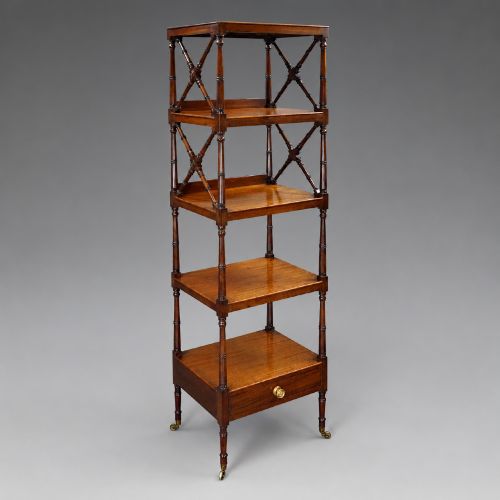
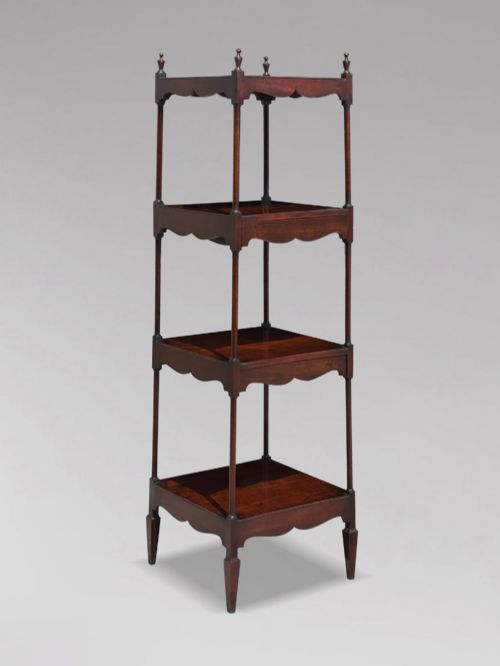
- A piece of open shelving with multiple tiers designed for displaying ornaments, books, or small objects. The form gained popularity during the Georgian period for domestic display.
- Tripod base
- A three-legged support system commonly found beneath the central pillars of dumb waiters and occasional tables. This configuration ensures stability on uneven dining room floors.
- Cuban mahogany
- A dense, dark timber imported from the Caribbean during the eighteenth century and favoured by cabinet makers for its strength and rich grain. It appears frequently in high-status George III furniture.
- Revolving tier
- A tray mounted on a central pivot allowing the surface to turn independently for easier access during tea or dinner service. This mechanism requires precise internal wooden or brass engineering.
18th Century Tier Stand: Frequently Asked Questions
What was an 18th century tier stand used for?
These stands functioned primarily as auxiliary serving tables in dining rooms during the Georgian era. Guests or hosts placed extra plates, wine bottles, and dishes upon the revolving tiers to minimise servant presence during meals.
In domestic parlours, similar tiered stands and whatnots held books, soft-paste porcelain, and decorative ornaments. Their multi-level design maximised vertical display space in smaller rooms.
How do I tell a George III tier stand apart?
George III tier stands typically display specific proportions, refined mahogany turning, and tripod bases with pad or spade feet. Cabinet makers during this reign focused heavily on balanced circular trays and slender central pillars.
Earlier pieces often incorporate oak construction and simpler joined frames, reflecting a more robust country aesthetic. Examining the timber grain and turning style helps distinguish these chronological shifts.
Can I use a tier stand in a modern dining room?
These stands integrate well into contemporary dining spaces as serving surfaces for drinks, desserts, or small side dishes. Their compact footprint makes them practical for holding items during dinner parties.
Outside the dining room, they function effectively in living areas or hallways for displaying plants and decorative objects. Their traditional tiered construction provides functional vertical storage.