
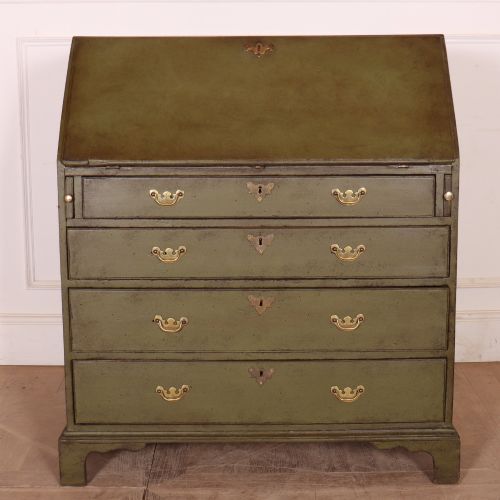
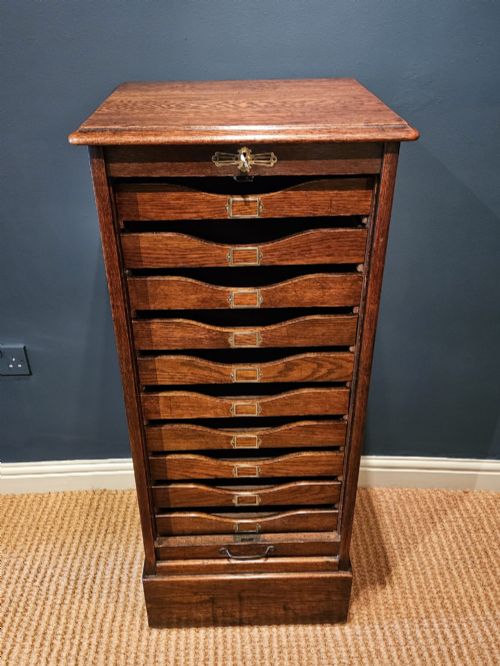


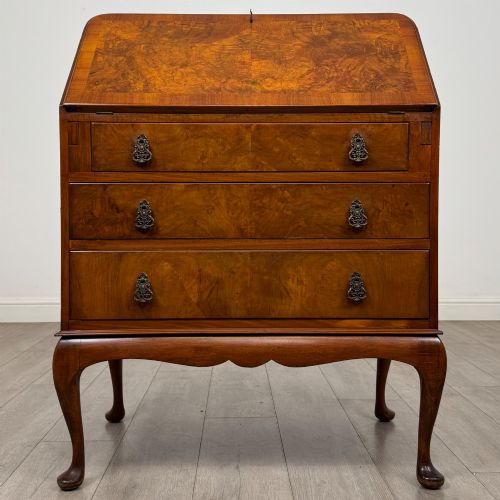
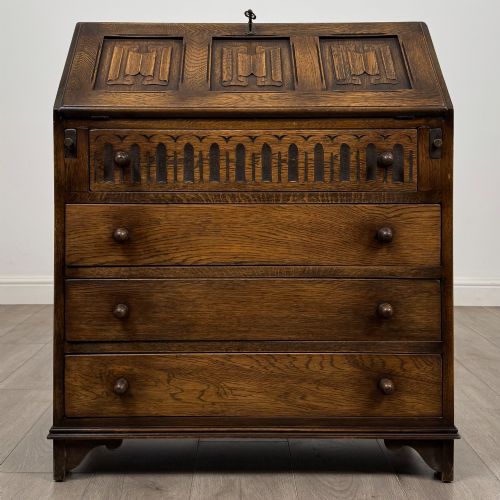
Antique Cabinet Drawer Desk
An antique cabinet drawer desk brings together practical writing surfaces and concealed storage, offering a traditional workspace that suits modern interiors.
Antique Cabinet Drawer Desk
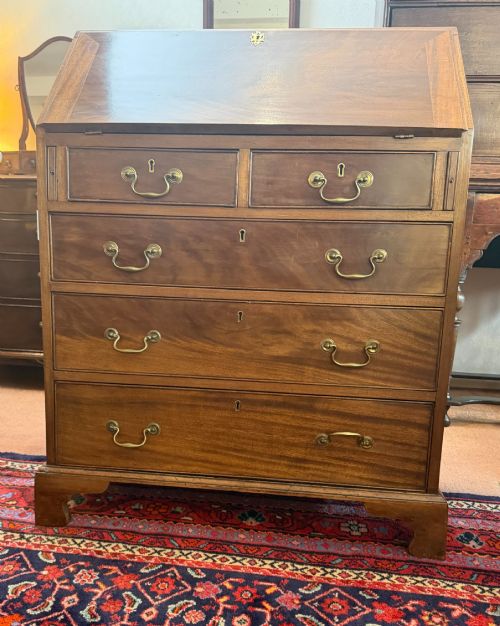
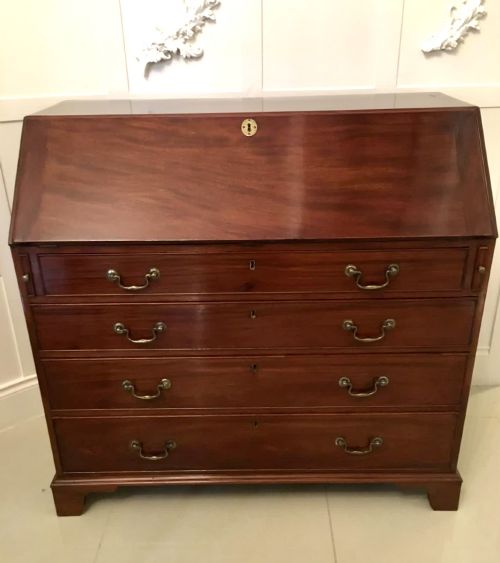
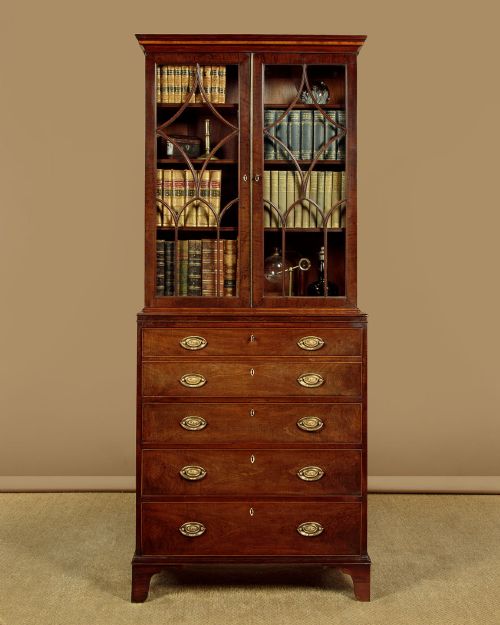
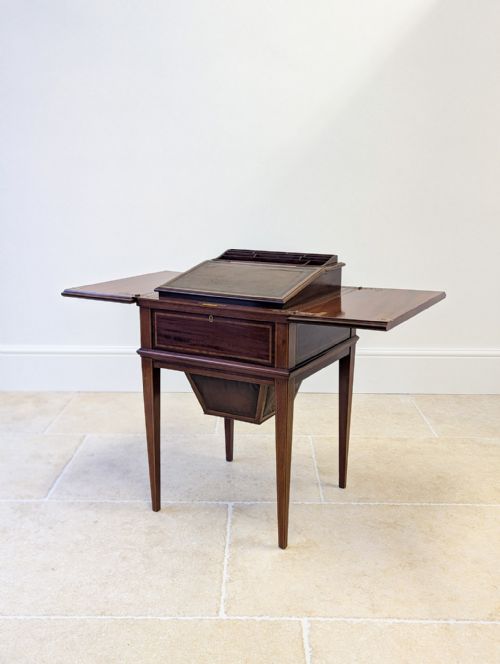
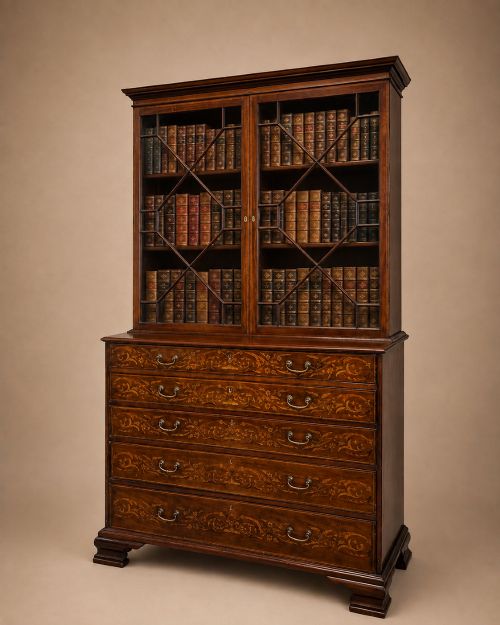
When you search for an antique cabinet drawer desk, you encounter pieces designed to conceal writing implements and paperwork behind fall-front panels or within fitted compartments. The selection spans compact oak filing cabinets and bureau bookcases alongside refined walnut and mahogany writing furniture.
You are most likely to meet pieces from the Georgian, Victorian, and Edwardian periods, constructed as bureaux, secretaire bookcases, or davenports. These forms combine internal small drawers and pigeonholes with larger exterior drawers for daily utility.
The origins of these items trace back through centuries of British and continental cabinet making, ranging from simple oak storage to elaborate burr walnut and marquetry inlaid designs.
Materials and construction methods
Makers utilised solid timbers such as oak, mahogany, walnut, and rosewood, often applying burr walnut or flame mahogany veneers to primary display surfaces. Brass hardware, leather writing inserts, and occasional glass door panels complete the construction.
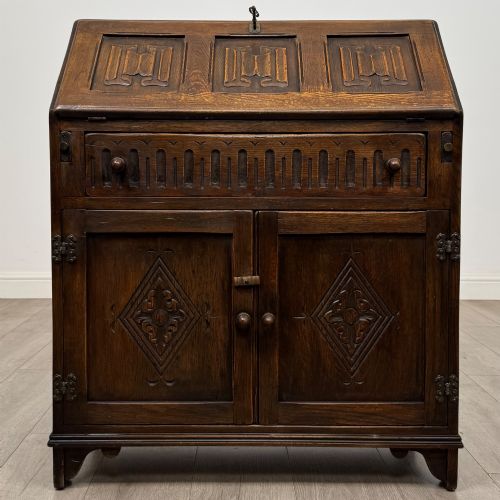
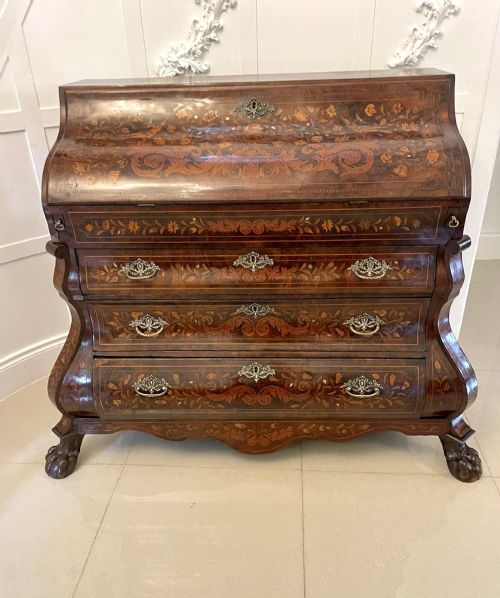
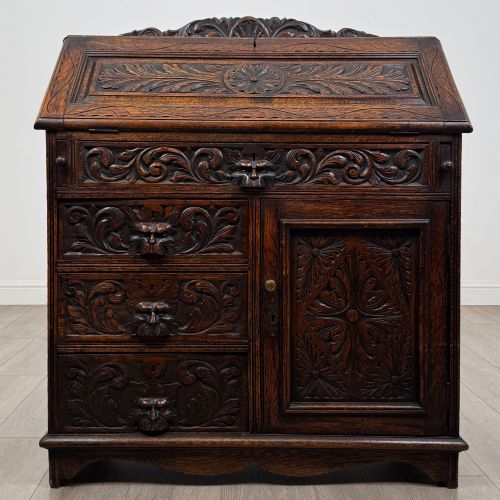
Joinery techniques involved precise dovetailing for drawer boxes and framed panel construction for larger carcass bodies. Carved details, floral marquetry, and linenfold panels were executed by hand to decorate the exterior surfaces.
The listings feature pieces spanning from 1700 through the Georgian, Victorian, and Edwardian eras up to the 1920s.
Distinctions in quality
The distinction between standard utility items and exceptional pieces rests upon the choice of timber figurations and the precision of the cabinet work. Superior examples display carefully matched veneers, flawless dovetail joints, and well-executed internal fittings.
Proportion and decorative restraint also determine value, where pieces possessing balanced dimensions and original brass hardware outrank heavier, altered, or overly restored alternatives.
Gillows·Maison Krieger
The Antique Cabinet Drawer Desk Glossary
- Bureau
- A writing desk featuring a sloping hinged flap that opens to reveal drawers and pigeonholes. It usually sits atop a chest of drawers.
- Secretaire
- A piece of furniture containing a drawer or compartment designed for writing, often disguised as a standard chest drawer.
- Davenport
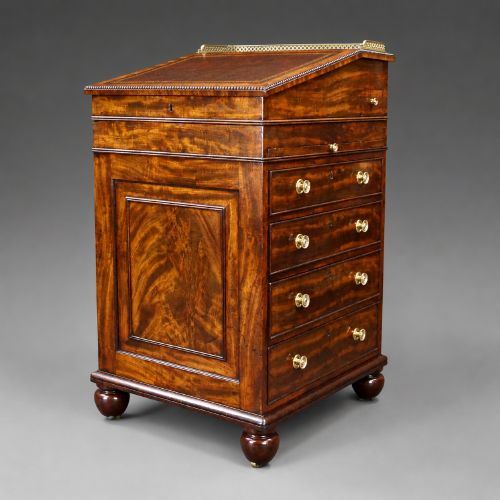
- A small compact writing desk with a sloping top and drawers opening to one side. It gained popularity during the Regency period.
- Linenfold
- A style of wood carving that imitates folded linen, commonly seen on oak panels from earlier periods.
- Marquetry
- The art of applying decorative pieces of veneer to a structure to form intricate patterns and pictures.
Antique Cabinet Drawer Desk: Frequently Asked Questions
What is a bureau bookcase?
A bureau bookcase combines a sloping writing desk at the lower level with enclosed shelving above, usually protected by glazed or solid wooden doors. This dual function provided both working space and a library.
Such pieces date across multiple centuries, serving as major storage and study furniture in traditional homes.
How do I identify a Georgian bureau?
Georgian bureaux typically feature rich mahogany or walnut timbers, standing on bracket feet with hand-cut dovetail joints on the internal drawers. The proportions remain balanced and understated.
Inside, the fitments often include secret compartments and small pigeonholes arranged around a central cupboard door.
Where were davenport desks used?
Davenport desks were utilised as compact writing tables in drawing rooms or bedrooms where space was limited. The side-opening drawers kept writing materials close to hand.
Their small footprint made them practical for correspondence without dominating the room.
What is a tambour front?
A tambour front consists of narrow slats of wood glued to a canvas or leather backing, allowing the door to slide in a track around a curve. This mechanism conceals filing compartments or desk interiors efficiently.
Cabinet makers applied this technique heavily during the Edwardian era for office furniture and filing cabinets.