

Antique Butler Serving Tray
An antique butler serving tray combines portable utility with period cabinet-making, offering a practical surface for drinks and display.
Antique Butler Serving Tray
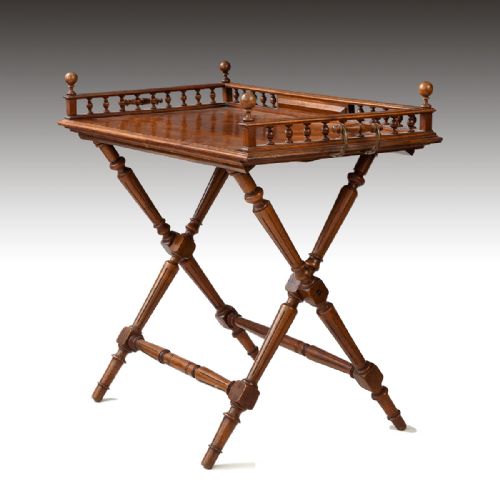
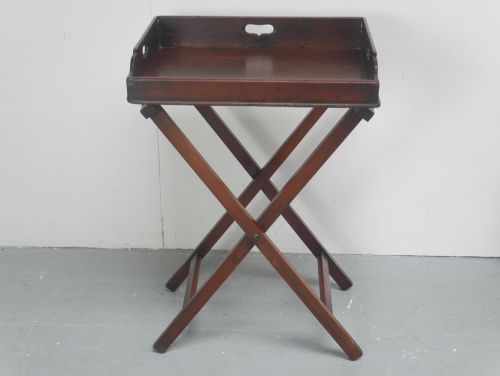
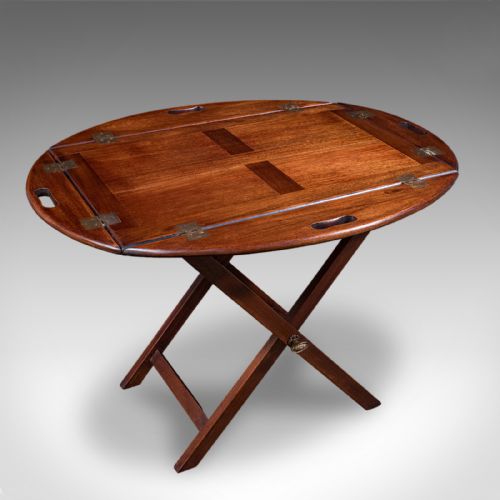
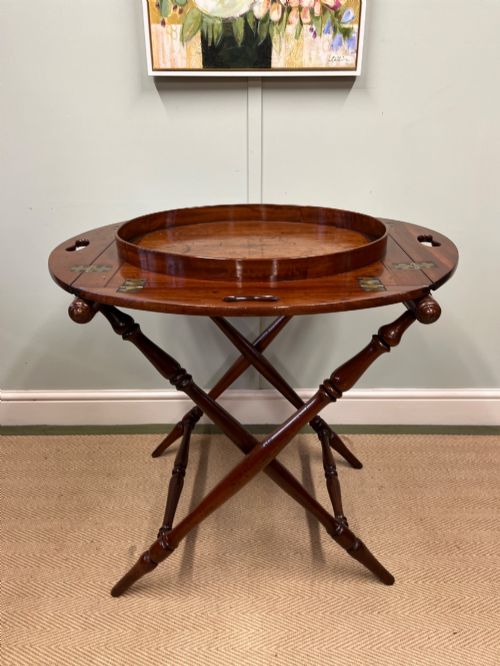
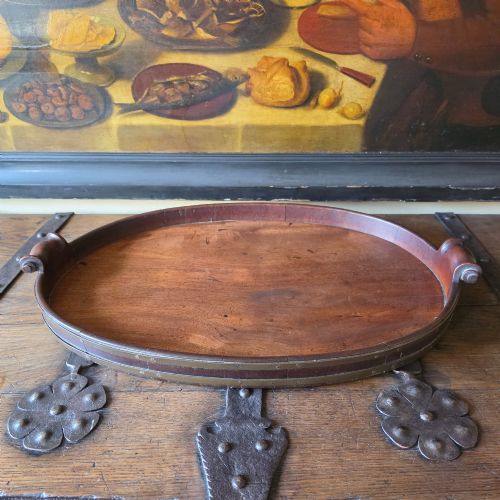
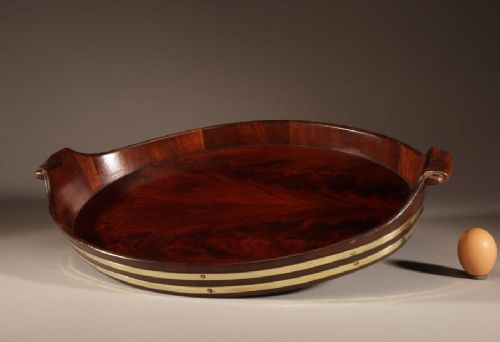
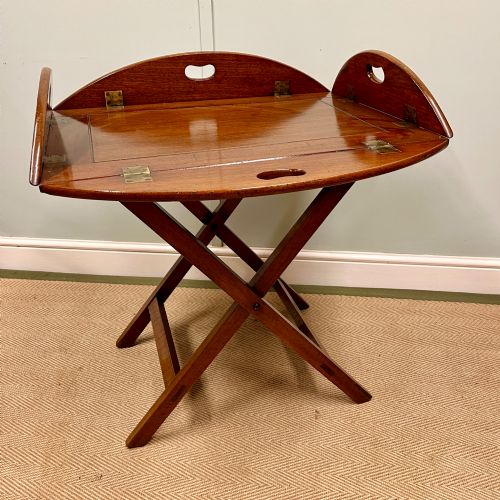
An antique butler serving tray typically appears as a deep, rectangular or oval wooden board with pierced carrying handles, designed to lift off a folding X-frame stand for service. When considering an antique butler serving tray, buyers encounter examples ranging from plain Georgian folding tables to inlaid Edwardian iterations.
The form developed to transport tea, silver, and glasses from the kitchens to the drawing room, often resting on a collapsible stand to save space. Many surviving pieces date from the Victorian and Edwardian eras, though earlier Georgian examples demonstrate simpler, robust joinery in solid timbers.
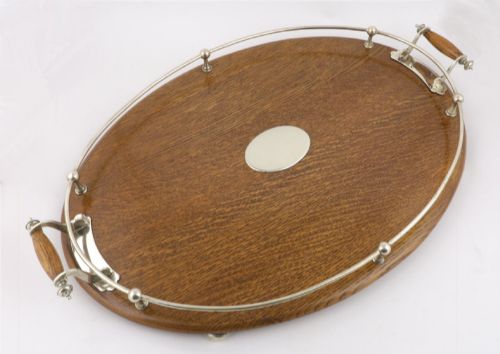
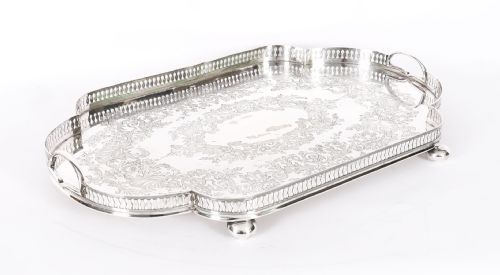
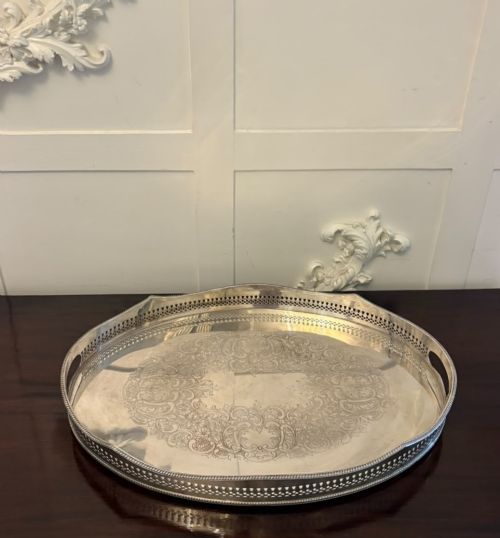
Stand combinations frequently emerge alongside standalone platters, reflecting the dual purpose of domestic service furniture. Mahogany dominates the selection, though variations in oak, walnut, and silver plate appear across different periods.
Materials and Construction
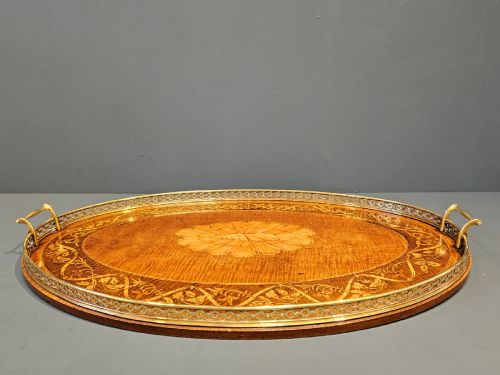
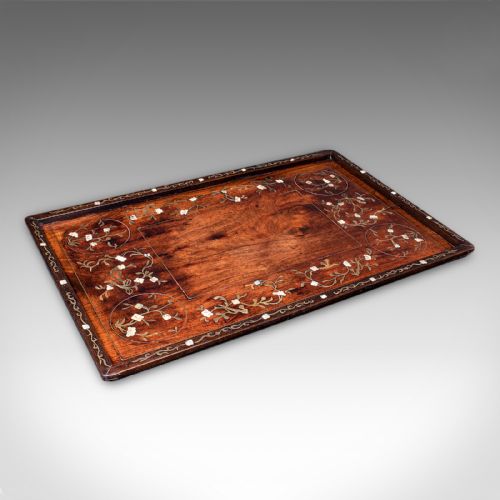
Cabinet-makers constructed these trays primarily using dense hardwoods such as mahogany, oak, and walnut, often applying decorative veneers like satinwood or oyster cut walnut to the primary surfaces. Edge details range from simple moulded rims to pierced brass galleries and raised wooden walls secured with dovetail joints.
Stands utilise folding X-frame carpentry designed to lock firmly beneath the tray base when open. Metal elements involve silver plate, Sheffield plate, or brass handles, alongside coppered wooden bands on coopered oval variants.
Listings span periods from Georgian to Edwardian times, utilising mahogany, oak, walnut, and silver plate.
Indicators of Excellence
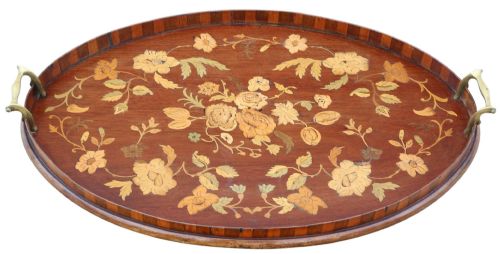
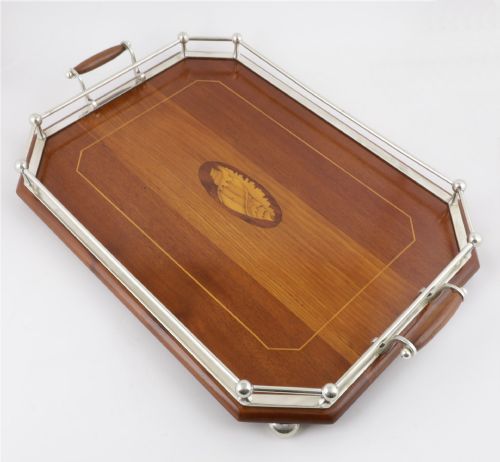
Quality rests upon the selection of timber grains, evident in symmetrical mahogany figures, intricate marquetry inlay, and tightly fitted oyster veneers. Superior craftsmanship shows in the crispness of hand-carved handles, substantial brass fittings, and the structural integrity of the folding stand joints.
Depth of the tray walls and the precision of the mitred corners separate standard utility pieces from fine drawing-room furniture. Original patination and intact surface finishes preserve the tactile character built through decades of domestic use.
James Deakin·Mappin and Webb·Edwards and Roberts·Christofle
The Antique Butler Serving Tray Glossary
- Gallery
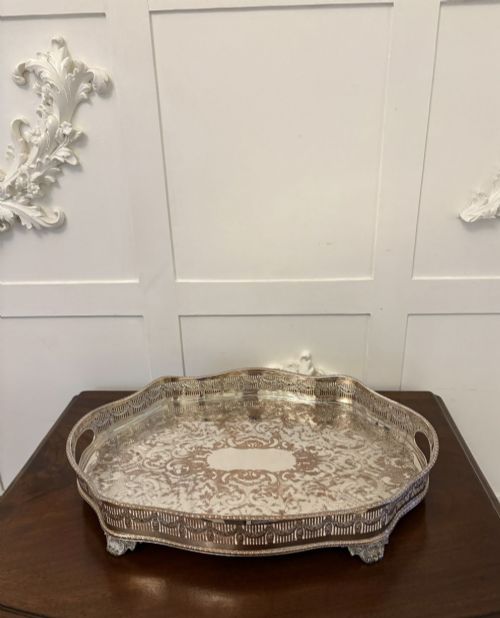
- A raised rim surrounding the edge of a tray, often pierced or fret-cut from metal or wood to prevent items from sliding off during transport.
- Coopered
- Constructed from vertical wooden staves bound together with metal bands, similar to barrel-making, utilised for rounded or oval wooden trays.
- Marquetry
- Decorative patterns formed by fitting together thin slices of various coloured woods and veneers onto a primary wooden surface.
- Oyster veneering
- The practice of slicing small branches cross-wise to produce circular or oval patterns resembling oyster shells, popular in walnut pieces.
- EPNS
- Electroplated nickel silver, a base metal coating technique widely utilised in manufacturing silver-toned trays during the late Victorian and Edwardian periods.
Antique Butler Serving Tray: Frequently Asked Questions
How were butler trays used?
Servants used these trays to transport tea services, decanters, and courses from the kitchens to reception rooms. The raised edges kept glassware secure during movement across large houses.
Once in the room, the tray often rested on a folding wooden stand to serve as a temporary side table. After use, the board lifted off and the stand folded flat for storage.
Can I use an antique tray on a stand daily?
Most wooden and silver-plated trays remain sturdy enough for regular use, provided owners protect the surface from excessive moisture and heat. Using coasters and careful placement preserves the antique finish.
The folding stands are engineered for weight-bearing service, though heavy leaning should be avoided on older folding hinges.
How do I date an antique tray?
Georgian pieces generally feature heavy solid mahogany boards with simple hand-cut handles and minimal decoration. Victorian and Edwardian examples often introduce marquetry inlay, satinwood borders, or extensive silver-plated galleries.
Markings on metal mounts, such as maker stamps on EPNS or Sheffield plate, help narrow down manufacturing decades.
What is the difference between a tray and a stand?
A tray is a flat or galleried carrying board designed solely for transport, while a stand provides a permanent or folding base to elevate that board into a table. Many listings offer both components together as an integrated piece of furniture.
Separated trays can sit on modern tables, but matching stands complete the original domestic function.