


Victorian Chinoiserie Tea Table
These Victorian chinoiserie tea table pieces bring hand-painted lacquer and rich gilt decoration into a room, offering a striking surface for daily use.
Victorian Chinoiserie Tea Table
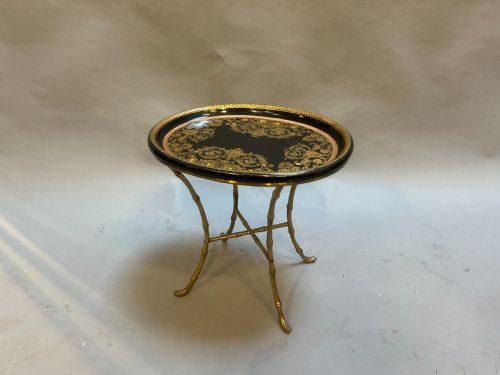
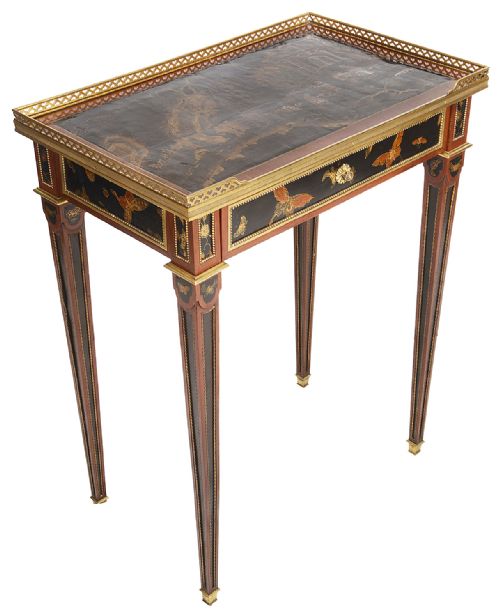
When you search for a victorian chinoiserie tea table, you encounter a fascinating group of serving trays mounted on stands, alongside occasional tables, card tables, and nested sets. These items bridge formal entertaining and practical furnishing, often taking the form of detachable papier-mâché or wooden trays resting upon folding or fixed wooden bases.
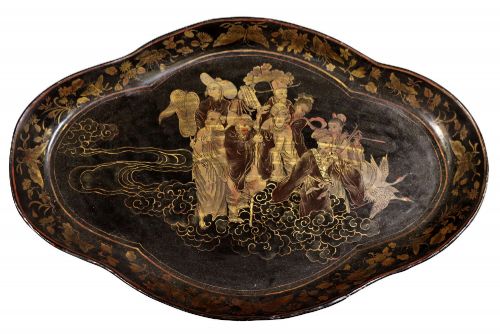
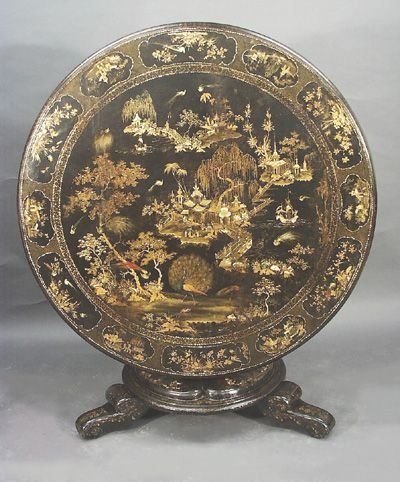
The pieces on this page span the nineteenth century and the Edwardian era, with Victorian examples showing deep ties to the Aesthetic Movement and earlier Regency design traditions. You will frequently find black lacquered surfaces adorned with intricate gold leaf and hand-painted oriental scenes, alongside occasional lamps and centre tables.
Origins cluster around English workshops that embraced japanning and lacquer techniques to satisfy a persistent fascination with eastern decorative arts. Whether you select a tray table or a nest of four tables, each object serves as a functional centrepiece with a distinct historical narrative.
Indicators of quality
The distinction between standard items and exceptional examples lies in the crispness and depth of the hand-painted decoration. Superior pieces display intricate gold leaf work and finely detailed figural scenes that retain their clarity across the entire lacquered surface.
Construction integrity also dictates value, particularly in the stability of tray stands and the preservation of the papier-mâché or wooden core. Items showing minimal cracking in the lacquer finish and retaining original brass components represent the higher tier of craftsmanship.
Available forms range from serving trays on stands and occasional tables to nests of four tables, card tables, and table lamps.
The Victorian Chinoiserie Tea Table Glossary
- Chinoiserie
- European artistic imitation of Chinese and East Asian decorative styles, popular in furniture and lacquerwork. This style relies on motifs of pagodas, figures, and exotic flora.
- Papier-mâché
- A composite material made from paper pulp or reinforced sheets mixed with glue, moulded and dried to form strong, lightweight trays. It provides an ideal smooth substrate for dark lacquer finishes.
- Japanning
- A European technique of finishing furniture to emulate Asian lacquerwork using heat-dried varnishes and paints. It produces a glossy black or dark surface decorated with gilt designs.
- Tray table
- A piece of furniture comprising a removable serving tray set upon a dedicated folding or rigid base. These items functioned historically for serving tea and beverages in drawing rooms.
- Aesthetic Movement
- A late nineteenth-century British design movement that promoted art for art's sake and embraced decorative Japanese influences. Pieces from this period often feature bold ebonised finishes and stark gilt ornamentation.
Victorian Chinoiserie Tea Table: Frequently Asked Questions
How were these tables used originally?
These tables served primarily in drawing rooms for the formal ritual of pouring and serving tea to guests. The removable top allowed servants to carry the tray directly from the kitchen to the parlour before mounting it on the stand.
Beyond tea service, people utilised the folding tray tables and card tables for entertaining, social gatherings, and holding decorative ornaments when not in active use.
Where should I place a lacquer table?
Position your table away from direct sunlight and strong heat sources to protect the delicate lacquer and gold leaf decoration from fading or drying out. A spot with gentle ambient light allows the hand-painted details and gilt surfaces to catch the eye without risking environmental damage.
These pieces work wonderfully as occasional side tables next to seating or as statement centrepieces in a room, provided they are kept clear of heavy or wet items that might scratch the finish.
How do I care for antique lacquer?
Dust the surface gently using a soft, dry microfibre cloth to remove particles without abrading the delicate painted layer. Avoid commercial polishes, water, and chemical cleaning agents, as moisture can penetrate hairline cracks and damage the underlying papier-mâché or wood.
Treat the surface with care during daily use, employing coasters beneath cups and avoiding abrasive objects that could mar the black japanned finish.
Can I use the tray separately from its stand?
Many historical examples feature a detachable tray resting freely on folding or fixed supports, allowing the top to be lifted off entirely. While original trays were built for carrying, modern placement often treats the combination as a fixed furniture unit to preserve the fragile structure.
If you choose to lift the tray, support the base fully at all times to prevent flexing the papier-mâché or stressing the painted corners.
How do I distinguish Victorian from Regency examples?
Regency pieces often display leaner classical proportions and sparser, more linear gilt motifs influenced by neoclassical taste and early nineteenth-century design manuals. Victorian items tend to embrace a denser decorative scheme, frequently incorporating richer floral patterns and bolder ebonised surfaces.
Examining the construction methods, screw types, and specific lacquer composition helps clarify the manufacturing era when stylistic clues overlap.