


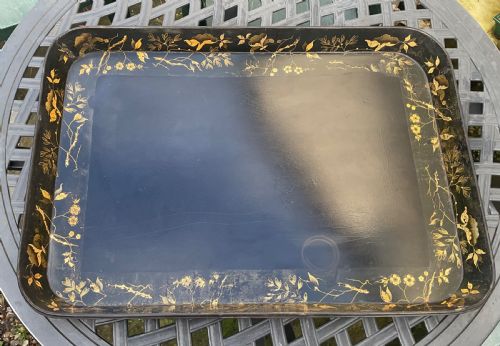


Gilt Chinoiserie Tray
A gilt chinoiserie tray brings painted orientalist scenes and metallic detail into domestic spaces, whether lifted onto a stand or used for serving.
Gilt Chinoiserie Tray
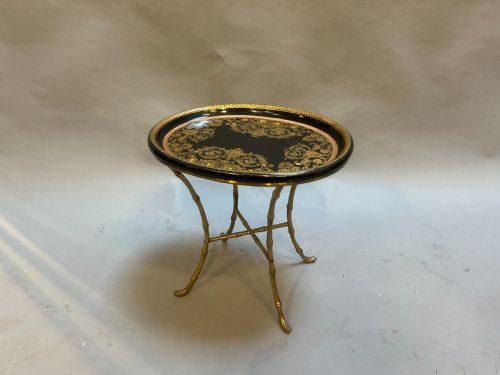
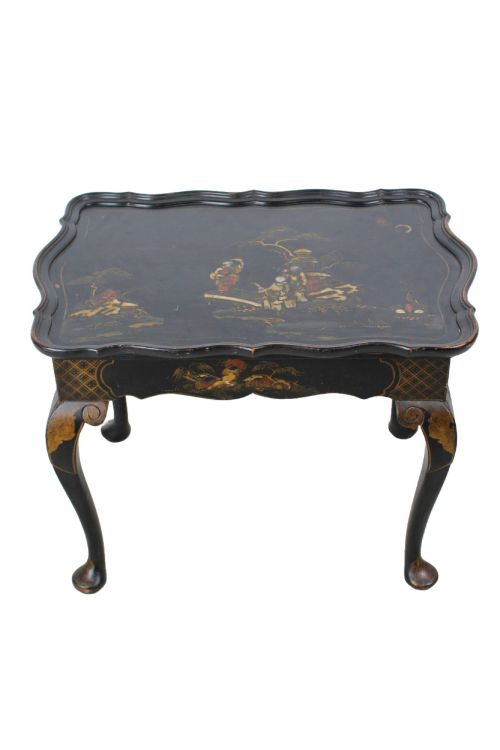
A gilt chinoiserie tray encompasses both flat serving pieces and deeper vessels designed to rest on collapsible bases as occasional or coffee tables. These pieces emerge from periods spanning the Regency era through to the Edwardian decades, reflecting changing domestic fashions.
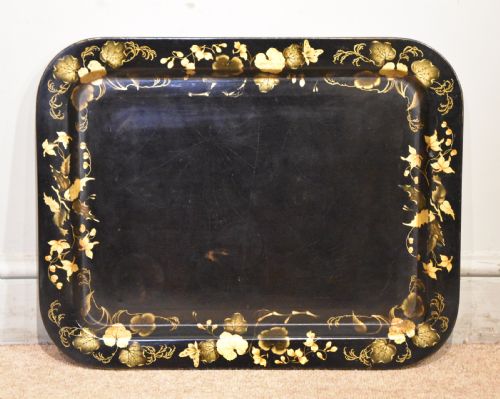
The most common formats on this page include papier-mâché and lacquered wood surfaces elevated on stands, alongside traditional serving platters and circular table tops. Craftsmen shaped these items from materials like ebonised timber and brass to create functional furniture.
Originating in Georgian workshops and evolving through Victorian and Edwardian iterations, these objects combine utility with decorative Asian-inspired motifs. Buyers encounter both original serving trays adapted for stands and pieces built specifically as tray tables.
How they were made
Papier-mâché formed the structural base for many leading examples, pressing paper pulp with glue and resin to create robust yet lightweight trays. Makers also utilised solid wood and ebonised timber, building smooth foundations suitable for detailed painting.
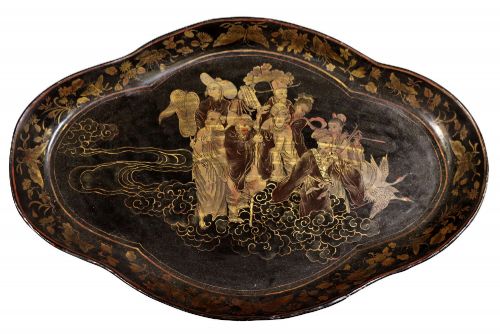
Gold leaf and gilt pigments provided the metallic highlights across the dark surfaces, applied by hand to define architectural and figurative motifs. Artisans finished these compositions with protective lacquers to seal the painted designs.
Listings feature items spanning the Regency, Victorian, and Edwardian periods, utilising papier-mâché, lacquered wood, and gilt.
What varies in quality
The refinement of the hand-painted decoration sets apart the superior pieces from standard production, with finer examples displaying delicate brushwork and complex figural scenes. The depth and layering of the lacquer finish also indicate the level of craftsmanship involved.
The integrity of the underlying papier-mâché or timber substrate determines durability, particularly on pieces adapted as tables. Original stands and mounts matching the period of the tray elevate the overall cohesion of the piece.
The Gilt Chinoiserie Tray Glossary
- Papier-mâché
- A composite material made from paper pulp or layers of paper mixed with glue, used to form lightweight trays. This substance provided a smooth, stable ground for lacquer and paint.
- Chinoiserie
- European artistic style reflecting Chinese and East Asian motifs, popular in furniture and decorative arts. Artisans interpreted these themes through painted figures, pavilions, and landscapes.
- Gilt
- Covered with a thin layer of gold leaf or gold paint to impart a metallic sheen. This technique highlighted key decorative elements against dark backgrounds.
- Ebonised
- Timber treated with a finish to imitate expensive ebony wood. Makers applied this dark stain to create high-contrast frames and surfaces.
- Comport
- A shallow pedestal dish used for serving fruit or sweetmeats at the table. These ceramic pieces sometimes shared the mandarin patterns seen on contemporary trays.
Gilt Chinoiserie Tray: Frequently Asked Questions
Can I use a tray table for daily drinks?
These pieces function adequately for holding glasses and serving ware, provided users protect the lacquered surfaces from excessive moisture and heat.
Many examples sit securely on folding or fixed stands, transforming portable serving trays into stable occasional furniture for living spaces.
How do I tell a Regency tray from a Victorian one?
Regency trays often display sparser, neoclassical-influenced gilt work combined with oriental motifs on papier-mâché, dating from the early nineteenth century.
Victorian and later pieces tend towards denser floral and figurative decoration, frequently accompanied by ebonised finishes and bespoke stands.
Were these trays originally made as tables?
Many items began life as portable serving trays or butlers' trays before being mounted onto custom stands during the nineteenth or twentieth centuries.
Some later Edwardian and Victorian variants, however, emerged from workshops specifically constructed as tray top coffee tables.
How should I clean a lacquered papier-mâché tray?
Dust surfaces gently with a dry, soft cloth to prevent scratching the delicate lacquer and gold leaf layers.
Avoid chemical polishes, abrasive cloths, and prolonged exposure to direct sunlight or standing water to preserve the painted finish.