
Antique Bureau with Mounts
An antique bureau with mounts combines fitted writing compartments with the decorative gleam of cast metal ormolu and brass.
Antique Bureau with Mounts
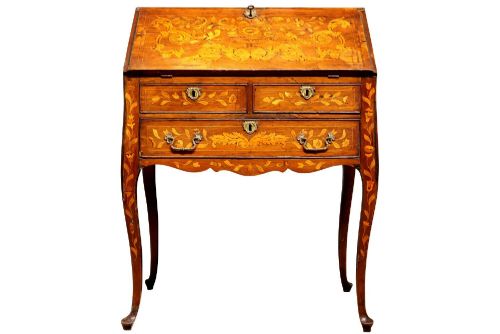
When you search for an antique bureau with mounts, you encounter refined writing furniture designed for domestic studies and boudoirs. Most examples on this page hail from the nineteenth century, reflecting nineteenth-century revivals of earlier French court styles.
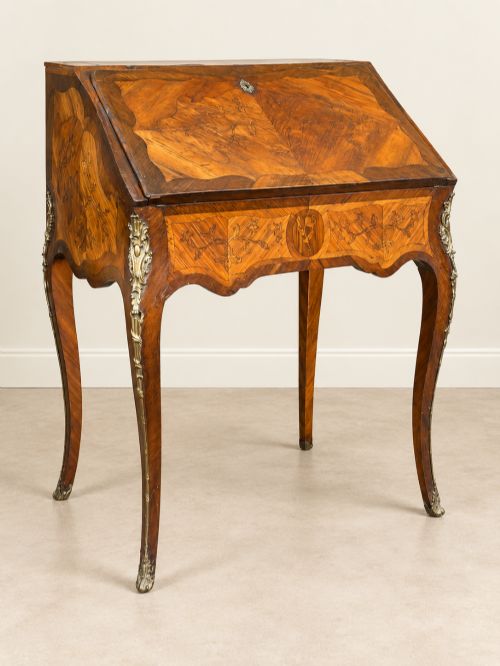
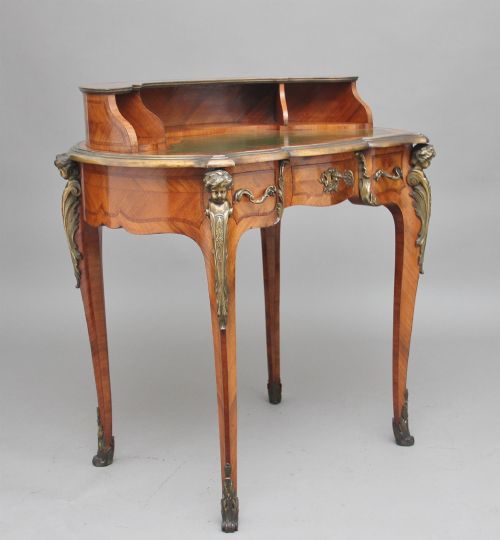
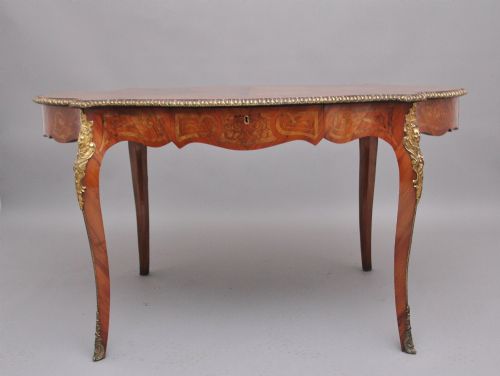
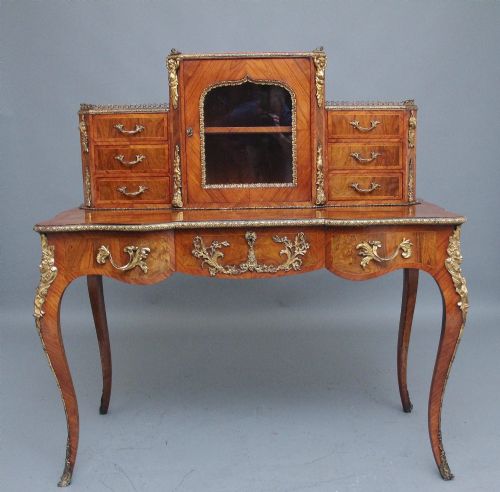
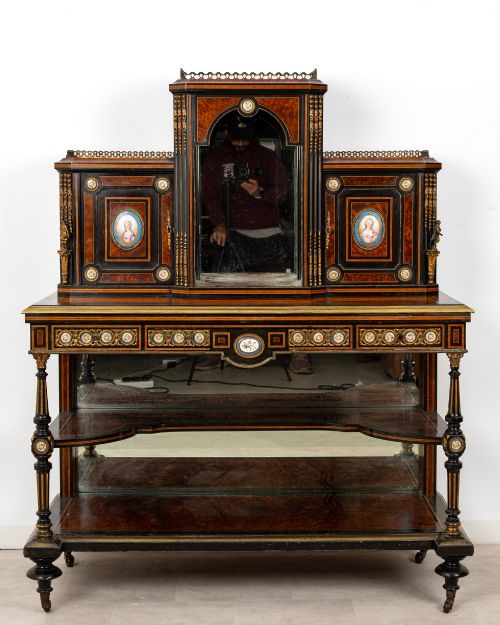
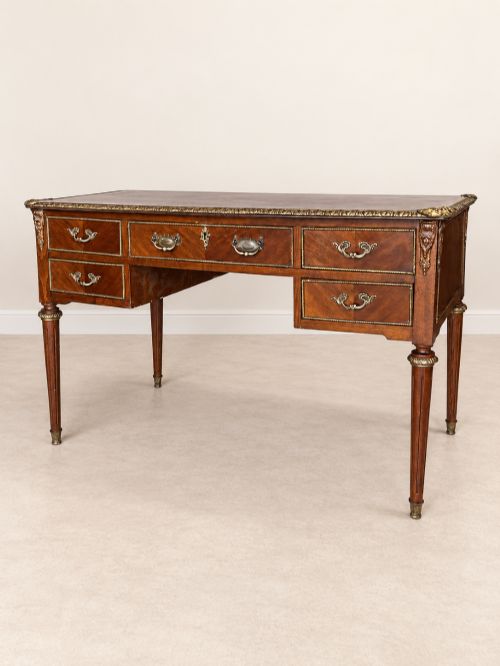
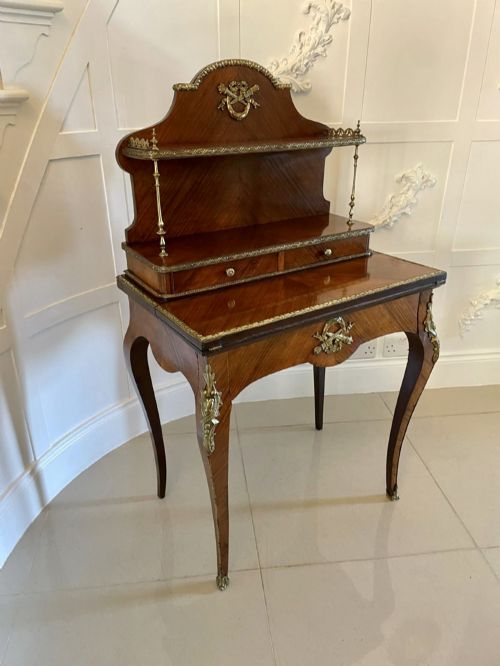
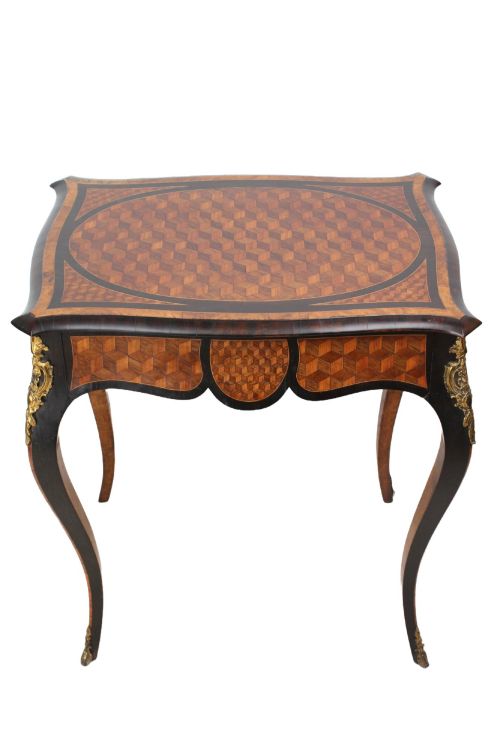
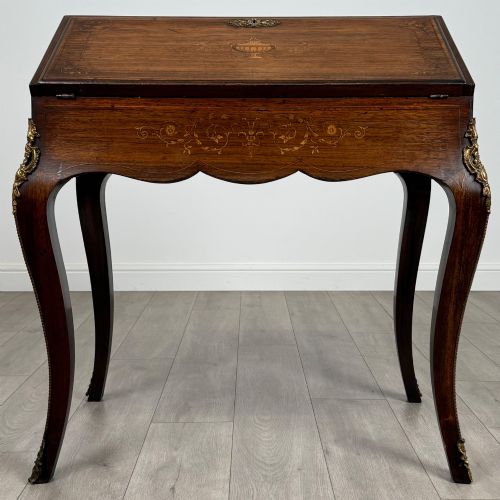
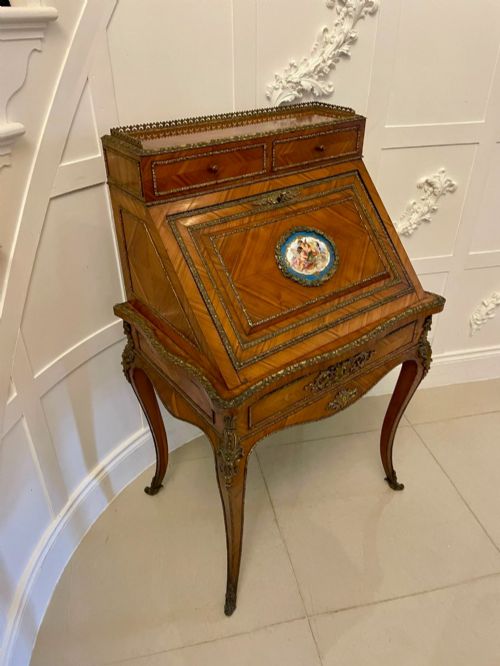
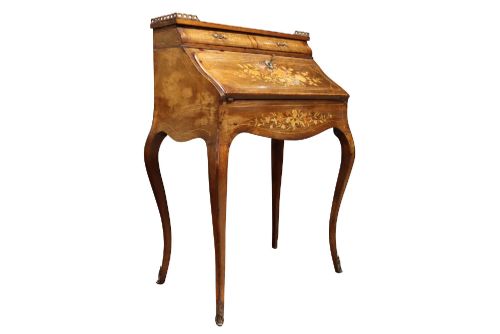
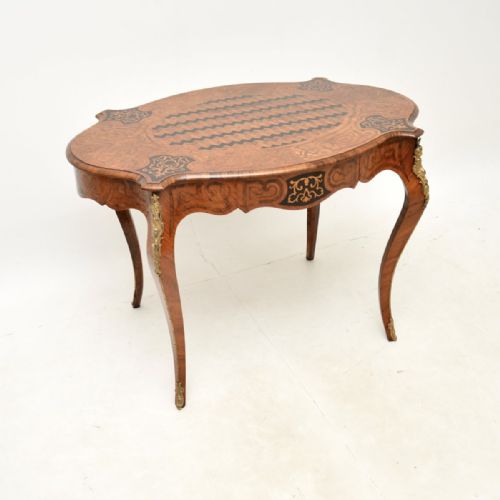
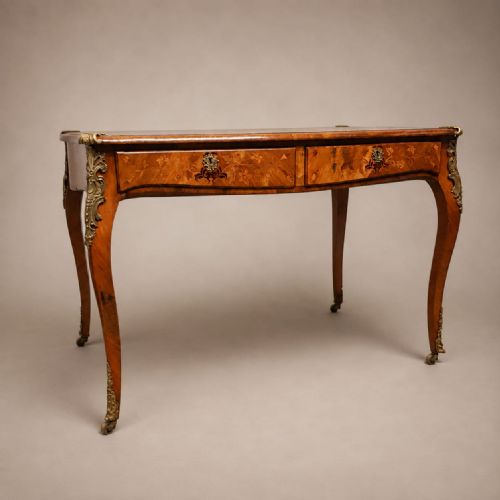
These pieces primarily take the form of bonheur du jour desks, writing tables, and fall-front secretaires fitted with internal compartments. Walnut, kingwood, and rosewood veneers dominate the forms, frequently enriched by parquetry or marquetry patterns.
Continental workshops, particularly French ateliers, produced the vast majority of these mount-adorned pieces during the Victorian era and the decades surrounding it. The integration of metal mounts elevates a standard writing desk into a decorative statement.
Materials and construction
Cabinetmakers constructed the carcases using native and exotic hardwoods such as walnut, satinwood, and kingwood over sturdy secondary timbers. Artisans laid decorative veneers like burr walnut or geometric parquetry across the exterior surfaces.
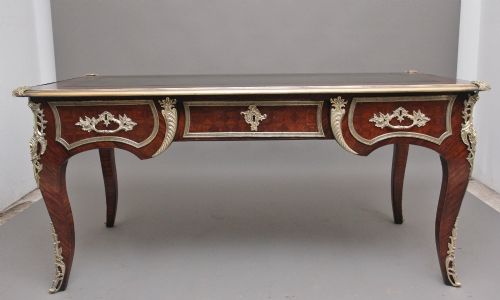
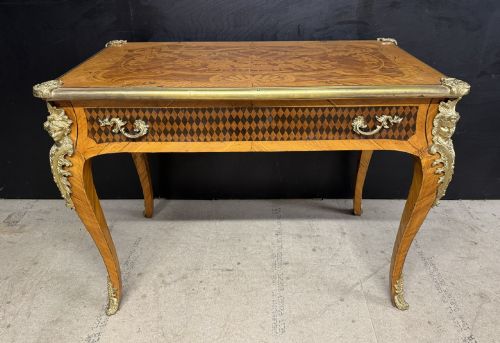
Gilt bronze, ormolu, and brass mounts were cast, chased, and secured to corners, legs, and borders to accentuate the structural lines. Marble tops and porcelain plaques frequently completed the composition, demanding precise joinery to support their weight.
Common surface materials across the current pieces include kingwood, burr walnut, rosewood, and marble paired with gilt bronze mounts.
Markers of distinction
The crispness of the cast metalwork separates standard pieces from exceptional ones, as finer ormolu displays deep hand-chasing rather than a flat, uniform finish. The precision of the wood veneers and marquetry inlay further indicates the skill of the original workshop.
Originality defines the upper echelon of these desks, particularly the survival of matching marble slabs, original leather writing surfaces, and intact porcelain plaques. Structural integrity in the drawers and drop-front mechanisms ensures the piece functions as intended.
The Antique Bureau with Mounts Glossary
- Ormolu
- Gilded bronze cast and finished with fine chiselling to adorn furniture mounts. This material provides the golden highlights seen on French revival pieces.
- Marquetry
- The art of applying decorative pieces of veneer to a structure to form intricate pictorial designs. It creates the floral and geometric patterns on the desk surfaces.
- Bonheur du jour
- A light ladies writing desk featuring a small cabinet or shelving superstructure on top. These dainty writing tables became popular during the nineteenth century.
- Secretaire abattant
- A tall writing cabinet featuring a drop-front fall that conceals a fitted interior of small drawers and pigeonholes. They often feature marble tops.
- Parquetry
- Geometric mosaic woodwork arranged in repeating patterns across the veneer. It adds texture and visual depth to the body of the desk.
Antique Bureau with Mounts: Frequently Asked Questions
What is a bonheur du jour?
A bonheur du jour is a small, elegant writing desk featuring a raised cabinet or shelf section on the desktop. These pieces were designed for ladies to write letters and keep stationery.
They often incorporate delicate wood veneers, porcelain plaques, and cast ormolu mounts. Their compact proportions make them suitable for placement in reception rooms and bedchambers.
How do I care for ormolu mounts?
Ormolu mounts require gentle dusting with a soft, dry brush to prevent the accumulation of dirt in the recesses. Avoid abrasive metal polishes that can strip the original gilding from the bronze.
Maintaining a stable room temperature protects both the metal mounts and the underlying wood veneers from splitting. Waxing the surrounding wood should be done carefully to avoid touching the gilt surfaces.
Are these desks strictly French?
While the majority of pieces featuring ornate mounts originate from French workshops following Louis XV and Louis XVI revivals, English makers also produced mounted writing furniture. English examples often favour figured walnut or mahogany with brass mounts rather than elaborate kingwood and ormolu.
The design vocabulary heavily references eighteenth-century French court furniture regardless of where the workshop was situated. Examining the secondary timbers helps clarify the geographic origin of the piece.
What is the difference between a bureau and a secretaire?
An antique bureau typically refers to a slant-front desk that opens to reveal a writing surface and pigeonholes. A secretaire often takes the form of an upright cabinet with a drop-front writing flap.
Both forms utilise internal compartments to store writing materials and correspondence securely. Mounts of brass or ormolu frequently frame the perimeters of these writing flaps.