



French Writing Slope Desk
A french writing slope desk brings portable elegance to correspondence, offering hinged surfaces and fitted compartments for daily letters.
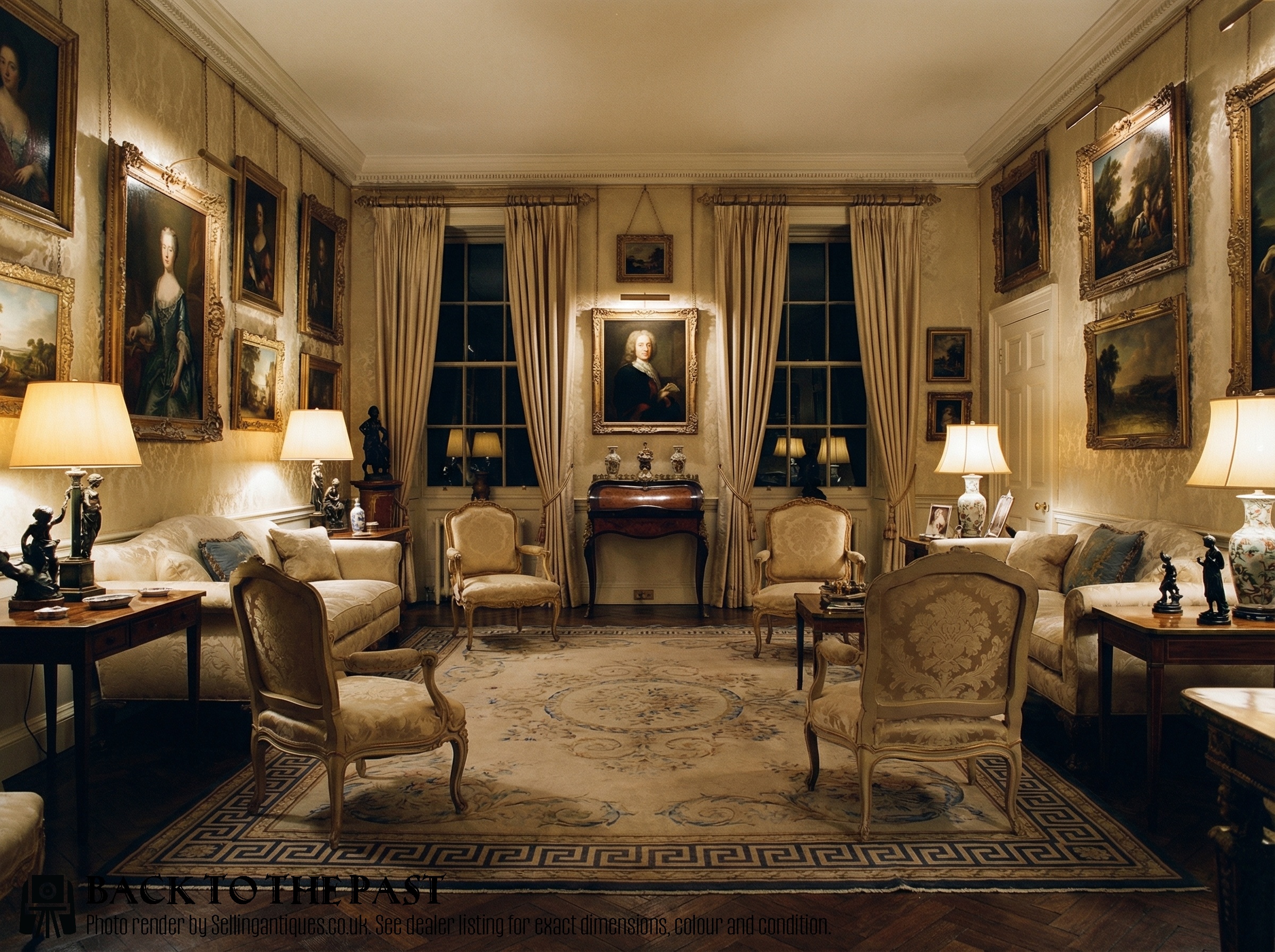
French Writing Slope Desk
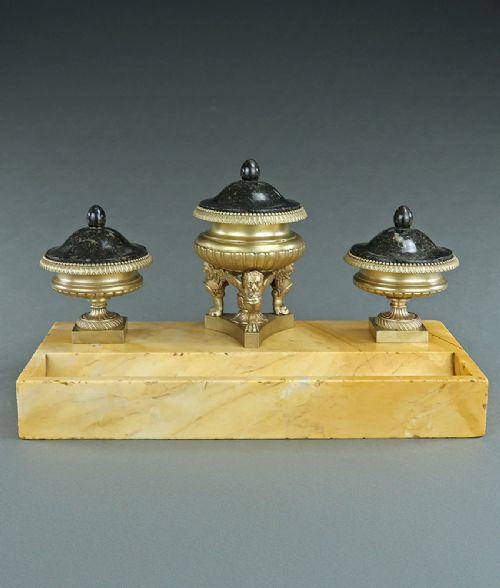
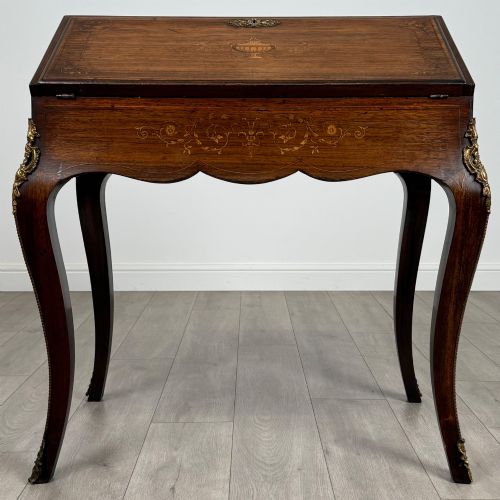
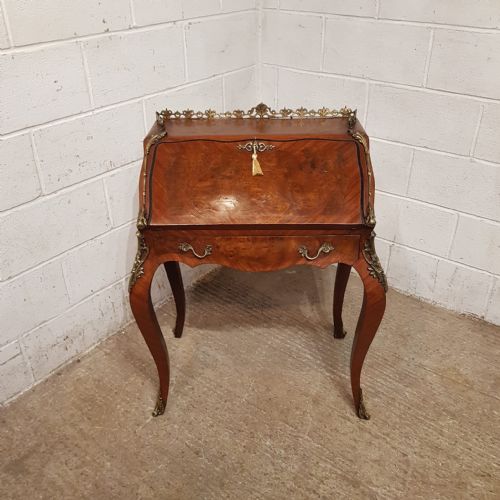
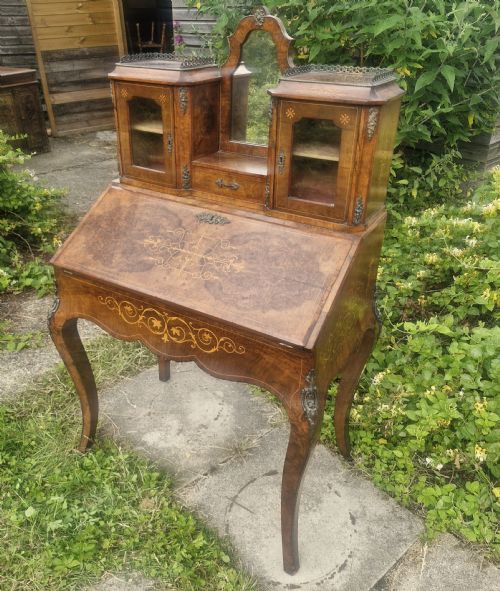
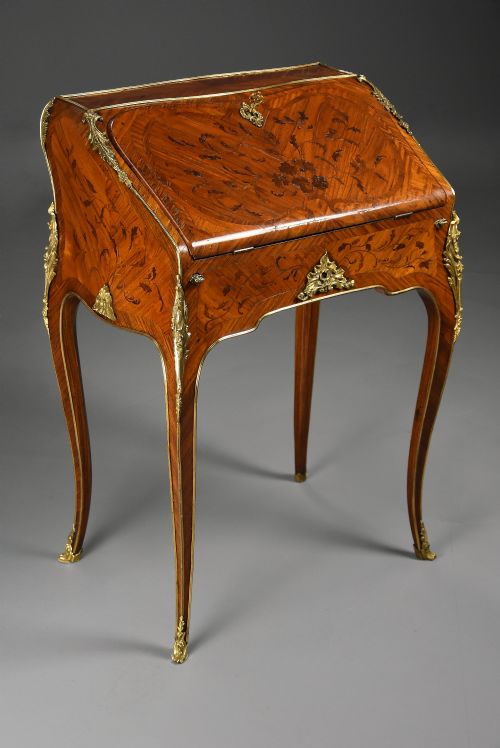
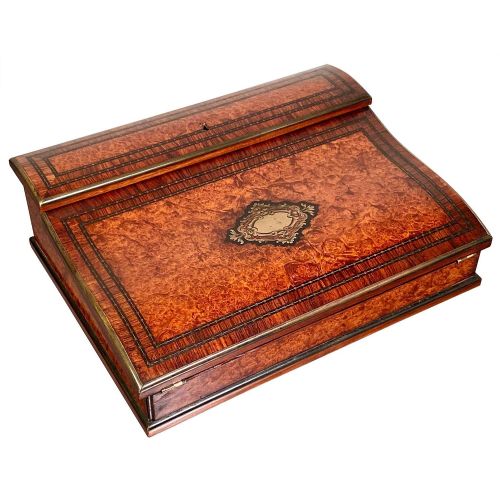
The french writing slope desk category encompasses portable writing boxes, bureau de dame forms, and ladies desks originating primarily across the nineteenth century. Pieces range from compact campaign slopes inlaid with brass to elaborate nineteenth-century bureau de dame tables.
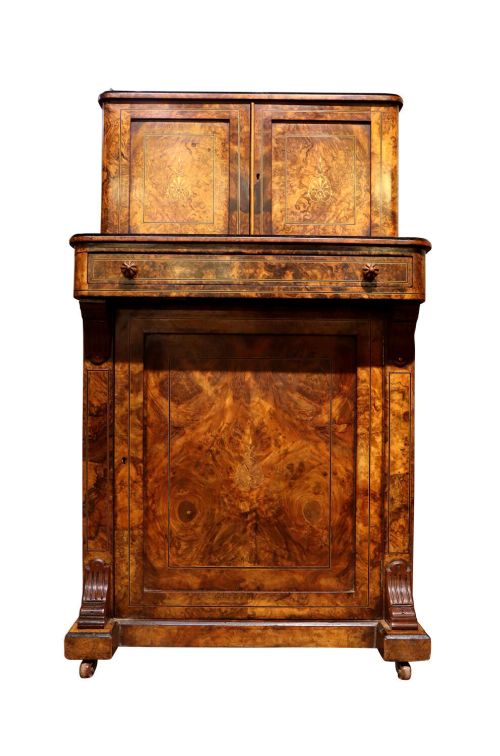
Buyers frequently encounter walnut, rosewood, and burr walnut examples reflecting Louis XV revival and Victorian aesthetics. These items combine practical stationery storage with decorative desktop presence.
Evaluating Quality
Quality rests upon the precision of timber selection and the crispness of decorative metal mounts. Finer examples display meticulous grain matching in burr walnut or rosewood alongside finely chased ormolu.
Construction integrity within interior stationery compartments and the seamless fit of folding writing flaps distinguish superior workshops from standard production.
Listings feature nineteen-century pieces alongside eighteenth-century examples, utilising walnut, rosewood, kingwood, brass, and ormolu.
BVRB·Lefebvre of Belgium
The French Writing Slope Desk Glossary
- Bureau de dame
- A ladies writing desk, often featuring a sloping lid or fitted superstructure with small drawers and pigeonholes.
- Ormolu
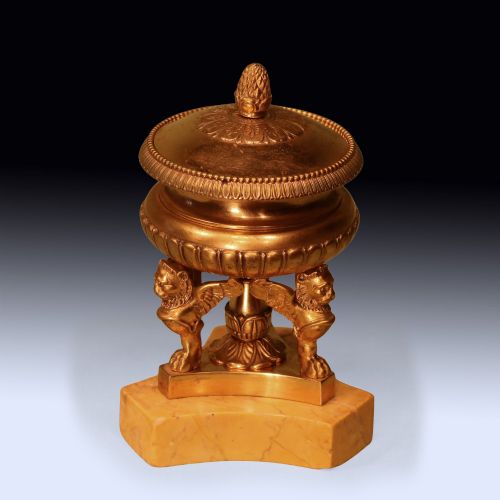
- Gilt bronze ornamentation applied to furniture mounts, inkstands, and desk accessories.
- Marquetry
- Decorative veneer patterns formed by fitting together thin slices of various coloured woods.
- Writing slope
- A portable box with a hinged sloping lid designed for correspondence and document storage.
- Bonheur du jour
- A light ladies writing desk featuring a small cabinet or set of shelves upon the upper surface.
French Writing Slope Desk: Frequently Asked Questions
What is a french writing slope desk?
A french writing slope desk is a portable or fitted piece of furniture designed for correspondence, featuring a slanted writing surface and interior compartments.
These items range from compact portable boxes to freestanding bureau de dame tables with intricate marquetry.
How were these desks used?
Owners used these desks for writing letters, storing stationery, and keeping personal documents secure within fitted interior compartments.
Portable slopes allowed travellers to carry writing materials easily, while larger bureau de dame forms remained stationary in private rooms.
How do I identify the period?
Period identification relies on timber choices, mount styles, and structural characteristics associated with nineteenth-century revival movements or earlier eighteenth-century designs.
Detailed ormolu mounts, boulle work, and specific veneer combinations such as rosewood and burr walnut point towards Victorian and nineteenth-century production.
Where should I place a desk?
These desks suit studies, living rooms, or bedrooms as functional display pieces and practical writing surfaces.
Freestanding models and compact bureau forms fit well against walls or in smaller alcoves where surface area is valued.