
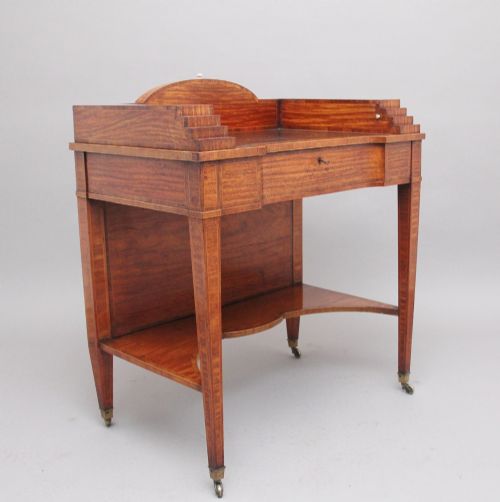


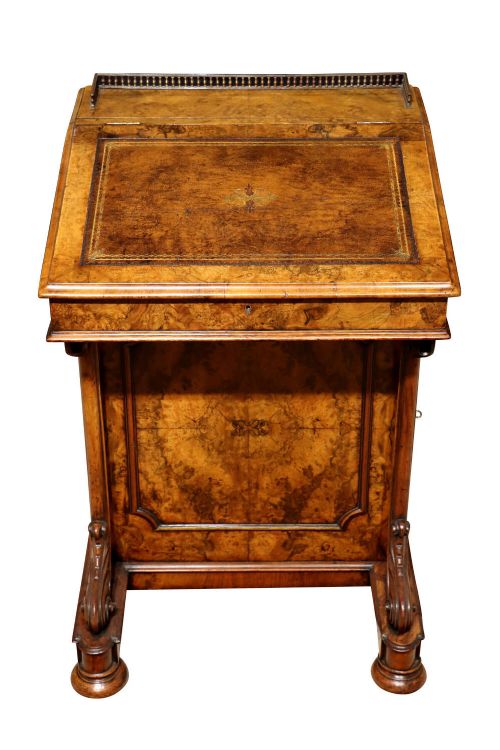


Brown Satinwood Bureau
These brown satinwood bureau selections bring polished timber and fitted writing compartments into home studies, drawing from Edwardian and Victorian eras.
Brown Satinwood Bureau
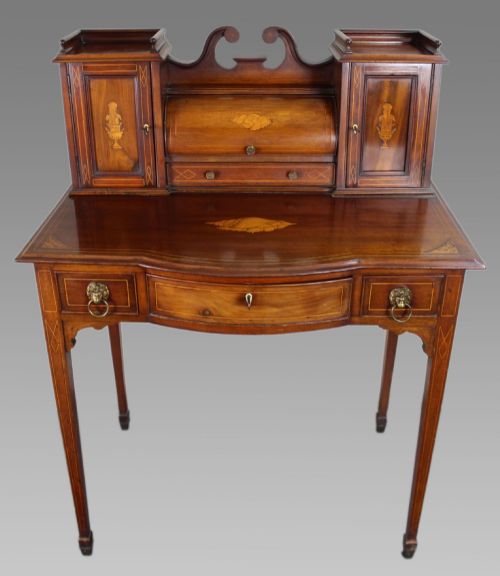
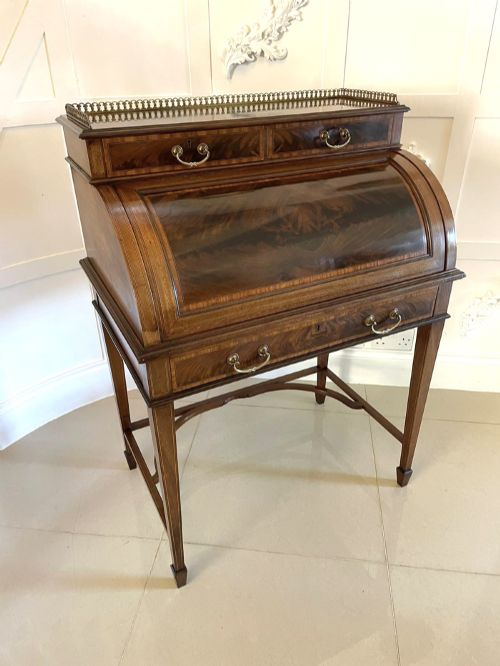
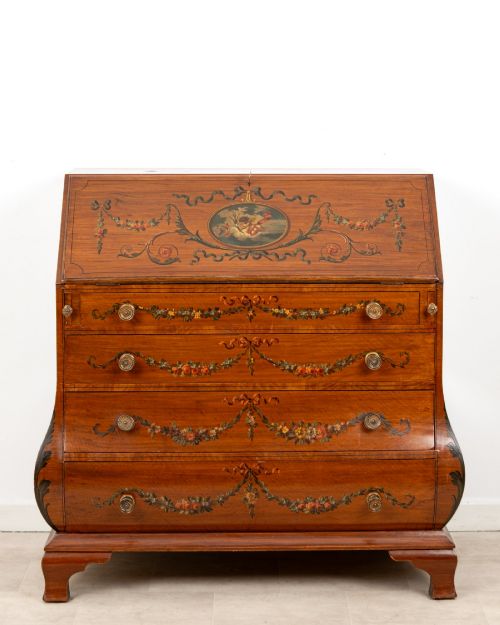
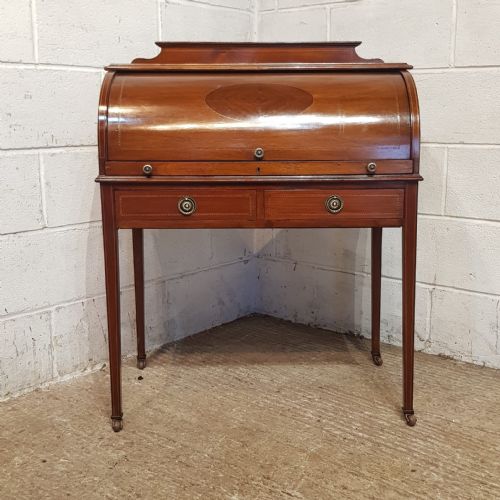
A brown satinwood bureau combines timber writing surfaces with concealed pigeonholes and drawers, predominantly appearing in Edwardian workshops and nineteenth century variations. Pieces matching this search phrase encompass drop-front writing desks, cylinder desks, and tall bureau bookcases.
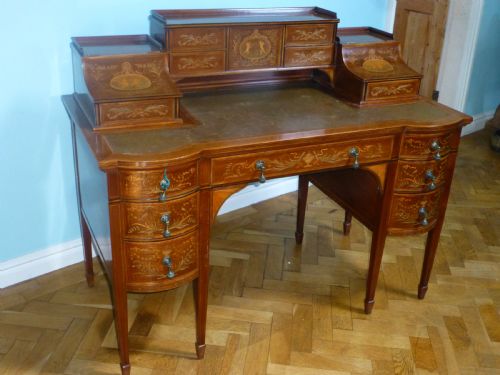
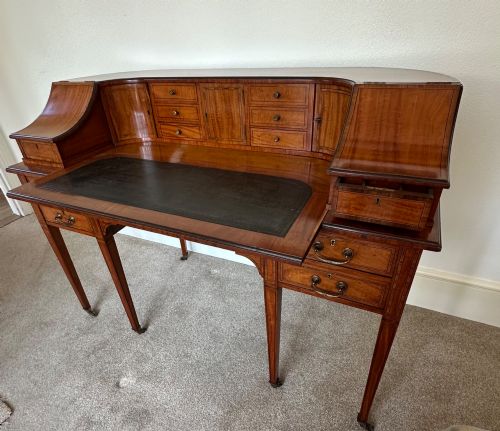
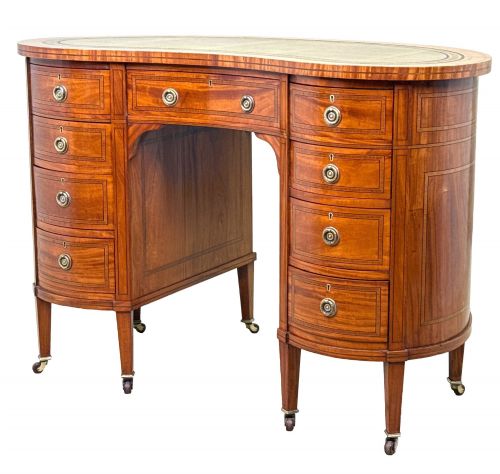
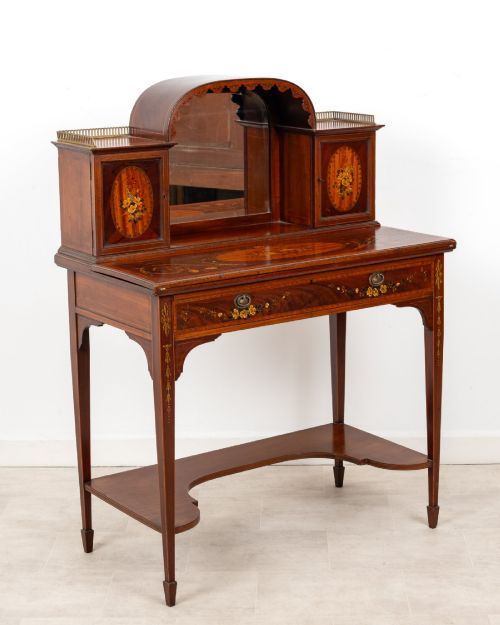
Edwardian interpretations dominate the selection alongside Sheraton Revival revivals, nineteenth century examples, and George III pieces. Buyers frequently encounter inlaid mahogany frameworks featuring satinwood panels, leather inserts, and brass hardware.
Materials and construction techniques
Craftsmen utilised mahogany and solid satinwood carcasses, often applying elaborate marquetry, line inlay, and painted decoration across drawer fronts and cylinder lids. Internal fittings relied on fine secondary timbers to build small drawers and stationery compartments.
Workshops incorporated brass handles, glass panel doors on bookcase additions, and fitted leather writing surfaces tooled with gold leaf borders. Ormolu mounts appear on select nineteenth century French and Victorian models.
Some cylinder desks hide clever mechanical linkages that slide the writing surface forward as the lid rolls back.
Distinctions in craftsmanship
Superior examples demonstrate precision in marquetry inlay and grain matching across large writing surfaces, whereas simpler versions rely on painted motifs. The complexity of internal stationery fittings and the inclusion of branded cabinetmaker signatures elevate certain desks.
The choice between solid satinwood construction versus mahogany carcasses veneered with satinwood defines distinct tiers of production. Original brass hardware, intact leather inserts, and balanced proportions distinguish exhibition-grade specimens from standard commercial output.
Maple & Co. London·Edwards and Roberts·James Shoolbred of London·Gillows of Lancaster·Morison of Edinburgh
The Brown Satinwood Bureau Glossary
- Satinwood
- A lustrous tropical hardwood with a yellow sheen utilised for fine furniture veneers and stringing. It is prized for its reflective surface quality.
- Bureau
- A desk featuring a sloping drop-front or cylinder lid that opens to reveal internal pigeonholes and small drawers. This form serves domestic writing needs.
- Marquetry
- The art of forming decorative patterns with pieces of veneer applied to a timber structure. Artisans use contrasting woods to create pictorial designs.
- Ormolu
- Gilt bronze mounts applied to furniture edges and feet during the nineteenth century. This decorative technique originates from French cabinetmaking traditions.
- Sheraton Revival
- A late nineteenth and early twentieth century style emulating the neoclassical furniture designs of Thomas Sheraton. These pieces often feature satinwood inlay and tapered legs.
Brown Satinwood Bureau: Frequently Asked Questions
What is a brown satinwood bureau?
A brown satinwood bureau is a writing desk featuring a sloping flap or cylinder lid that conceals internal compartments. These items use pale exotic timbers alongside mahogany to create decorative writing furniture.
Such desks evolved from eighteenth century forms into popular Edwardian and Victorian household fixtures. They provide compact storage for stationery alongside a dedicated writing surface.
How do I identify an Edwardian bureau?
Edwardian bureaux typically display Sheraton Revival influence through symmetrical satinwood stringing, bellflower inlay, and tapered supports. Their internal drawers and pigeonholes reflect early twentieth century manufacturing standards.
Examination of the secondary woods inside the drawers helps confirm the period of construction. Makers marks or paper labels inside the upper compartments also assist with dating.
Where were these desks used?
These pieces served as private writing desks in drawing rooms, bedrooms, and studies throughout nineteenth and early twentieth century homes. Their fitted interiors kept correspondence and personal documents organised.
In modern interiors, they function effectively as compact laptop desks or display surfaces in sitting rooms. The drop-front lid closes to conceal working papers when not in use.
What is the difference between solid satinwood and veneered pieces?
Solid satinwood pieces utilise timber throughout the structural carcass, which is less common and typically found in earlier eighteenth century forms. Most surviving examples employ a sturdy mahogany base covered in decorative satinwood veneer.
Veneering allowed cabinetmakers to cover large surfaces with striking grain patterns without risking the warping associated with solid boards of this timber. Both methods represent valid historical construction techniques.