




Antique Buffet Table Lamps
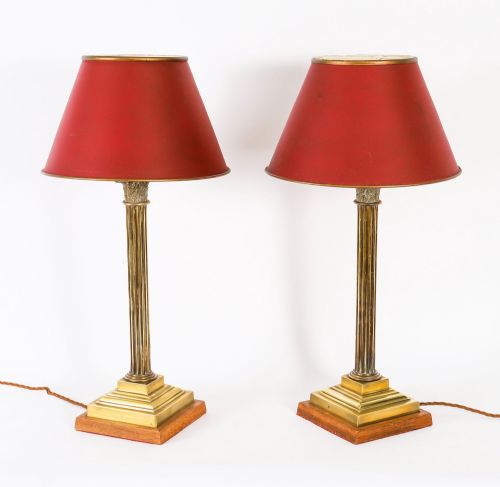
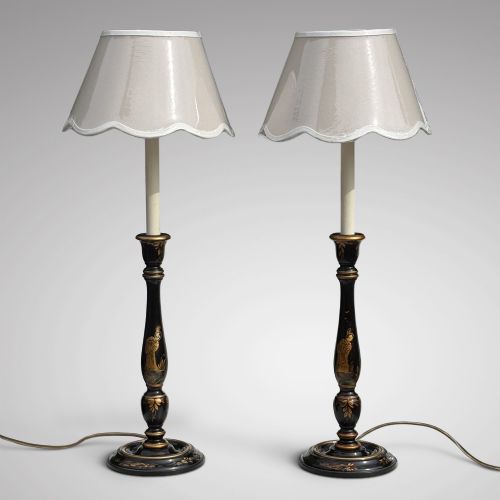
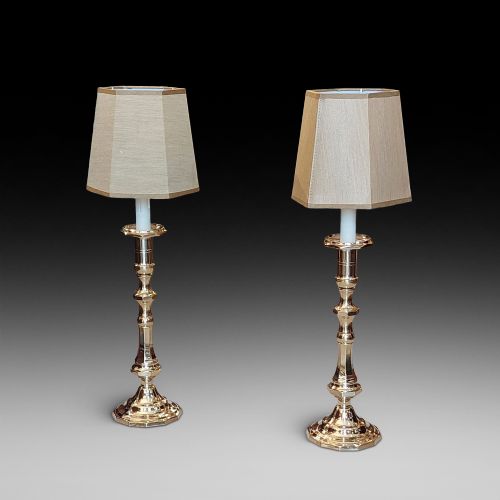
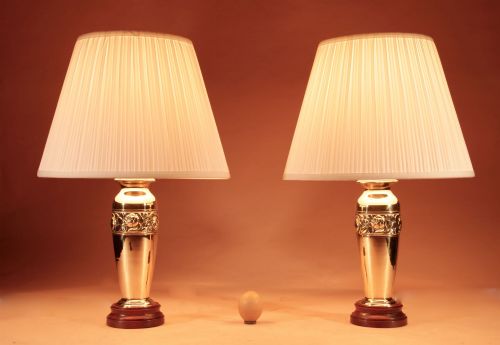
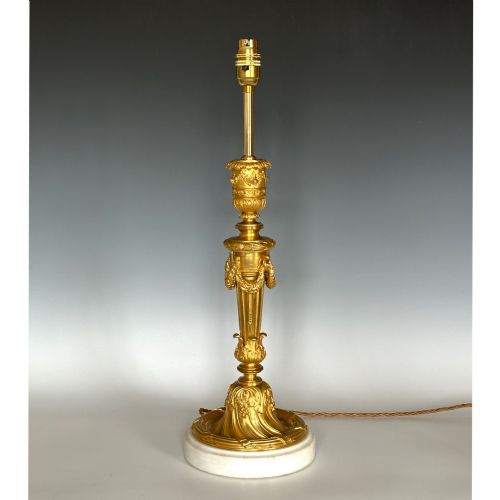
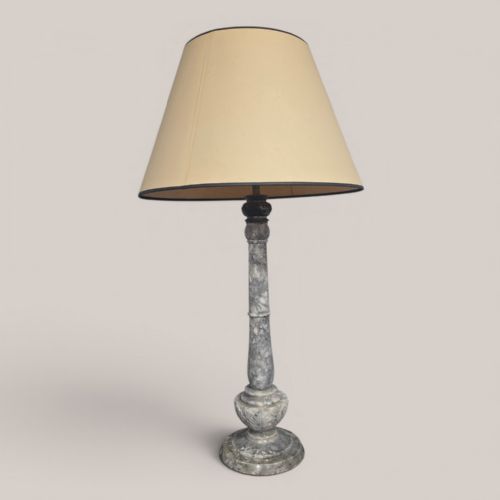
These antique buffet table lamps bring focused light and classical proportion to a room, ranging from slender brass columns to ornate French ormolu.
Antique Buffet Table Lamps
When searching for antique buffet table lamps, buyers encounter tall, slender lighting fixtures designed originally to stand upon sideboards, serving tables, or narrow side consoles without crowding the surface. The pieces listed here span the nineteenth century through the mid-twentieth century, drawing heavily on classical, Victorian, and Art Deco design vocabularies.
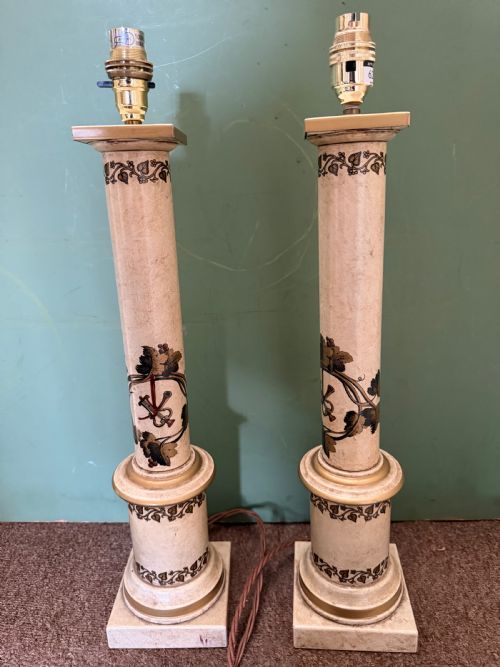
The selection leans heavily toward pairs, often adapted from earlier candlesticks, church standards, or decorative vases. Brass Corinthian columns and French ormolu mounts appear alongside bronze figures, carved giltwood, and lacquer work, reflecting both domestic British and continental European manufacture.
Form follows function closely in these domestic objects, where height and slim profiles matter more than wide bases. Many survivors preserve the substantial weight needed to anchor tall fabric shades, utilising solid metal castings or heavy marble plinths to maintain stability.
How they were made
Makers relied on metal casting techniques, utilising brass, bronze, and ormolu to build rigid structural frames and decorative mounts. Molten metal poured into sand or lost-wax moulds created crisp architectural details like fluted column shafts and acanthus leaf capitals, which workers then chased and polished by hand.
Wood and stone components required traditional joinery and turning, incorporating carved giltwood, rosewood, and polished marble into composite bodies. Artisans frequently combined these varied materials with gilt bronze or silver plating, securing them with threaded central rods that ran from base to bulb fitting.
Nineteenth-century pieces dominate the inventory, with brass Corinthian columns and French ormolu featuring as recurring forms.
What varies in quality
The fidelity of the casting and the crispness of the chasing separate standard production from superior examples. Master metalworkers spent hours hand-chiselling cast bronze and ormolu to sharpen details, whereas lesser pieces retain soft edges and rough seam lines straight from the mould.
Material density and structural integrity also define the upper tier of these lamps. Solid brass columns, heavy marble bases, and substantial fire-gilt surfaces retain their finish and rigidity far better than hollow pressed metal or thin electroplated alternatives.
Jean-Démosthène Dugourc·Palmer and Co
The Antique Buffet Table Lamps Glossary
- Ormolu
- Gilded bronze, where a mercury and gold amalgam is fired onto the bronze surface to create a rich, durable golden finish. This technique was widely practiced by French metalworkers from the eighteenth century onward.
- Corinthian column
- An architectural column style featuring an ornate capital decorated with carved acanthus leaves. Many nineteenth-century table lamps emulate this classical order in brass or bronze.
- Tole-peinte
- Painted or enamelled sheet metal, frequently utilised for decorative cylinders and shades on continental European lighting. The painted scenes often mimic porcelain or ceramic textures.
- Cloisonné
- An ancient enamel technique where thin metal wires are soldered to a metal body to create compartments filled with coloured paste and fired. Surviving Chinese vases utilising this method are frequently converted into striking table lamps.
Antique Buffet Table Lamps: Frequently Asked Questions
What is an antique buffet table lamp?
These tall, slender lamps were designed to sit on narrow sideboards and serving tables where space was restricted. Their elevated light sources illuminated dining rooms and hallways without obstructing eye level.
Most examples in this category use converted candlesticks, oil lamps, or decorative vases mounted with electrical fittings during later periods. Their proportions remain distinctively tall and narrow compared to standard desk or bedside lighting.
How do I date an antique brass lamp?
Dating relies on manufacturing techniques, material composition, and stylistic cues inherited from prevailing design movements. Heavy sand-cast brass components with hand-finished chasing typically point to nineteenth-century production.
Later twentieth-century pieces often display machine threading, lighter gauge metals, or electroplated finishes. Examining the base construction and internal wiring channels usually reveals the age of the primary metal body.
Are these lamps originally electrified?
Almost all antique lighting fixtures of this age were converted from candles, oil, or gas to electricity long after their initial manufacture. Makers adapted existing candlesticks, vases, and column structures by running cords through central weighted channels.
This conversion process preserves the decorative metalwork or ceramic body while updating the functional mechanics for modern domestic use. Professional rewiring ensures these historic pieces comply with current safety standards.
Where should I place a tall column lamp?
Tall column lamps suit narrow surfaces such as sideboards, console tables, or deep mantelpieces where vertical height balances large rooms. Their slender profiles allow them to fit into constrained spaces while casting light over a wide area.
Pairing matching columns on opposite ends of a sideboard creates formal symmetry derived from nineteenth-century interior decoration. Selecting an appropriately proportioned shade keeps the overall height balanced against the base.