


Antique Buffet Display Cabinet
These substantial storage and display pieces unite practical surface area with glazed or open shelving for holding china and glassware.
Antique Buffet Display Cabinet
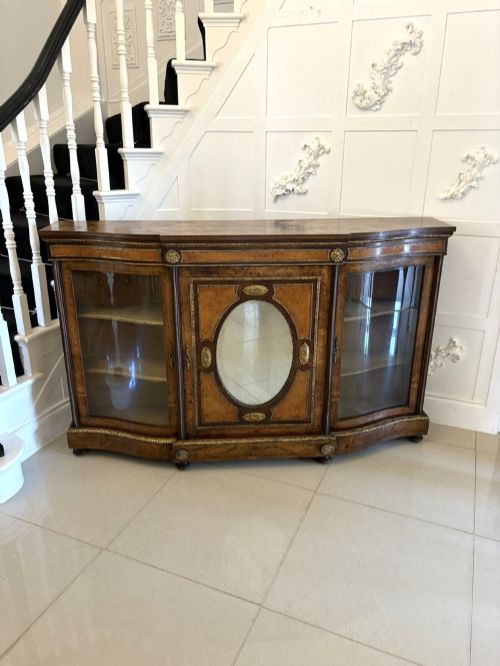
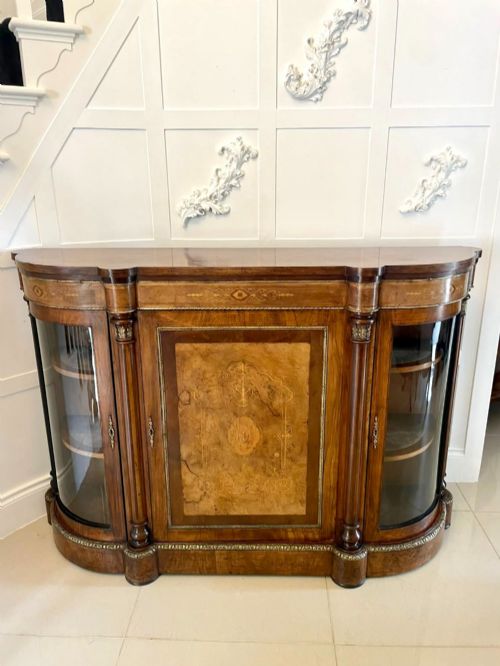
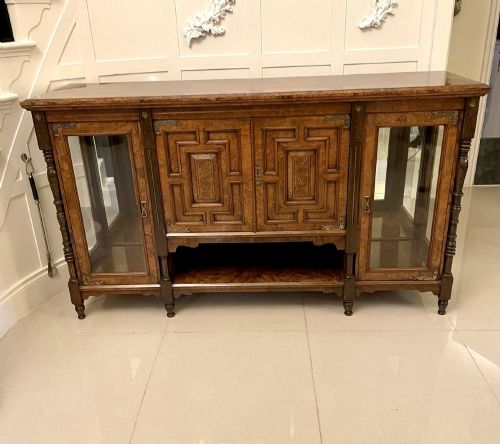
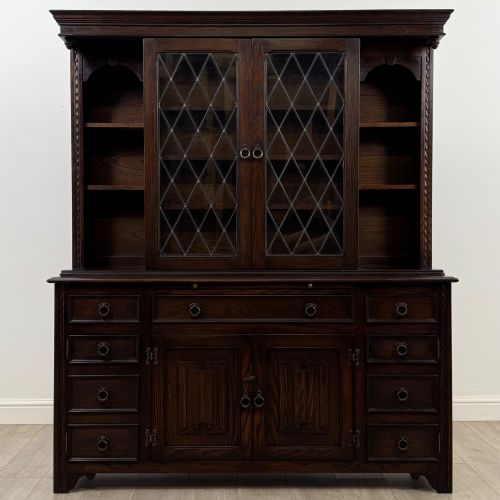
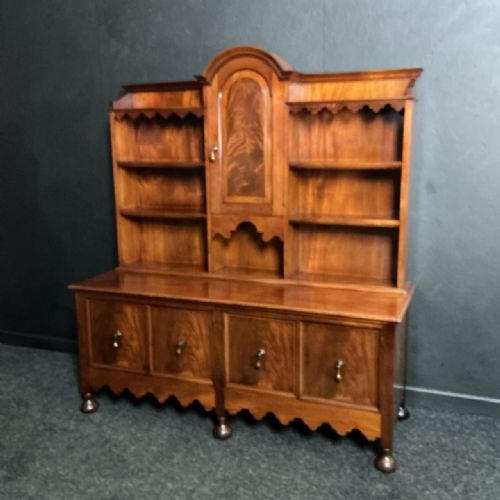
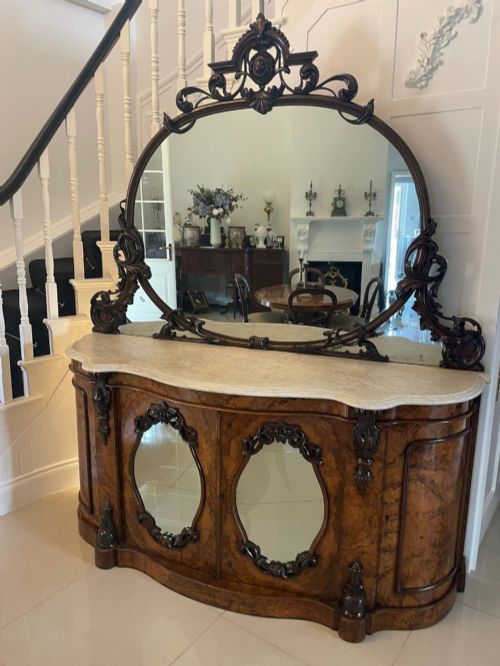
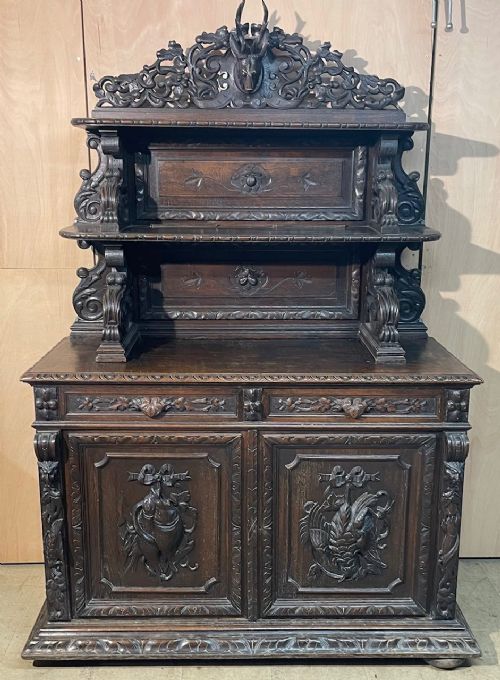
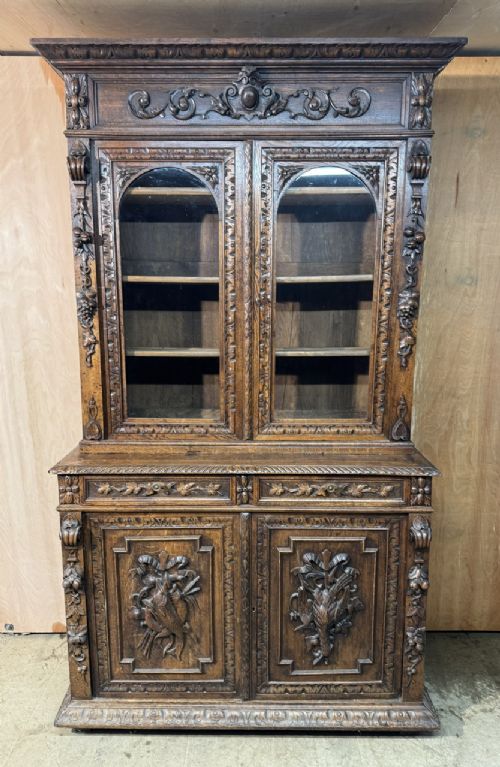
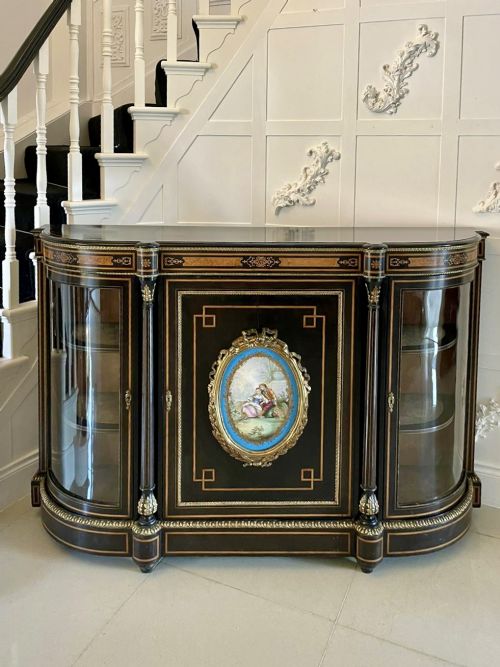
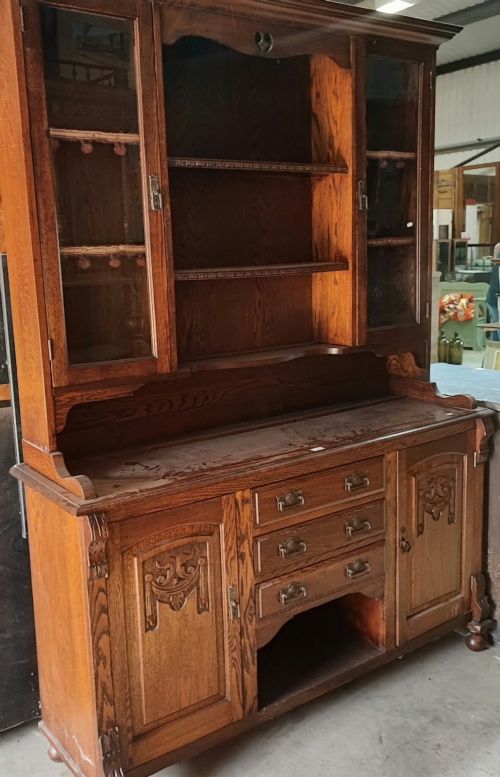
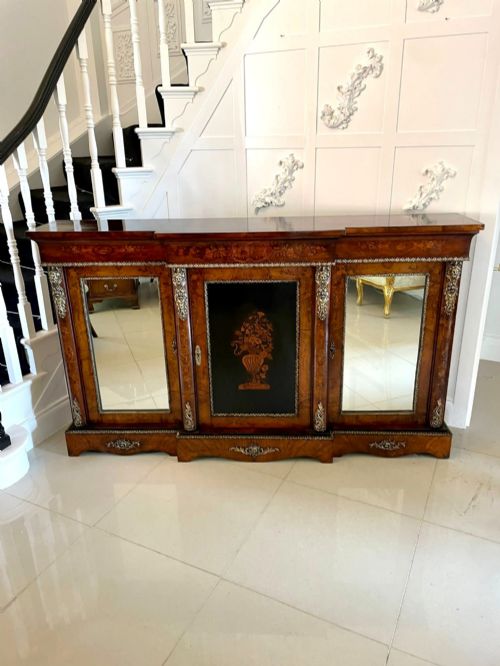
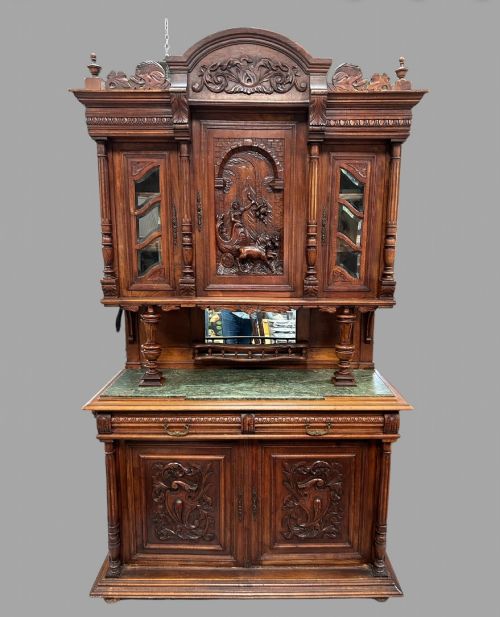
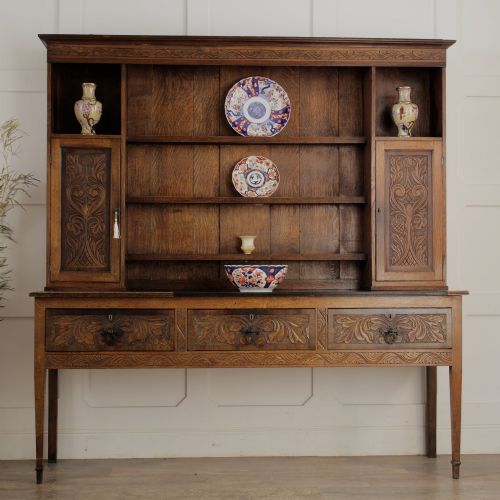
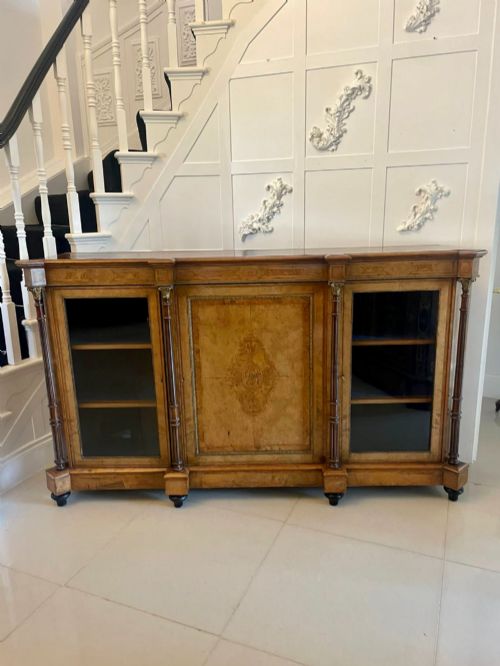
An antique buffet display cabinet encompasses low serving surfaces, glazed credenzas, and tall kitchen dressers designed to store and exhibit household possessions. When you examine this selection, you encounter forms ranging from low Victorian burr walnut credenzas to French provincial oak dressers.
The objects span the eighteenth, nineteenth, and early twentieth centuries, reflecting changing domestic habits across English and continental workshops. Victorian examples in burr walnut and mahogany dominate the offerings, alongside earlier oak country pieces and Arts and Crafts designs.
Makers adapted these cabinets for dining rooms and parlours, combining lower cupboards with upper display shelves or mirrored backs. Each piece serves simultaneously as a functional sideboard and a showcase for valued ceramics.
Materials and construction methods
Cabinet makers utilised dense hardwoods such as mahogany, oak, and walnut, frequently applying burr walnut or amboyna veneers to key surfaces for decorative grain patterns. Ormolu mounts, brass hardware, and marble tops appear on high-status nineteenth-century examples.
Joinery techniques relied on traditional hand-cut dovetails for drawers and mortise and tenon joints for structural frames. Glazed doors incorporate delicate wooden bars, while marquetry and inlay introduce contrasting floral and geometric motifs.
Listings feature eighteenth-century oak pieces alongside nineteenth-century burr walnut credenzas and early twentieth-century Arts and Crafts oak furniture.
Judging quality and execution
Quality rests on the selection of timber veneers and the precision of the marquetry or carving. Superior examples display carefully matched burr walnut grains and crisply cast ormolu mounts rather than mass-produced metalwork.
Structural integrity and original glass panels distinguish fine pieces from heavily restored items. The depth of hand-carving on oak and mahogany surfaces indicates the level of craftsmanship invested by the workshop.
Shapland and Petter
The Antique Buffet Display Cabinet Glossary
- Credenza
- A low cabinet, typically without legs, featuring central cupboards flanked by curved glass doors. This form became popular during the Victorian period for displaying porcelain.
- Marquetry
- The art of applying small pieces of veneer to form decorative patterns and pictures. Craftsmen used various tinted woods to achieve pictorial depth.
- Ormolu
- Gilded bronze mounts applied to furniture for decorative accent. High-quality mounts show crisp chisel work after casting.
- Welsh dresser
- A traditional dining room piece combining a lower set of drawers and cupboards with open upper plate racks. It served for both food preparation and crockery storage.
- Pollard oak
- Timber taken from trees that were pollarded, creating gnarled wood with distinctive clustered knots. Cabinet makers prized this timber for striking panel centres.
Antique Buffet Display Cabinet: Frequently Asked Questions
Where should I place a buffet display cabinet?
These cabinets suit dining rooms or large living spaces where their surface area and display shelves function effectively.
Ensure adequate clearance for opening doors and position them away from direct sunlight to protect antique veneers.
How do I clean wooden cabinet surfaces?
Dust regularly with a dry, soft cloth and apply quality beeswax periodically to nourish the grain.
Avoid silicone-based polishes and keep moisture away from veneered surfaces to prevent lifting.
What is the difference between a sideboard and a credenza?
Sideboards generally feature legs and a long serving surface, whereas traditional credenzas sit low to the ground with curved glass ends.
Victorian credenzas frequently incorporated mirrored backs to reflect light within parlours.
How can I date an oak dresser?
Examine the drawer construction and timber markings for signs of hand-sawing and pegged joinery.
Earlier eighteenth-century pieces display simpler country lines, while later revival styles incorporate heavier geometric carvings.