


Antique Mirrored Server Table
An antique mirrored server table combines reflective glass with timber framework, bringing practical surface space and light into a room.
Antique Mirrored Server Table
When you search for an antique mirrored server table, you encounter substantial serving furniture and console tables featuring integrated mirror glass. The selection spans the Victorian and Edwardian eras, alongside Regency, William IV, and French Empire pieces from the nineteenth and early twentieth centuries.
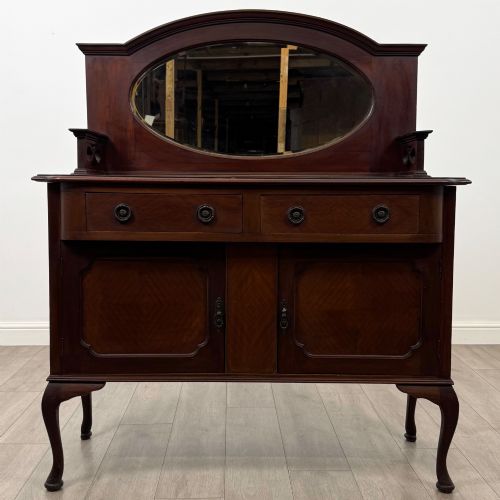
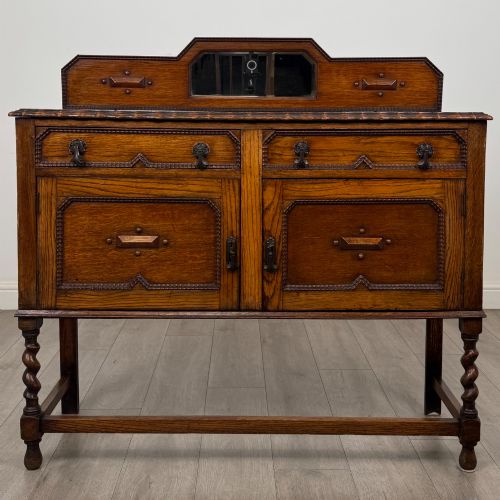
Most examples on this page take the form of sideboards, chiffoniers, and console tables designed with large mirror backs or panels. These items function as principal dining room or hallway furniture, combining a functional surface top with upright reflective elements.
Timber frames define the structure of these pieces, utilising materials such as mahogany, rosewood, oak, and walnut. The integration of mirror glass distinguishes them from standard sideboards, adding depth and light to interior spaces.
Materials and construction methods
Cabinet makers constructed the framework using dense hardwoods like mahogany, rosewood, and oak, often selecting figured veneers such as flame mahogany or pollard oak for prominent display surfaces. These timbers provided the structural strength required to support heavy marble tops and upright mirror frames.
Mirrors were set into carved or moulded wooden backings, utilising silvered glass plates characteristic of nineteenth-century production techniques. Brass fittings and marble inserts frequently complemented the timber construction, adding contrasting texture and weight.
Materials recorded in the inventory include mahogany, rosewood, oak, brass, marble, and mirror glass.
Assessing quality and craftsmanship
Quality in these pieces rests on the selection of timber veneers and the depth of carving executed on the frame. Finely figured flame mahogany or geometric oak carving indicates a higher grade of workshop production.
The integration of the mirror back into the main sideboard or console structure demonstrates the maker's joinery skill. Integrated architectural mouldings and heavy marble top inserts separate superior examples from simpler utilitarian forms.
The Antique Mirrored Server Table Glossary
- Console table
- A table designed to be fixed against a wall, frequently supported by front legs or brackets. These pieces often feature mirror backs in nineteenth-century formats.
- Chiffonier
- A compact sideboard or cabinet developed in the nineteenth century. It typically includes shelving or a mirror superstructure above a low base.
- Flame mahogany
- A veneer cut from the fork of a mahogany tree where the branches join the trunk. This produces a distinctive flickering, flame-like grain pattern.
- Pollard oak
- Timber taken from oak trees that have been pollarded, creating dense, gnarled growth rings. Cabinet makers utilised this wood for decorative panel fronts.
Antique Mirrored Server Table: Frequently Asked Questions
Where should I place this table?
These pieces suit dining rooms, hallways, and living spaces where a combination of surface area and reflective wall presence is useful. Their substantial backing makes them effective against flat walls.
Ensure the room has sufficient floor space to accommodate the depth of pedestals and console bases without obstructing movement.
How do I clean the mirror glass?
Wipe the mirror glass gently with a soft cloth and a mild glass cleaning solution. Avoid spraying liquid directly onto the glass to prevent moisture seeping behind the silvered backing.
Keep moisture away from the surrounding timber frame during cleaning to protect the polish and veneer.
What timber types are common?
Mahogany, rosewood, oak, and walnut form the primary structural woods found across these listings. Cabinet makers frequently utilised veneers to create decorative grain patterns on large surfaces.
Marble top inserts also appear on specific console and table formats from the nineteenth century.
How do I identify the period?
Stylistic indicators such as heavy carved decoration point to Victorian production, while lighter frames and simpler lines often suggest Edwardian manufacture. Regency and French Empire pieces display distinct classical proportions and ornamentation.
Examine the construction methods and timber selection to corroborate the era indicated in the description.