
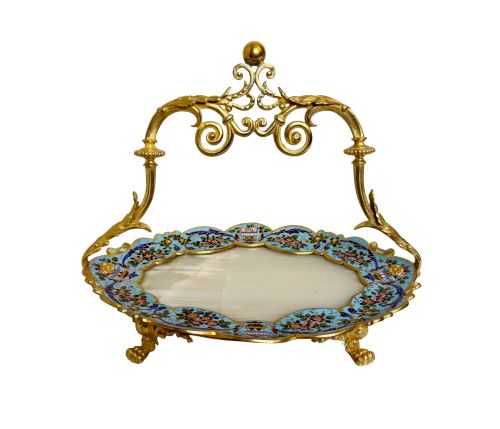


Antique Bronze Vide Poche
An antique bronze vide poche is a desk accessory or tray designed to hold pocket items, offering both utility and decorative charm for collectors.
Antique Bronze Vide Poche
An antique bronze vide poche takes the form of small trays, desk tidies, and pin trays designed to hold pocket items. Buyers searching this phrase encounter French and Austrian pieces dating from the nineteenth century through the Art Deco period.
The selection ranges from simple dishes featuring animal subjects like dogs and ducks to elaborate centrepieces adorned with champleve enamel and mounted on onyx plinths.
Many examples double as small sculptures or desk accessories, reflecting the decorative tastes of the Belle Epoque and later twentieth-century design movements.
Materials and construction
Pieces are cast in bronze, gilt bronze, or ormolu, frequently incorporating polychrome paint in cold painted Austrian works. Artisans combined these metals with natural stones such as onyx, green onyx, malachite, and blue john for bases and plinths.
Enamelling techniques, specifically champleve enamel, appear across French trays and centrepieces, adding colourful geometric or floral patterns to the metal surface. Glass eyes also feature in figurative animal designs to enhance realism.
One hound figurine gazes outward with watchful glass eyes.
Assessing quality and craftsmanship
Quality depends on the crispness of the casting and the finesse of the chasing work on the metal surface. Finer pieces display sharper detail in figurative elements and more secure integration of enamel and stone bases.
The complexity of the materials also dictates standard, with multi-media objects combining ormolu, champleve enamel, and mounted minerals representing higher levels of workshop execution.
Ferdinand Preiss·Georges Van Der Straeten·Josef Lorenzl
The Antique Bronze Vide Poche Glossary
- Vide poche
- A small tray or dish intended for emptying pockets of coins, keys, or small personal items. The term translates from French as empty pocket.
- Ormolu
- Gilt bronze produced by applying a finely ground high-carat gold-mercury amalgam to a bronze object. This technique creates a rich golden finish characteristic of French decorative arts.
- Champleve enamel
- An enamelling technique where troughs or cells are carved into the metal surface and filled with vitreous enamel paste before firing. The piece is then polished flush.
- Cold painted bronze
- A method where bronze figures are painted with unfired oil paint or enamel colours. Austrian workshops utilised this technique extensively for animal and human subjects.
- Onyx
- A banded variety of chalcedony used frequently for the plinths and bases of desk accessories and trays. Green onyx appears across several nineteenth and twentieth-century examples.
- Tazza
- A shallow bowl or cup mounted on a stem and foot, used historically for display or serving. In bronze desk items, it functions as an ornamental desk piece.
Antique Bronze Vide Poche: Frequently Asked Questions
What is a vide poche used for?
A vide poche serves as a small receptacle placed in an entryway or on a desk to hold everyday pocket items like coins, keys, and pocket watches.
Historically, they kept surfaces organised while adding a decorative accent to domestic interiors.
What is the difference between ormolu and gilt bronze?
Ormolu specifically refers to gilt bronze created using a mercury-gilding process common in eighteenth and nineteenth-century French manufacturing, producing a particular deep lustre.
Gilt bronze is a broader term encompassing any bronze object with a gold-coloured surface coating applied through various methods.
How do I care for antique bronze?
Antique bronze benefits from occasional dusting with a soft, dry cloth to prevent particulate buildup on the metal surface.
Harsh chemical cleaners and abrasive polishes should be avoided to protect original patinas, cold paint, and mounted stone elements.