


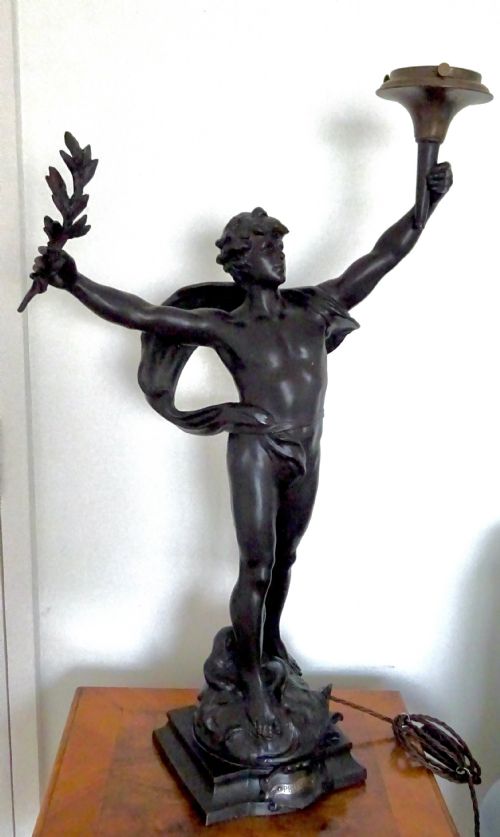
Belle Epoque Bronze Statue
A belle epoque bronze statue captures the buoyant optimism of the turn of the century in cast metal.
Belle Epoque Bronze Statue
When you search for a belle epoque bronze statue, you encounter sculptural works that celebrate elegance, personality, and theatrical costume from the late nineteenth and early twentieth centuries. These figures range from spirited busts of young ladies to elaborate lamp bases that incorporate lighting into sculptural design. You are most likely to meet French works from the 1890s through to 1910, reflecting the Art Nouveau tastes and sophisticated portraiture of the period.
The subjects span from Continental portrait busts to full figures of tambourine players and elegant ladies in period dress. Makers captured transient expressions and spirited character studies, often mounting the metal figures upon rich bases of marble or alabaster. These sculptures function simultaneously as cabinet pieces, large mantel ornaments, and functional lighting fixtures.
How they were made
Foundries utilised traditional lost-wax or sand-casting methods to produce these metal sculptures, achieving remarkable detail in hair, drapery, and facial expression. Artisans applied chemical patination to the bronze surfaces, yielding varied tones from warm browns to dark metallic finishes. Workshops frequently combined cast metal with hand-carved marble or alabaster for the plinths and pedestals.
Certain pieces integrate ormolu mounts and gilt highlights to accentuate the decorative qualities of the costume. Alternative metal alloys such as spelter appear in specific figural lamps, offering a lighter medium for intricate casting. Each sculpture relies on the interplay between the dark metallic figure and the pale stone base.
Listings feature works spanning the late nineteenth century through to the Edwardian period, executed in bronze, patinated bronze, spelter, marble, and alabaster.
What varies in quality
The choice of secondary materials also signals distinction, with solid marbles and rich patinas elevating the presence of the sculpture. The prestige attached to named sculptors who exhibited in Paris salons naturally separates standard decorative castings from collector pieces. Quality is ultimately found in the vitality of the pose and the precision of the surface finish.
Georges Van Der Straeten·Sylvain Kinsburger·Claudius Marioton·Adrien Gaudez·Eutrope Bouret
The Belle Epoque Bronze Statue Glossary
- Patina
- The chemical or natural surface coloration developed on bronze over time or applied intentionally by the foundry. This finish protects the metal and defines the visual mood of the sculpture.
- Ormolu
- Gilt bronze produced by applying a finely ground mercury and gold amalgam to a bronze object before firing. The technique imparts a rich golden lustre to decorative mounts and highlights.
- Spelter
- A zinc-based alloy commonly utilised as an economical alternative to bronze for figural sculptures and lamps. It accepts patination and metallic paint finishes to simulate more costly materials.
- Alabaster
- A fine-grained, translucent stone utilised for carved sculptural bases and pedestals. Its soft appearance contrasts with the dark metallic tones of patinated bronze.
Belle Epoque Bronze Statue: Frequently Asked Questions
What is a belle epoque bronze statue?
These sculptures are decorative figures and busts produced in France and across the Continent during the late nineteenth and early twentieth centuries. They capture fashionable ladies, performers, and expressive portraits typical of the era's artistic output.
Created primarily in bronze and patinated metal, many pieces double as table lamps or incorporate carved marble bases. They represent the transition from nineteenth-century academic sculpture into the fluid lines of Art Nouveau.
How do I date a bronze statue?
Dating relies upon stylistic markers such as costume details, hairstyles, and the overarching aesthetic movement visible in the piece. Works from the eighteen-eighties and nineties often lean toward classical portraiture, whereas those from nineteen-ten embrace Art Nouveau curves.
Signatures, foundry stamps, and the choice of secondary materials like marble or ormolu further assist in narrowing the period of production. Examining the depth and technique of the patination also provides clues to the era of manufacture.
Where were these statues placed?
Original owners displayed these sculptures upon mantelpieces, side tables, and pedestals within formal reception rooms and parlours. Pieces designed as lamps additionally served practical illumination purposes on desks and cabinets.
Their domestic scale allowed them to be integrated easily into diverse interior settings as focal points of visual interest. The combination of metal sculpture and marble provided a sturdy decorative object suited for tabletop display.
How do I care for bronze and marble?
Maintenance requires gentle dusting with a soft, dry cloth to prevent the accumulation of particles on the patinated surface and stone. Avoid abrasive cleaners, moisture, and chemical polishes that can strip the original foundry patina or stain porous marble.
Placing the sculpture away from direct sunlight and excessive humidity helps preserve both the metallic finish and the integrity of the stone base. Periodic light cleaning maintains the natural lustre of the materials without altering their historic surface.