





Antique Bronze Sphinxes
Antique bronze sphinxes bring mythological form and classical gravity to interiors, moving easily from mantelpieces to library desks.
Antique Bronze Sphinxes
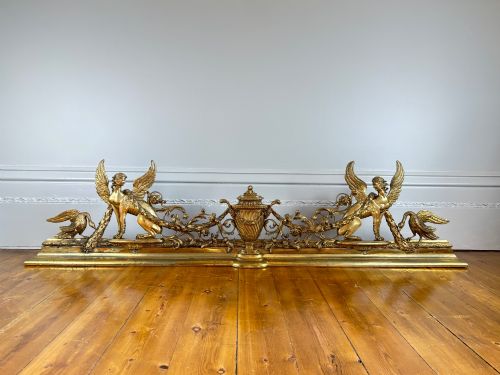
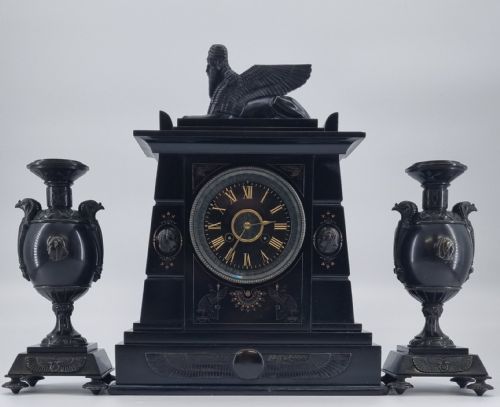
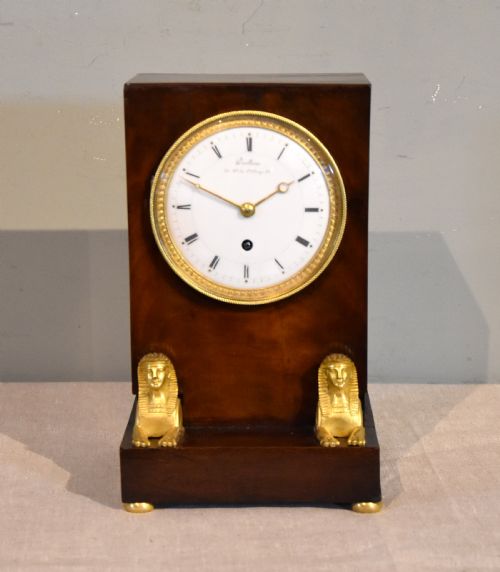
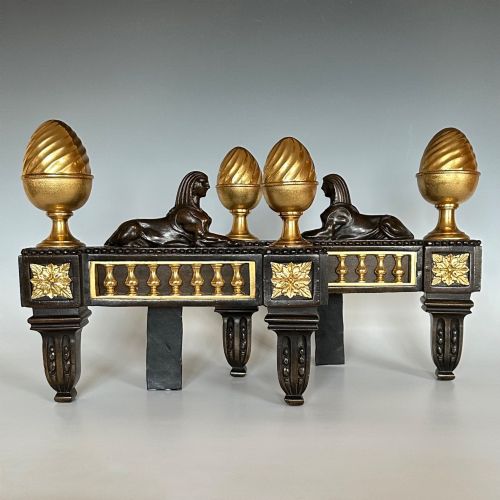
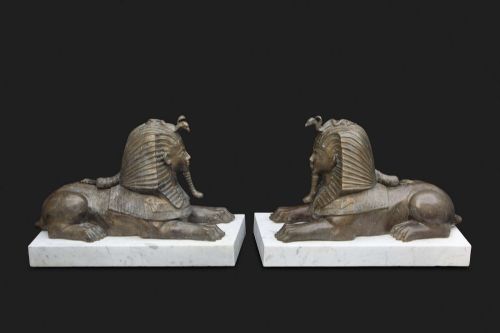
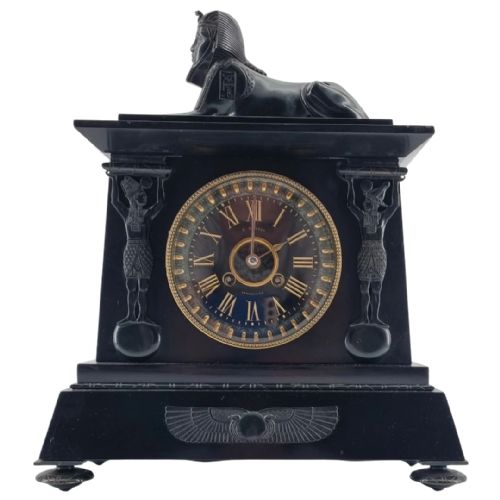
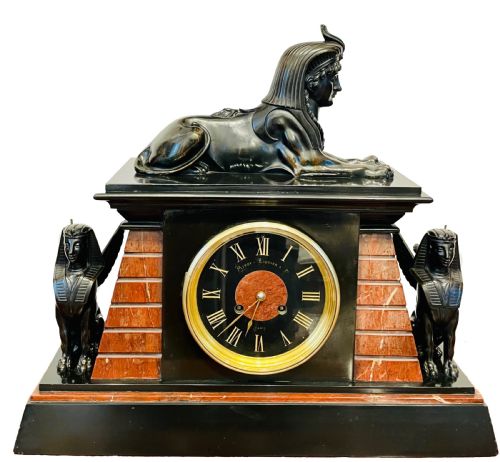
When you search for antique bronze sphinxes, you are looking at metal figures cast in the likeness of the mythical creature, combining human and animal anatomy. These objects appear most frequently as mantel clocks, sculptural pairs, chenets, door knockers, and fireplace fenders.
The versions you are most likely to meet on this page date from the nineteenth century, including Regency, Victorian, and French Empire periods. Many of these pieces reflect the enduring fascination with Egyptian Revival and Neoclassical styles.
Makers and designers of the period placed these creatures on plinths of black slate or Carrara marble. They serve equally as functional timepieces, chenets, and standalone sculptures.
How they were made
Foundries produced these pieces primarily through traditional metal casting methods using bronze, often supplemented by ormolu and gilt bronze highlights. Patination varied from dark, uniform surfaces to richly burnished golden finishes.
Stone bases were cut and polished from black slate, Carrara marble, or veined marble to support the heavy metal sculptures. Enamel dials and brass movements were integrated into the clock forms during assembly.
Recumbent sphinxes gaze steadily from fireplace fenders, keeping watch over centuries of hearthside soot and glowing embers.
What varies in quality
The integration of materials also dictates overall standard. Heavy marble or slate plinths paired with well-chased bronze demonstrate superior craftsmanship compared to simpler assemblies.
E F Caldwell New York·D Munsey of Cambridge·Achille Brocot·Barraud & Lund London
The Antique Bronze Sphinxes Glossary
- Ormolu
- Gilded bronze used widely in French Empire and Regency decorative arts. The technique involves applying a finely ground mercury and gold amalgam to the bronze surface before heating.
- Chenets
- Andirons or firedogs placed at the front of a hearth to support logs. They frequently incorporate decorative figures such as sphinxes facing one another.
- Garniture
- A matching set of decorative objects for a mantelpiece, usually consisting of a central clock flanked by two matching ornaments like urns or sphinx sculptures.
- Grand Tour
- A traditional trip through Europe undertaken by upper-class young men in the eighteenth and nineteenth centuries. Souvenirs included small bronzes and antiquities.
- Fusee
- A conical pulley used in antique clocks to maintain equal force on the gear train as the mainspring unwinds. This mechanism improves timekeeping accuracy.
Antique Bronze Sphinxes: Frequently Asked Questions
What periods do these pieces date from?
The pieces span the nineteenth and early twentieth centuries, with heavy representation from the Regency and Victorian eras.
Stylistic influences lean heavily into French Empire, Neoclassical Revival, and Egyptian Revival aesthetics.
How were bronze sphinxes used originally?
They served multiple roles in period interiors, functioning as clock cases, fireplace chenets, door knockers, and desk timepieces.
Sculptural pairs were also placed on marble plinths as standalone decorative objects on mantelpieces or libraries.
What materials accompany the bronze?
Foundries frequently mounted the bronze figures on bases made of Carrara marble, black slate, or veined marble.
Some examples incorporate ormolu, gilt bronze, brass, enamel dials, and glass components.
How do I identify an Egyptian Revival piece?
Egyptian Revival pieces often feature hieroglyphic motifs, nemes headcloths, and distinct pharaonic styling on the sphinx figures.
These designs gained popularity following nineteenth-century archaeological discoveries and military campaigns.