




French Bronze Sphinxes
French bronze sphinxes bring heavy classical weight and Egyptian mystery to a room, cast in solid metal and mounted on marble or slate.
French Bronze Sphinxes
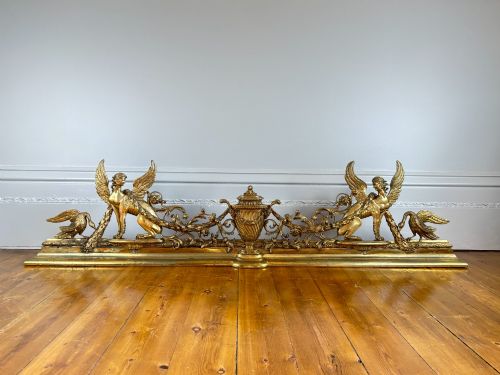
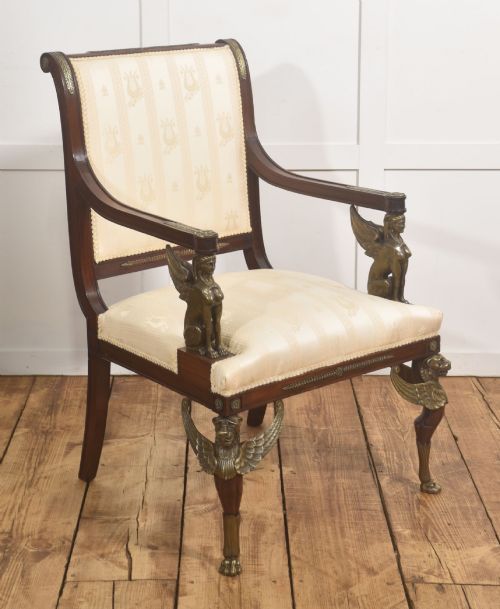
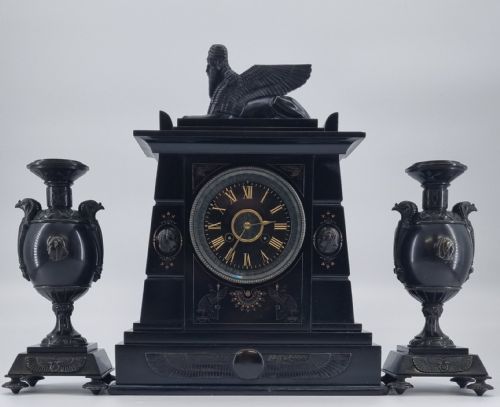
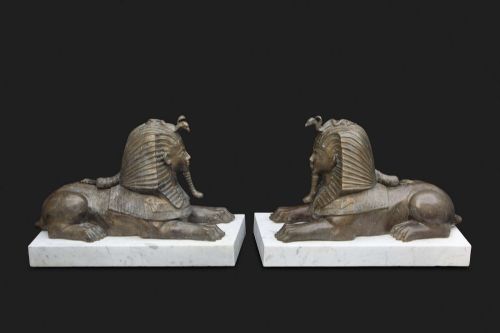
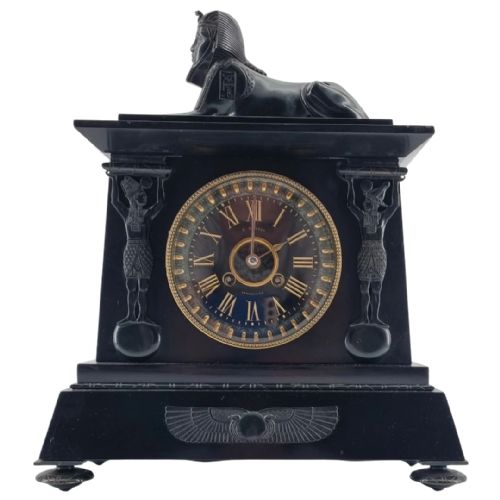
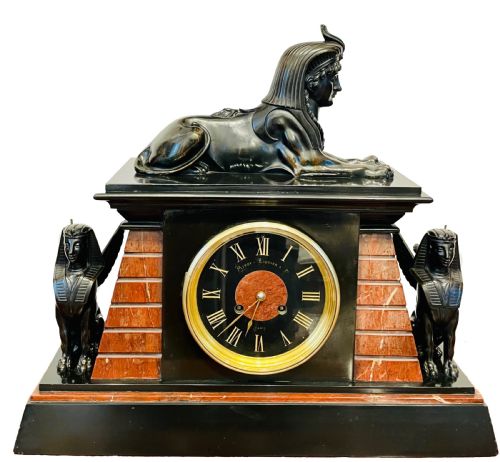
French bronze sphinxes encompass decorative sculptures, mantel clocks, chenets, and fireplace fenders that draw heavily upon Egyptian Revival, Neoclassical Revival, and French Empire design. These pieces combine mythological imagery with domestic utility, appearing frequently as part of garniture sets or standalone mantel ornaments.
The versions most commonly met on this page date from the nineteenth century, including Regency and Victorian interpretations alongside later cast items. They emerge in various formats, from monumental sculptures on Carrara marble plinths to smaller recumbent pairs and clock garnitures.
Materials and construction
Foundry work relies heavily on cast bronze, dore bronze, ormolu, and brass, often paired with contrasting structural bases of black slate, white marble, or Carrara marble. Metals are chased and finished by hand to create sharp detail in the wings, headdresses, and feline bodies of the creatures.
Composites and functional elements integrate glass and enamel dials within timepiece housings, whilst heavier architectural pieces utilise slate or timber carcasses beneath gilt bronze mounts and figural castings.
French Bronze Sphinxes Retail Price Guide 2026
Typical asking prices for french bronze sphinxes among the pieces listed under this phrase on Sellingantiques today, from the lower quarter to the upper quarter. They describe what is for sale here now, not the wider market.
Listings feature items spanning the nineteenth century, including Regency and Victorian periods, executed in bronze, marble, slate, and ormolu.
Assessing quality and execution
The choice and weight of the mounting materials also define the grade of an object, with dense Carrara marble plinths and heavy fire-gilt ormolu surfaces sitting at the higher end of the range compared to simpler slate or patinated bronze alone.
E F Caldwell New York·D Munsey of Cambridge·Achille Brocot
The French Bronze Sphinxes Glossary
- Ormolu
- Gilded bronze produced through a mercury amalgamation technique, yielding a rich, lasting gold colour. It is widely used on nineteenth-century decorative mounts.
- Garniture
- A set of matching decorative objects designed to sit together on a mantelpiece, typically comprising a central clock flanked by matching urns or figures.
- Chenets
- Andirons placed at the front of a fireplace to support logs, often highly decorative in French Empire and Regency interiors. They frequently incorporate cast bronze figures.
- Egyptian Revival
- An architectural and decorative style drawing on motifs from ancient Egypt, experiencing major revivals during the nineteenth century. Sphinxes and obelisks are central to this visual vocabulary.
- Plinth
- A heavy rectangular block or base supporting a statue, clock, or sculpture. They are commonly fashioned from contrasting stone such as black slate or white marble.
French Bronze Sphinxes: Frequently Asked Questions
What rooms suit French bronze sphinxes?
These pieces suit libraries, studies, or drawing rooms where classical or architectural furniture provides a suitable backdrop. Their dark patinated metal and gilt highlights command attention on mantelpieces or heavy sideboards.
Because many examples function as clocks or fireplace accessories, they integrate easily into rooms with working hearths or period focal points. Pairing them with other neoclassical or empire objects enhances their visual weight.
How do I care for bronze and ormolu?
Maintenance requires only a soft, dry cloth to remove dust from recessed chases and intricate wing details. Avoid using metal cleaners or abrasive polishes, which strip gilding and damage original patination.
Keeping pieces away from direct heat sources and excessive moisture protects underlying slate or marble bases from staining or cracking over time.
How are nineteenth-century clocks powered?
Nineteenth-century timepieces generally rely on mechanical spring-driven or weight-driven movements regulated by an escapement and pendulum. Winding keys are used to tension the springs through small dial or backplate apertures.
Professional setup ensures the movement beats in beat and keeps accurate time without straining vintage gear trains.
How do I distinguish Regency from Victorian pieces?
Regency items typically display leaner, stricter neoclassical lines influenced by French Empire taste, with precise use of fire-gilding and crisp bronze casting. They date from the early part of the nineteenth century.
Victorian and later nineteenth-century pieces often introduce heavier proportions, mixed media like black slate, and broader interpretations of Egyptian Revival motifs as mass production techniques expanded.