

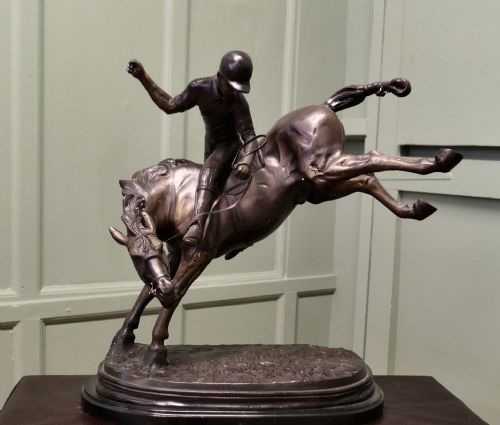

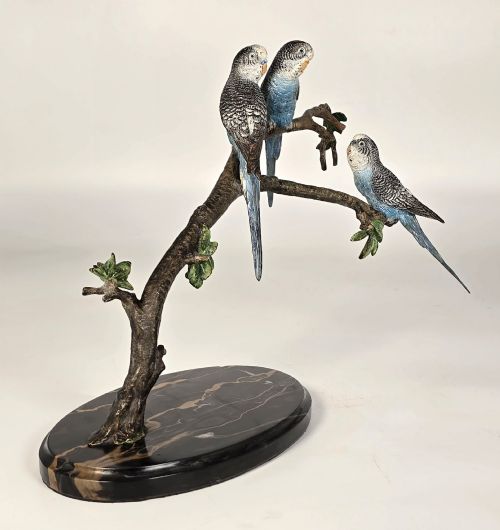
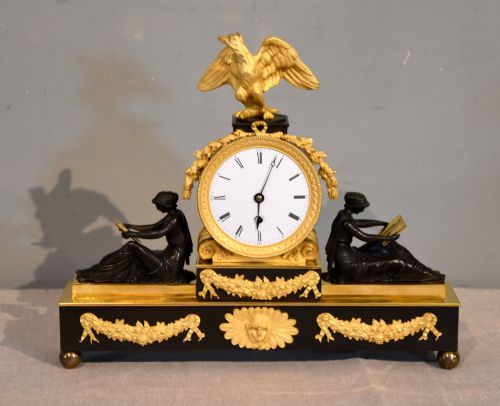


Antique Bronze Mantle Sculpture
These antique bronze mantle sculpture pieces bring sculptural presence to a room, offering patinated metalwork and classical or decorative subjects from the nineteenth and early twentieth centuries.
Antique Bronze Mantle Sculpture
An antique bronze mantle sculpture is a decorative three-dimensional figure or group designed for display on a fireplace shelf or sideboard. The selection spans the nineteenth century, the Victorian era, and the art deco period of the 1920s and 1930s.
You will encounter various interpretations, including French animalier figures of hounds and hunting dogs, mythological subjects, and figural groups mounted on marble or onyx bases. Many pieces integrate into clock garnitures or function alongside timepiece movements.
The materials range from solid cast bronze and gilt bronze to spelter, brass, and mixed media compositions incorporating glass or enamel. These works reflect the decorative tastes of English Regency, French Empire, and Victorian Orientalist styles.
Materials and construction methods
The primary material used is bronze, cast using traditional foundry methods and finished with dark patination or gilt surfaces. Spelter appears frequently as an alternative metal base for figures.
Marble and onyx serve as substantial plinths and bases for figures and clock sets, providing weight and colour contrast to the metalwork. Cold painting and silver plating are also utilised on specific decorative surfaces.
Antique Bronze Mantle Sculpture Retail Price Guide 2026
Typical asking prices for bronze mantle sculpture among the pieces listed under this phrase on Sellingantiques today, from the lower quarter to the upper quarter. They describe what is for sale here now, not the wider market.
Listings feature works in bronze, spelter, marble, onyx, and brass, spanning the nineteenth century through to art deco productions of the 1930s.
Assessing craftsmanship and design
The integration of the sculpture with its base, whether marble, onyx, or integrated clock housing, indicates the original ambition of the piece. Superior examples preserve their original patination and mountings without later alterations.
Auguste Moreau·Ugo Cipriani·Jean Jacques Pradier·Charles Anfrie·Henri Ple
The Antique Bronze Mantle Sculpture Glossary
- Bronze
- A copper alloy traditionally used for durable metal castings with rich patination. It takes fine detail well and resists corrosion over time.
- Spelter
- A zinc-based alloy commonly used as a cost-effective substitute for bronze in nineteenth-century figures. It is softer than bronze and typically carries a painted finish.
- Clock garniture
- A set comprising a central mantel clock accompanied by matching side ornaments or candelabra. These matched groupings were popular decorative arrangements.
- Patina
- The surface sheen and colour acquired by metal through age or chemical treatment. It provides a visual indicator of the age and handling history of a piece.
- Animalier
- A nineteenth-century artistic style focusing on realistic depictions of animals, particularly dogs, horses, and wild beasts. These sculptures often capture subjects in motion.
Antique Bronze Mantle Sculpture: Frequently Asked Questions
What is an antique bronze mantle sculpture?
It is a decorative metal figure or group created to sit upon a fireplace mantel or shelf. These pieces range from classical figures to animals and clock garniture components.
Most date from the nineteenth and early twentieth centuries, reflecting changing aesthetic movements from French Empire to art deco.
How do I tell bronze from spelter?
Bronze is heavier, cooler to the touch, and rings with a clear tone when tapped gently. Spelter is a softer zinc alloy that often shows a lighter grey metal underneath worn painted surfaces.
Many nineteenth-century figures used spelter as an accessible alternative to solid bronze casting.
Were these sculptures always part of clocks?
While many sculptures form part of clock garnitures or sit atop clock bases, others were created as standalone decorative figures. Sculptors produced independent statues for display on furniture surfaces.
Clock sets combined timekeeping movements with matching side ornaments to create a unified mantel display.
How should I clean my sculpture?
Dust the surface gently with a soft, dry brush or cloth to remove particulate matter. Avoid using commercial metal polishes or liquid cleaners, which can strip the historic patina.
Keeping the piece away from direct heat sources and damp environments protects both the metal patination and any stone bases.