


Antique British Military Pistol
An antique british military pistol carries the weight of state service through flintlock and percussion eras.
Antique British Military Pistol
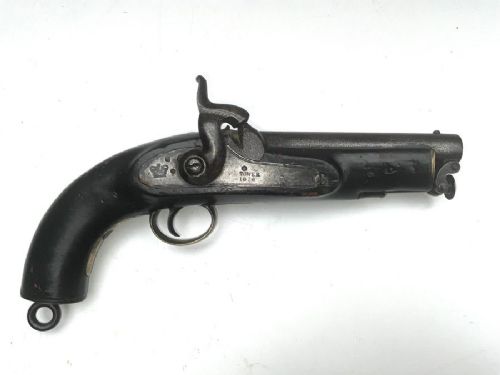
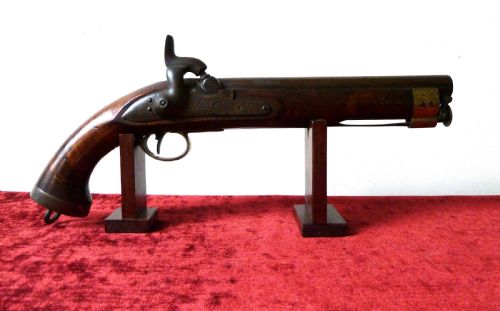
An antique british military pistol represents regulation sidearms issued to cavalry, dragoons, and officers across the eighteenth and nineteenth centuries. Buyers searching for an antique british military pistol encounter standard issue service arms bearing government inspection marks alongside private purchase pieces carried by officers.
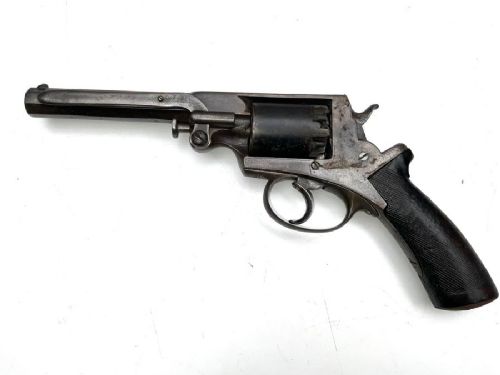
The pieces visible on this page span from late eighteenth century flintlock dragoon and cavalry types through mid nineteenth century percussion service arms. Most examples originate from government arsenals or recognised London makers, showing the evolution from smoothbore flintlock mechanisms to percussion ignition and early revolvers.
Forms range from heavy holster pistols and Newland service models down to belt pistols and boxed percussion revolvers. Each variation reflects the specific tactical requirements of British forces during the Georgian and Victorian military campaigns.
Materials and construction
Construction relies on robust stocks of walnut or plain wood fitted with iron, steel, or brass furniture. Metal components include heavy barrels, lockplates, and trigger guards designed to withstand active field conditions.
Lock mechanisms transition from flintlock ignition systems to percussion cap action, utilising metal springs and hammers. Barrels are forged in steel or brass, often featuring proof marks and inspector stamps from the Tower armoury or private contractors.
Dragoons kept their heavy pistols stuffed into holsters across their saddles, meaning the left and right sides aged differently against the horse sweat.
Assessing quality and condition
Quality rests upon the crispness of government or maker stampings, the original form of the stock, and the mechanical integrity of the lock. Retaining legible crown markings and clear contractor names distinguishes superior examples from heavily worn or altered pieces.
The balance between original patina and functional working order dictates the standing of an individual piece. Stock preservation, matching metal surfaces, and crisp wood edges separate standard service issue from well kept officer sidearms.
T. Potts·Henry Nock·Brasher·Wilson
The Antique British Military Pistol Glossary
- Flintlock
- An ignition system that uses a piece of flint held in a cock to strike a steel frizzen and create sparks for firing. This mechanism dominated military firearms until the mid nineteenth century.
- Percussion
- A later ignition system utilising a percussion cap struck by a hammer to detonate the powder charge. It replaced flintlocks for greater reliability in wet weather.
- Smoothbore
- A barrel lacking internal rifling grooves, firing round lead balls at close range. Most military pistols of the eighteenth and early nineteenth centuries used this bore.
- Tower
- A reference to the Tower of London, the principal ordnance facility where British government arms were stored and inspected. Many pieces bear specific Tower stamps and crown markings.
- Dragoons
- Mounted infantry troops who required robust holster pistols for close combat. Their firearms were built for rugged service conditions.
Antique British Military Pistol: Frequently Asked Questions
How do I know if it is a military issue?
Government contract pieces typically display crown inspection stamps and Tower markings on the lockplate.
Private purchase officer arms often substitute commercial maker signatures while maintaining regulation dimensions and calibres.
What is the difference between flintlock and percussion?
Flintlock pistols rely on a flint striking a steel frizzen to produce sparks for ignition.
Percussion pistols use a hammer that falls onto a small primed metal cap placed on a nipple.
Were these pistols carried in active service?
Most examples served with cavalry regiments, light dragoons, or officers during Georgian and Victorian campaigns.
Their heavy construction and brass or iron furniture were specified for harsh military environments.
How should I store and care for an antique pistol?
Keep the piece in a dry, stable environment away from direct sunlight and excessive humidity.
Lightly oil metal parts to preserve the surface while leaving dry historical wood untouched by modern varnishes.