
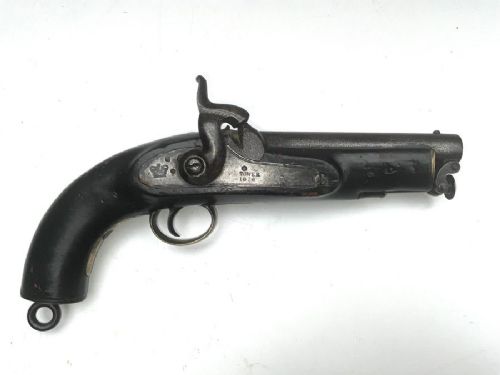

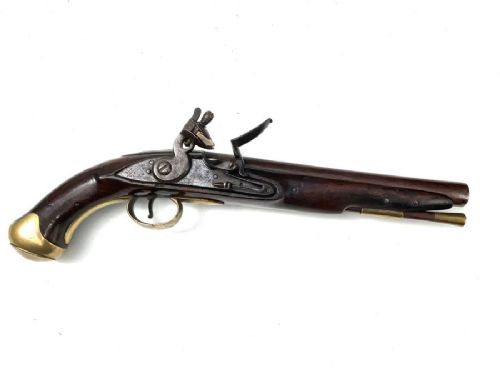


Vintage Muzzle Loading Pistol
A vintage muzzle loading pistol carries the weight of past conflicts and personal defence, offering collectors tangible links to the mechanics of earlier centuries.
Vintage Muzzle Loading Pistol
A vintage muzzle loading pistol encompasses firearms loaded from the front of the barrel, spanning the eighteenth and nineteenth centuries. Buyers encountering this selection will find military service arms alongside civilian pocket and belt variants.
The periods represented stretch from the Georgian era through the Victorian period, capturing significant shifts in ignition technology. Military percussion pistols and officer sidearms dominate the available forms.
Many examples originate from British workshops and regiments, showing the standard issue patterns of the era. Flintlock mechanisms appear alongside the later percussion cap systems that superseded them.
Materials and construction
Stock construction relies heavily on dense hardwoods such as walnut and oak, shaped to fit the hand and house the lock mechanism. Brass and steel furniture, including trigger guards and butt caps, reinforce the wooden frames.
Barrels and lockplates are forged from steel and iron, often bearing London proof marks or maker stamps. Silver wire inlay and escutcheons occasionally accent the finer civilian and Scottish pocket pistols.
Listings feature steel, brass, and iron hardware mounted onto walnut and oak stocks from the eighteenth and nineteenth centuries.
Assessing quality and execution
The refinement of the engraving on lockplates and hammer spurs separates standard military issue from bespoke officer pieces. Maker signatures, such as those by Harrison or Meyer & Mortimer, indicate higher grade workshop production.
The crispness of the action and the snugness of the wood-to-metal fit reveal the original maker's skill. Finer examples retain intact checkering on the grips and original ramrods matching the bore.
Harrison of London·Meyer & Mortimer
The Vintage Muzzle Loading Pistol Glossary
- Flintlock
- An ignition mechanism where a flint strikes a steel frizzen to create sparks that ignite the priming powder. This system preceded the percussion cap in firearm development.
- Percussion
- A later ignition system utilising a percussion cap struck by the hammer to detonate the main charge. This method offered greater reliability in damp weather.
- Smoothbore
- A barrel lacking internal rifling, designed to fire lead shot or round balls without spin. Most early military and civilian pistols utilised this bore type.
- Belt pistol
- A compact firearm equipped with a side hook for securing to a belt or sash. These pieces served travellers and officers requiring accessible personal defence.
Vintage Muzzle Loading Pistol: Frequently Asked Questions
How do I clean a vintage muzzle loading pistol?
Cleaning requires specialist knowledge to preserve antique steel, wood, and brass without stripping patination or historical finish. Modern solvents should be avoided in favour of conservation-grade oils.
Professional advice is recommended before attempting any maintenance on delicate lock mechanisms or fragile wooden stocks.
Are these pistols legal to own in the UK?
Antique firearms held as curiosities or ornaments typically fall under specific exemptions within UK firearms legislation. The legal status often depends on the ignition system and whether the piece uses obsolete ammunition.
Buyers must verify current legislation regarding deactivated or antique status before purchase.
What is the difference between flintlock and percussion?
Flintlock pistols rely on a flint and steel mechanism to generate a spark, representing the technology of the eighteenth and early nineteenth centuries. Percussion pistols use a small explosive cap placed on a nipple, introduced around the mid-nineteenth century for better reliability.
This technical shift occurred across both military and civilian production.
How can I tell a military pistol from a civilian one?
Military pieces generally feature standard government inspection stamps, broader steel or brass furniture, and robust walnut stocks designed for rough service. Civilian and officer weapons often display finer checkering, silver wire inlay, or private maker signatures.
Contract numbers and Tower markings typically indicate official government supply.